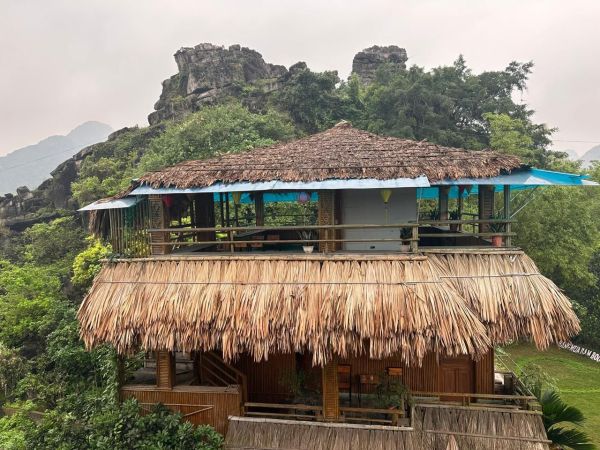
We slept, lulled by the gentle rhythm and sway of the train on our way to Ninh Binh. Several friends had recommended we include Ninh Binh on our itinerary and we were looking forward to seeing the beautiful countryside. The sunshine peeked through the train cabin’s curtains and we awoke to the scenes of rural Vietnam outside our window. We arrived at the station in Ninh Binh and I limped from the train to the taxi we hired to take us to our homestay. The homestay was in a beautiful location and we had a great view from our third-floor suite. Unfortunately for me and my ankle, the elevator only carried luggage. We decided to let my foot rest and relax at the homestay until the afternoon when we headed to a park and avian sanctuary outside of town, the Thung Nham Bird Valley.
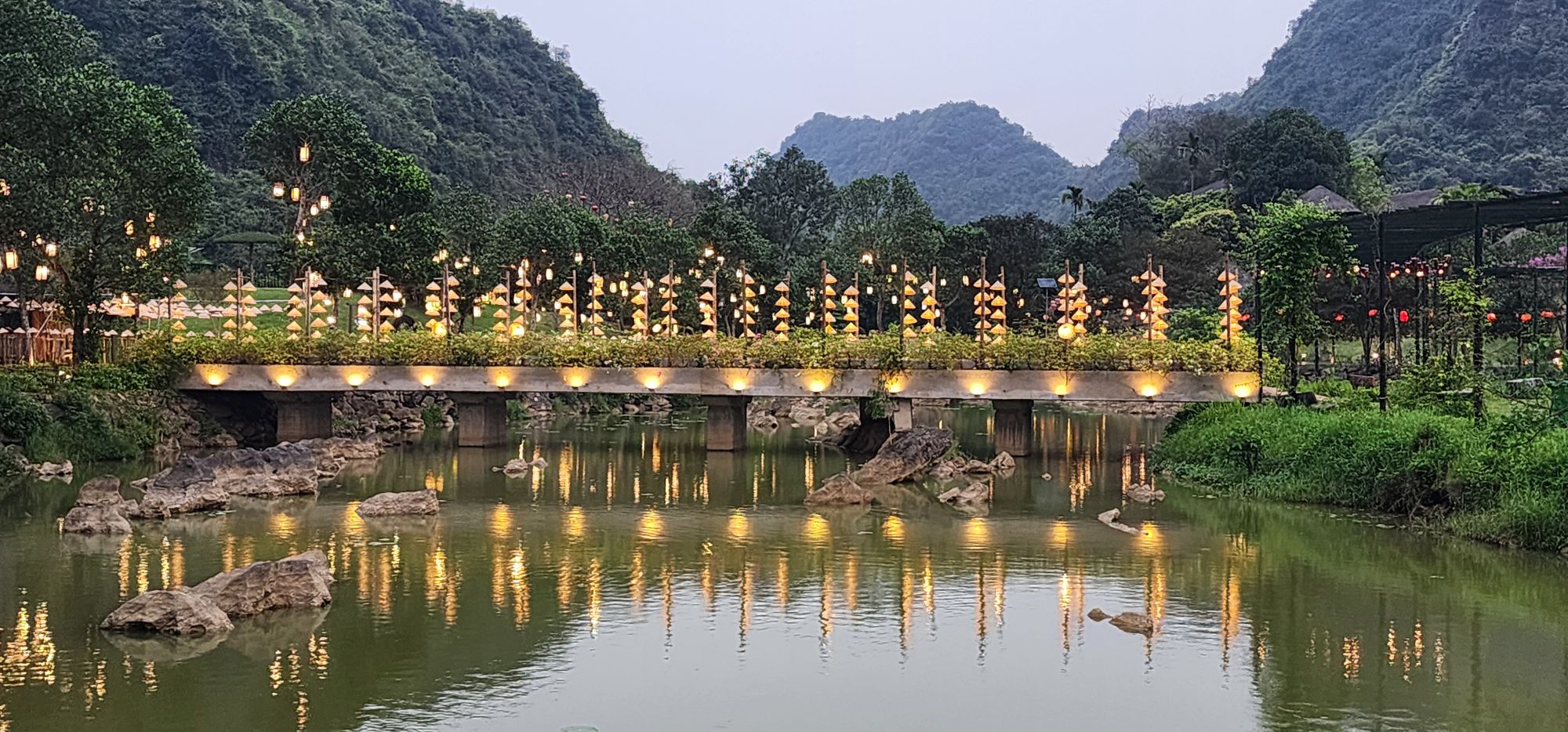
The park is situated in a large valley dotted with lakes and surrounded by rocky cliffs cloaked in dense vegetation. Admission granted us two boat rides, powered by guides who skillfully paddled with their feet. The first paddled us into a dark cave where we explored stalagmites, stalactites, and sleeping bats with headlamps. “Buddha! Buddha!” my paddle guide pointed at a large Buddha-like stalagmite. Later I read that “Hang But” the cave’s name, translates as “Fairy Man Cave,” apparently named for this curious stalagmite.
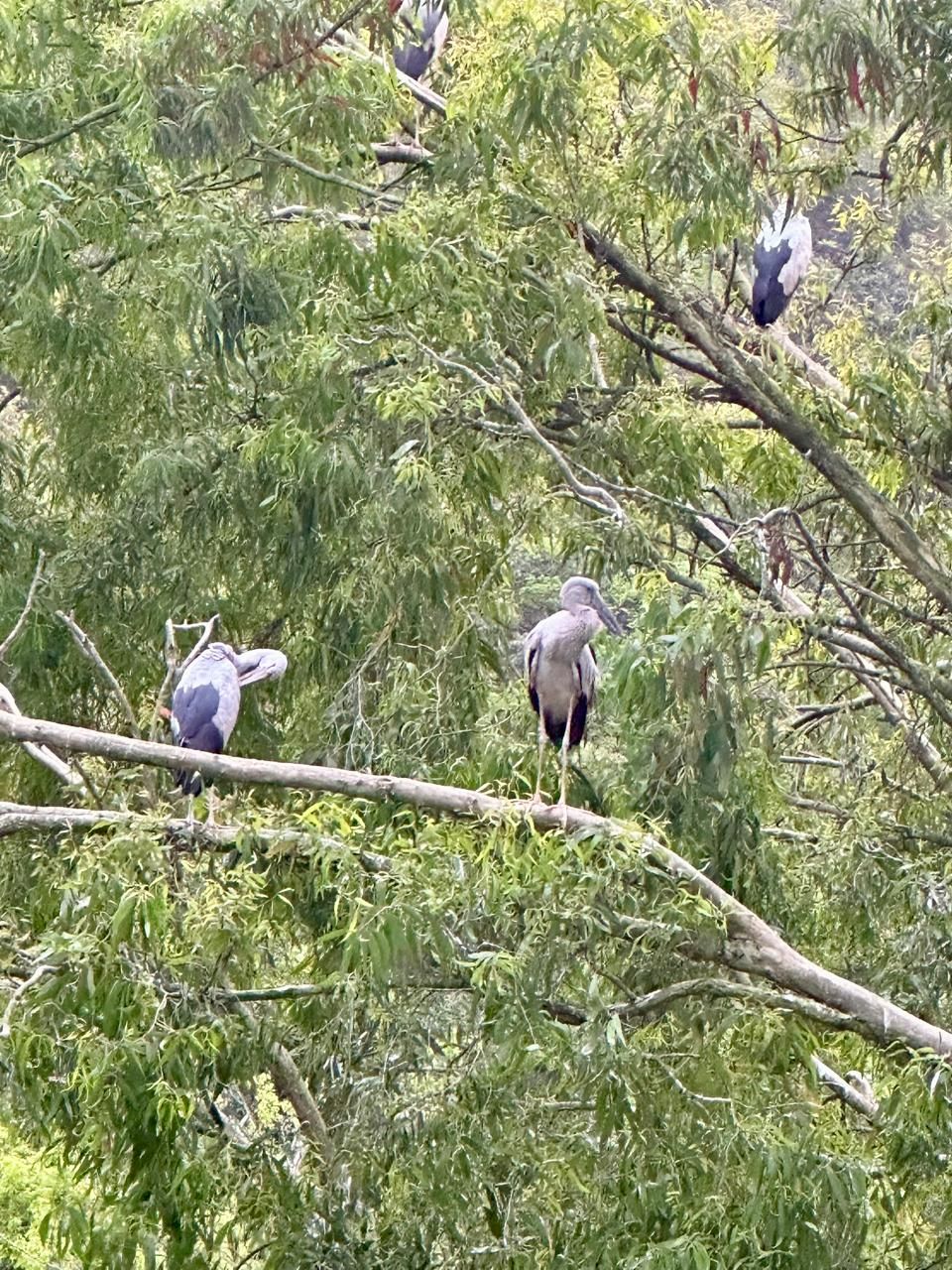
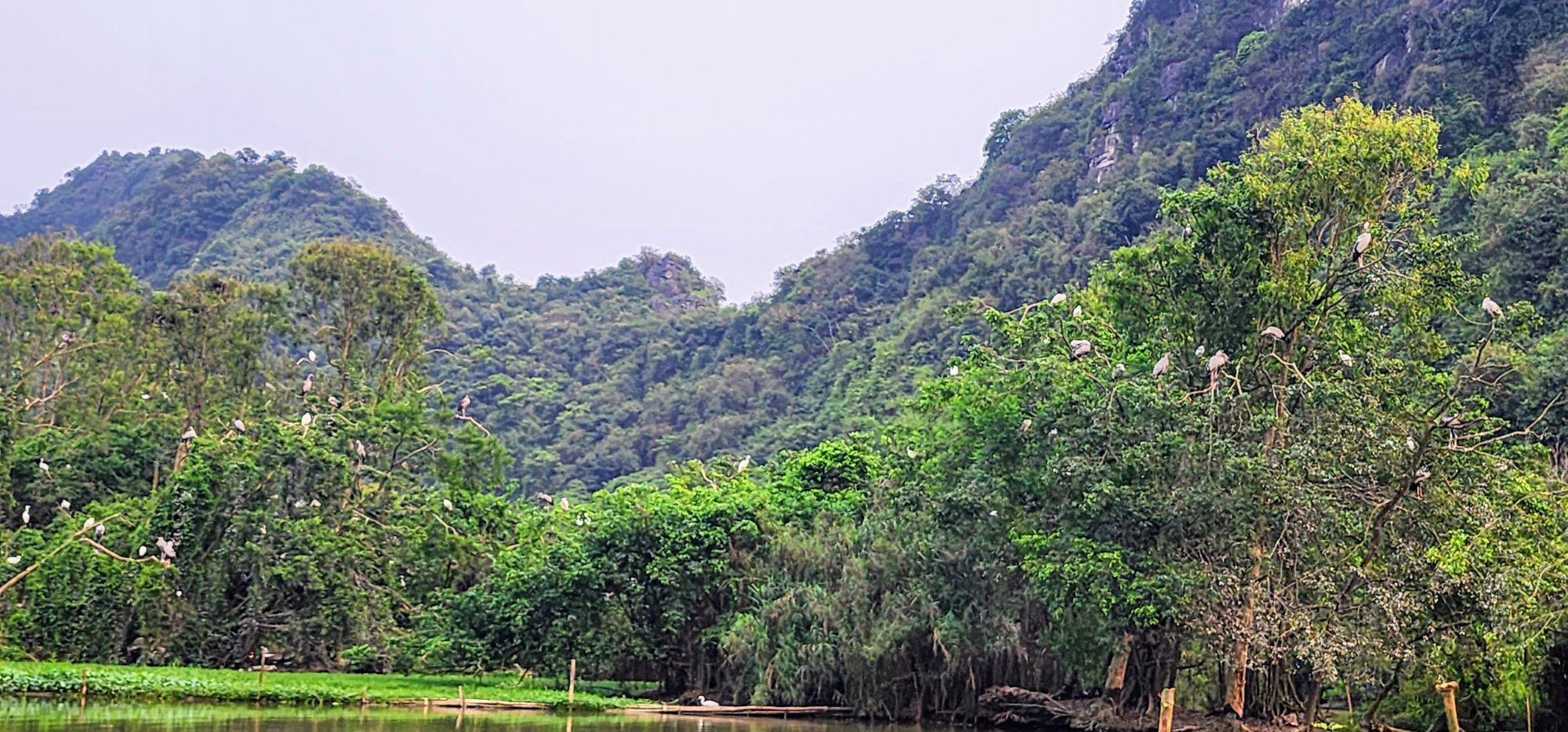
Sunset approached as we walked deeper into the park and embarked on the second boat ride. From the boat, flocks of storks, herons, and egrets could be seen soaring above the valley while other birds sang from their hiding spots amidst the dense foliage. Over 40 species of birds live in the park, though without my telephoto lens, I could only identify a handful of the many that I could hear and spy from a distance. We paddled quietly towards trees teeming with noisy birds, including many juveniles, and then sat silently in the boat observing them and listening to the impressive cacophony.
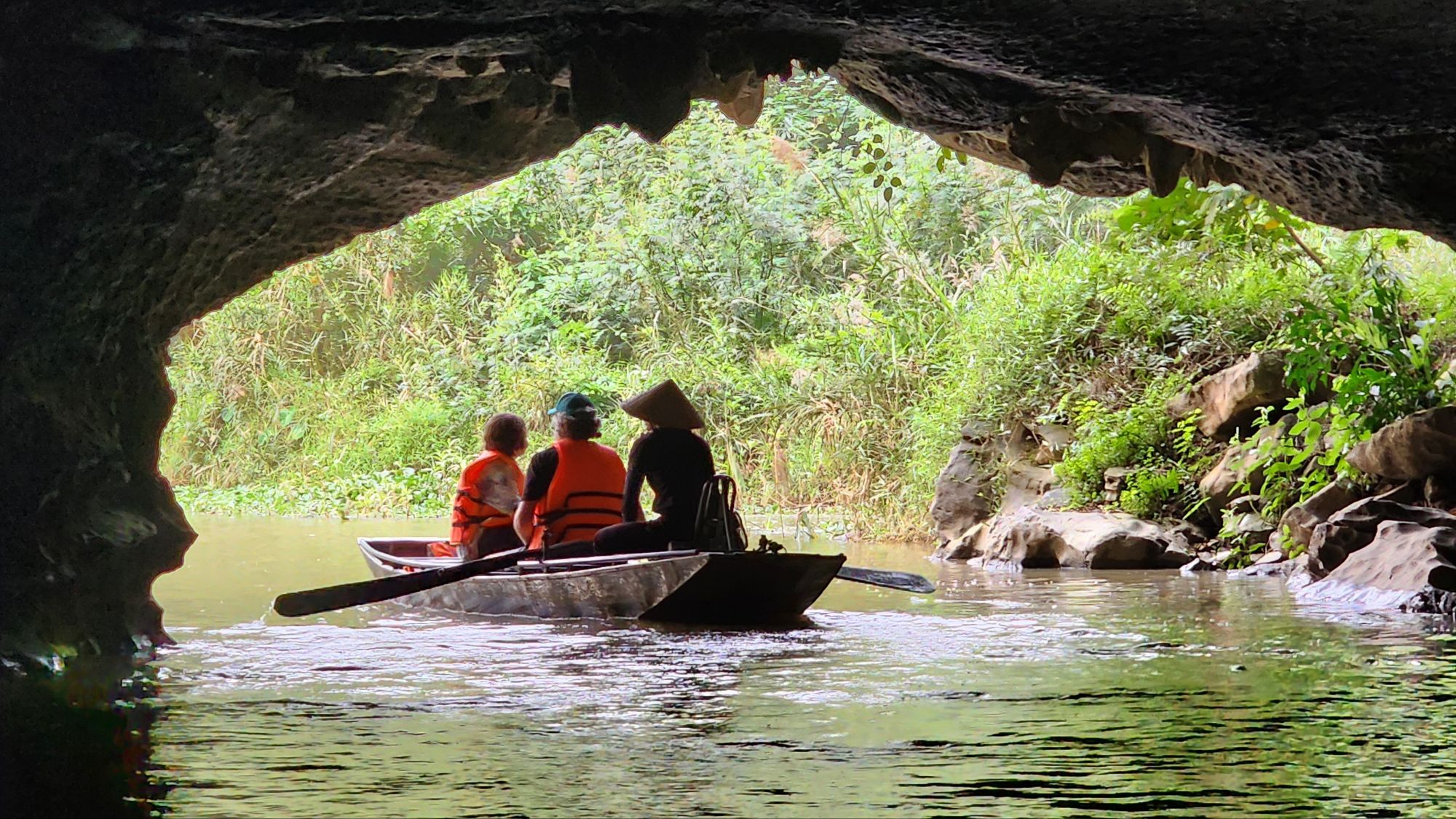
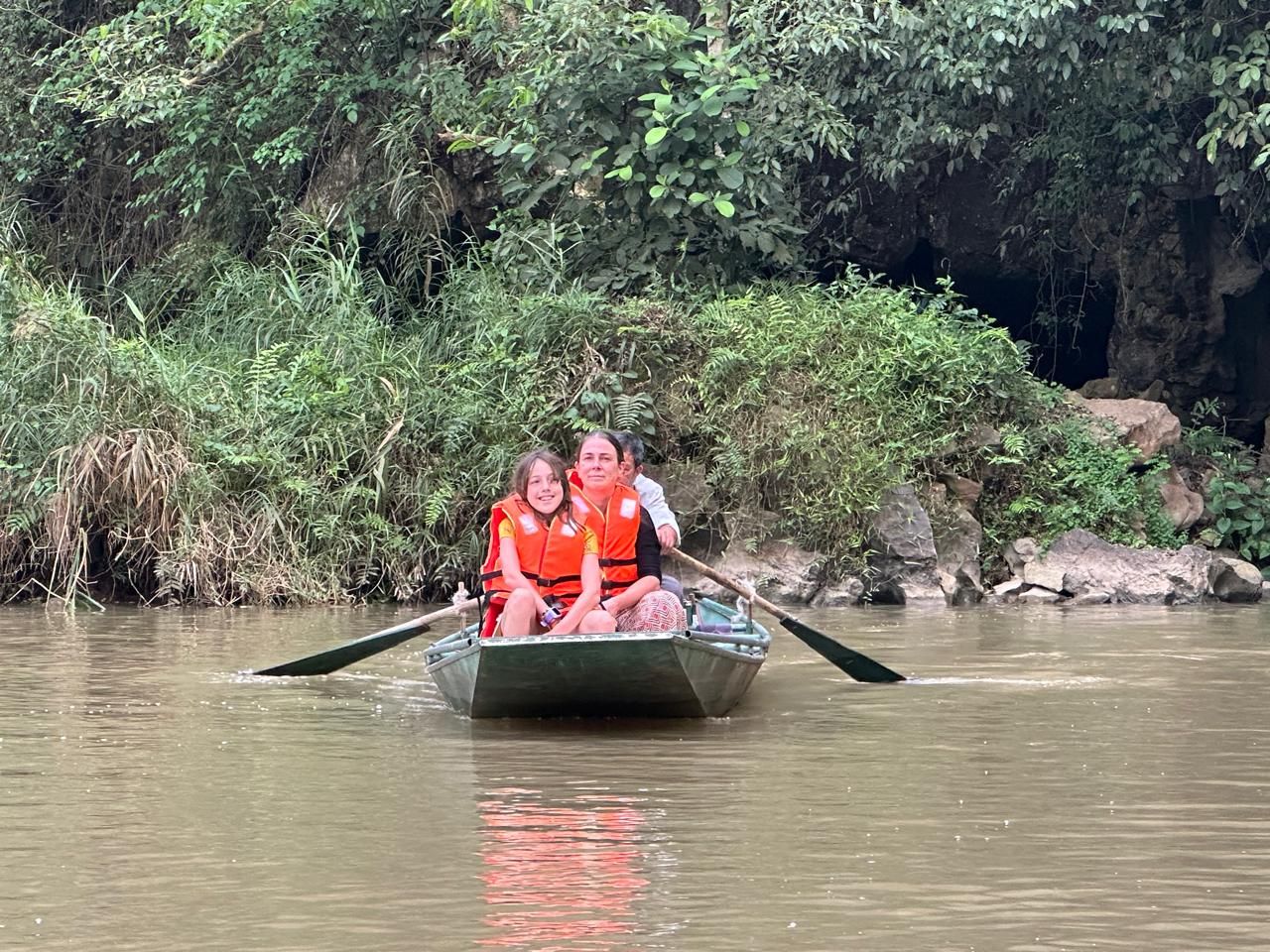
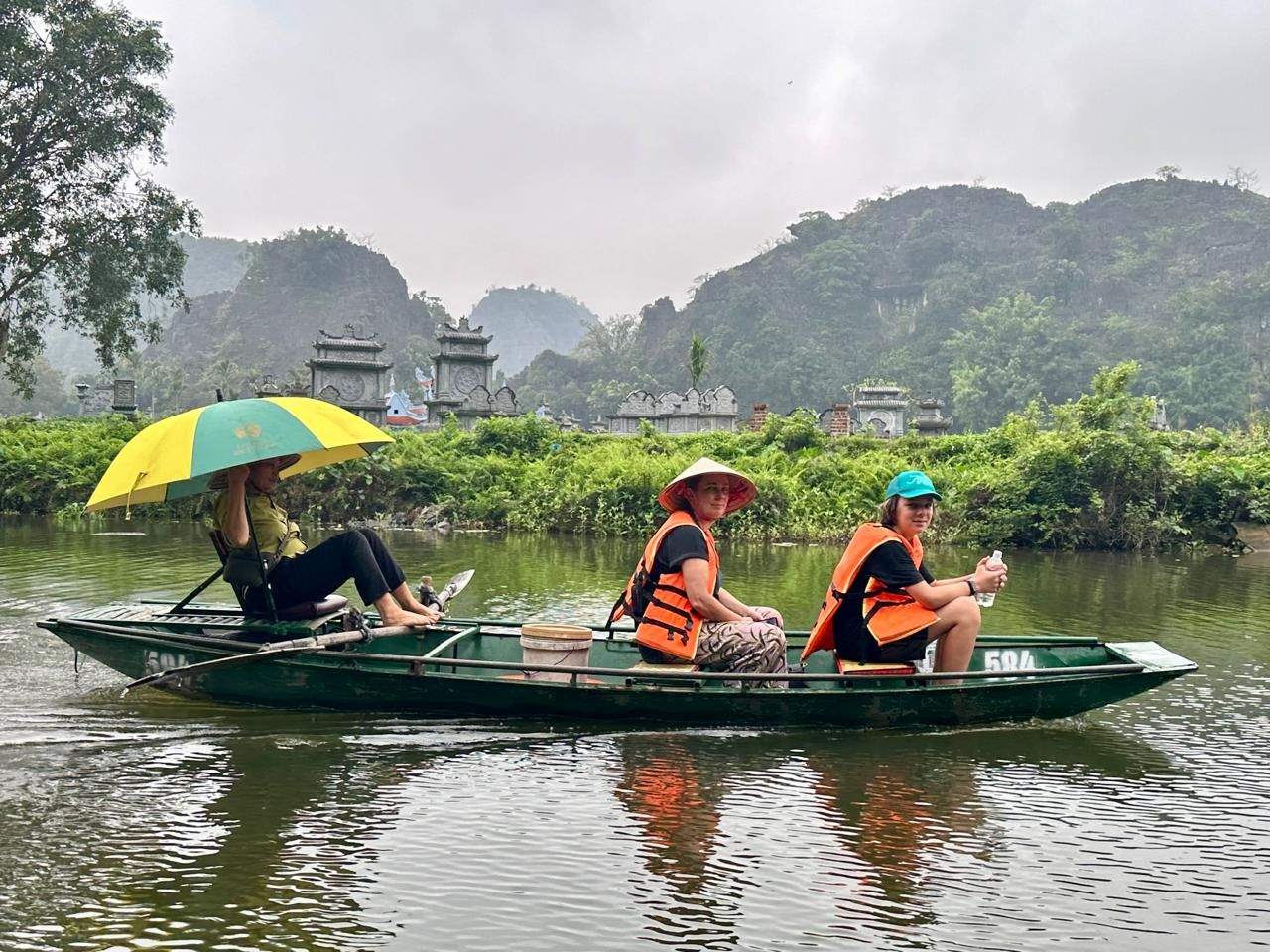
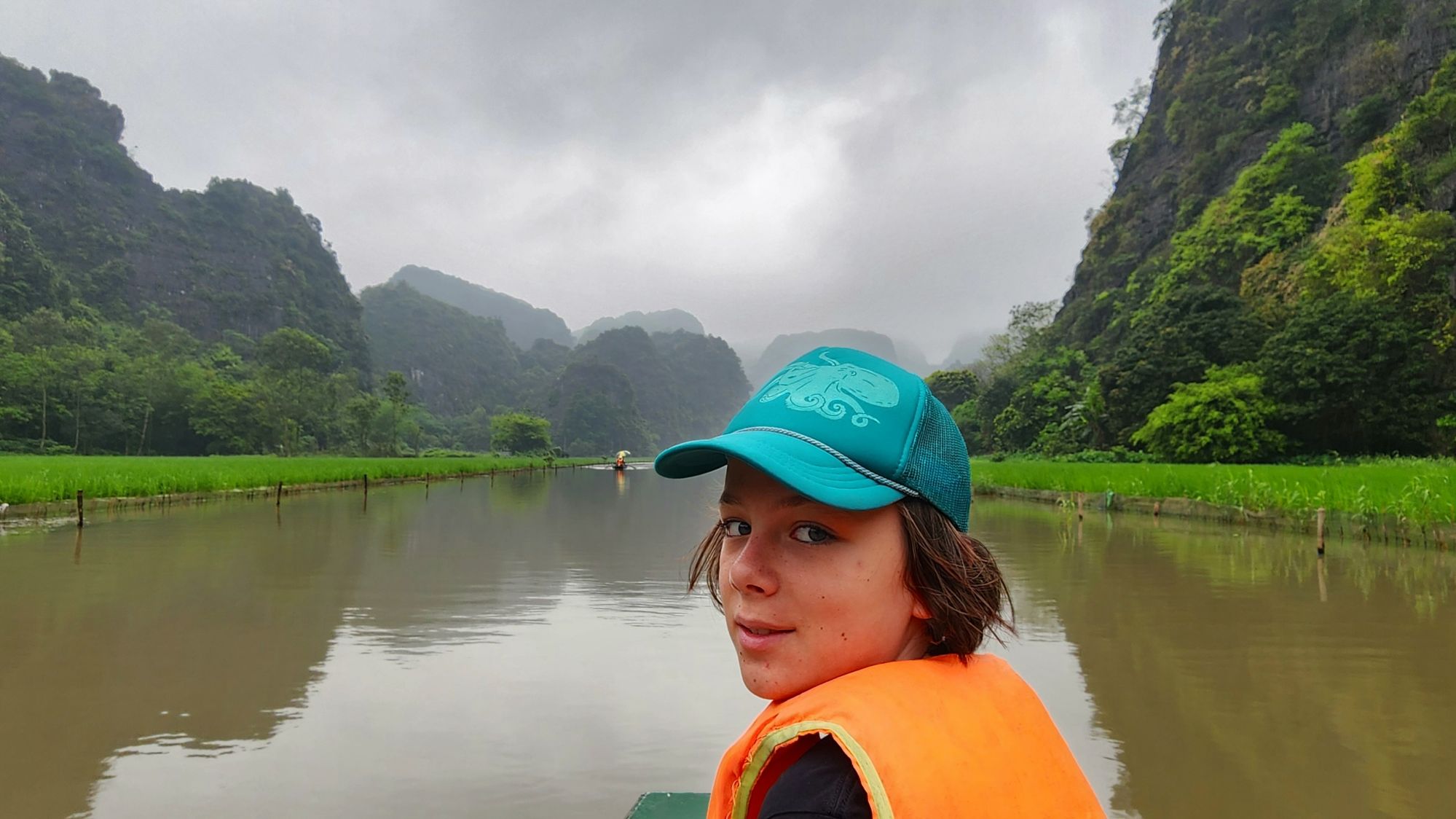
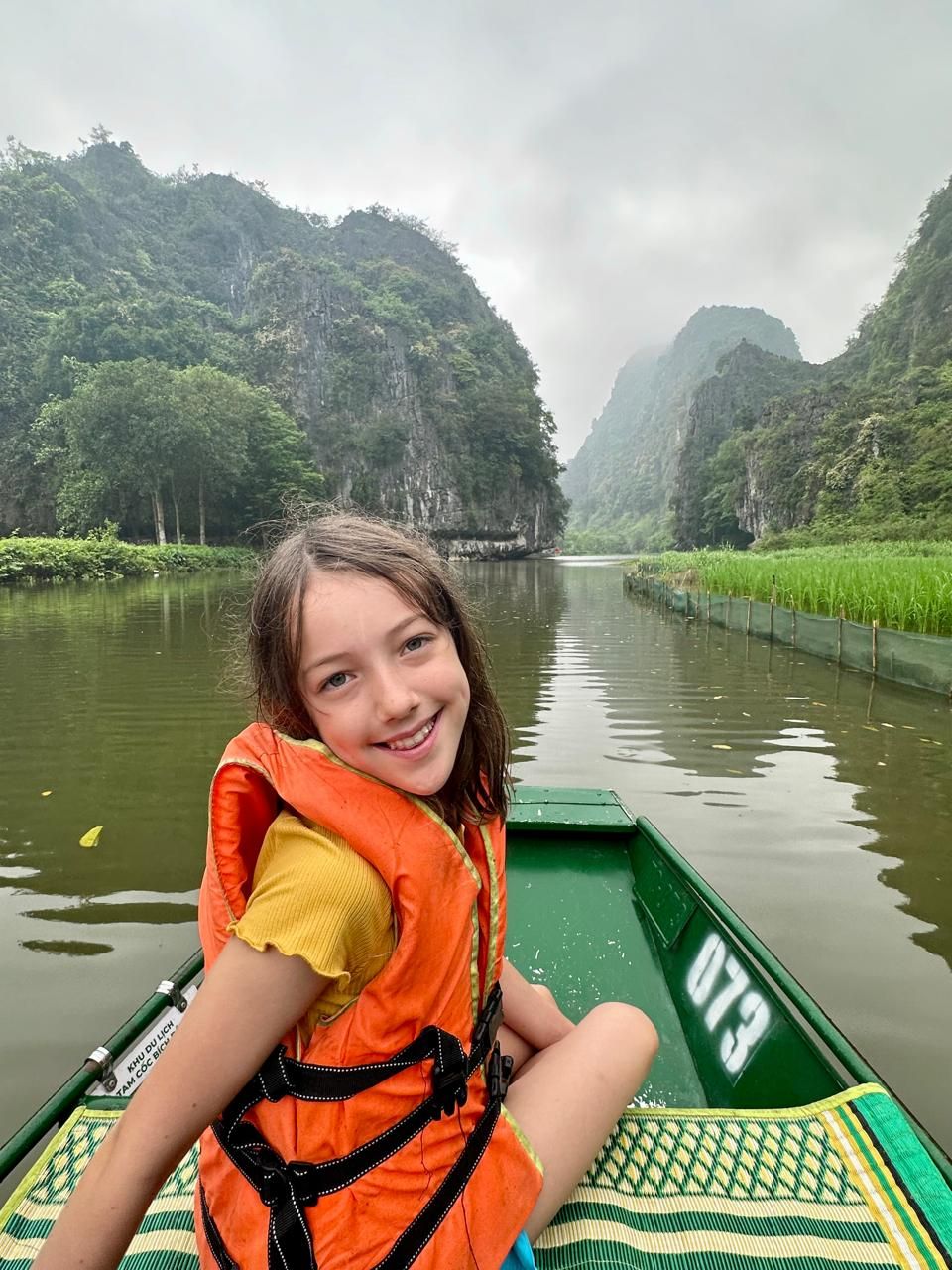
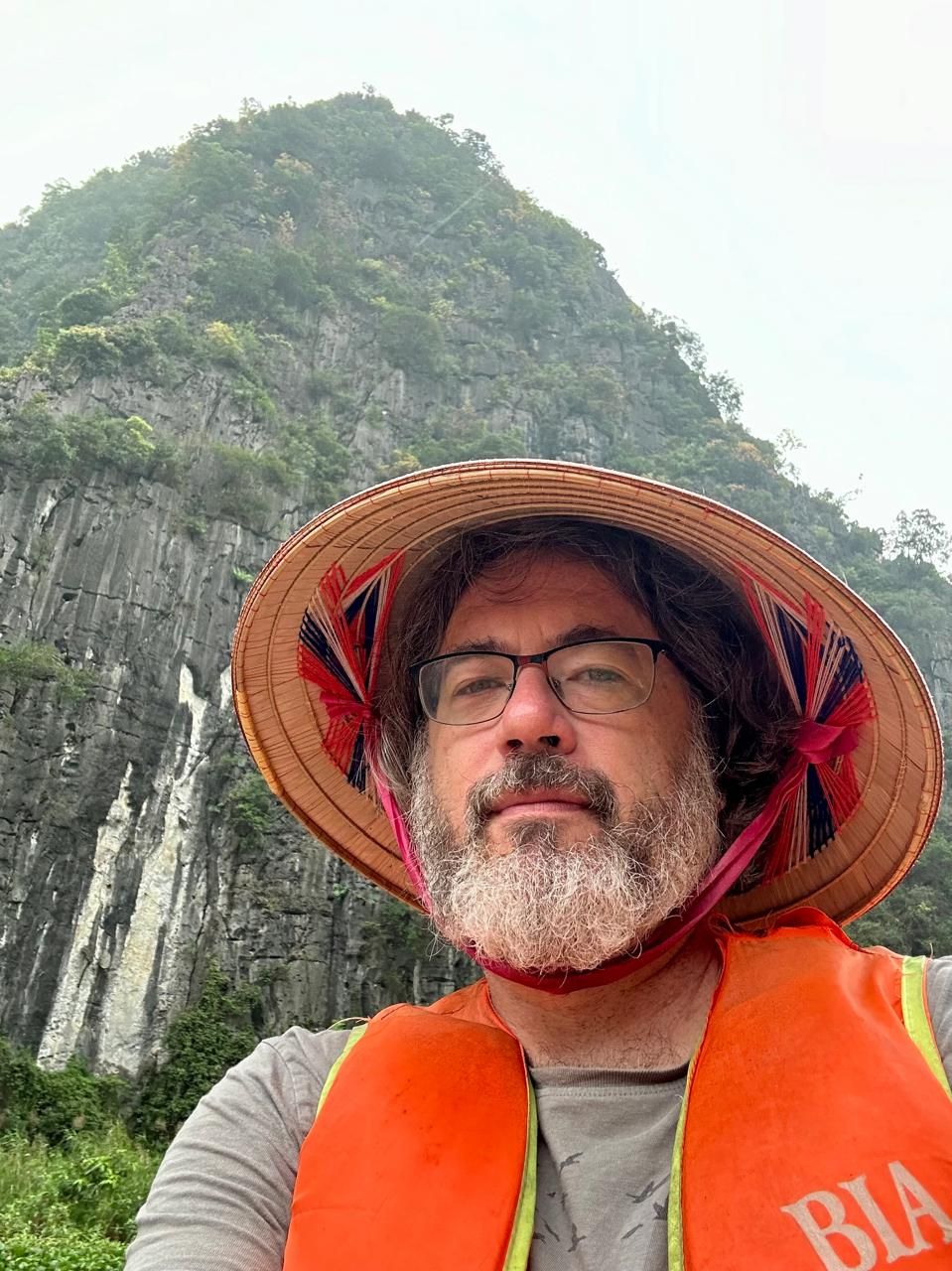
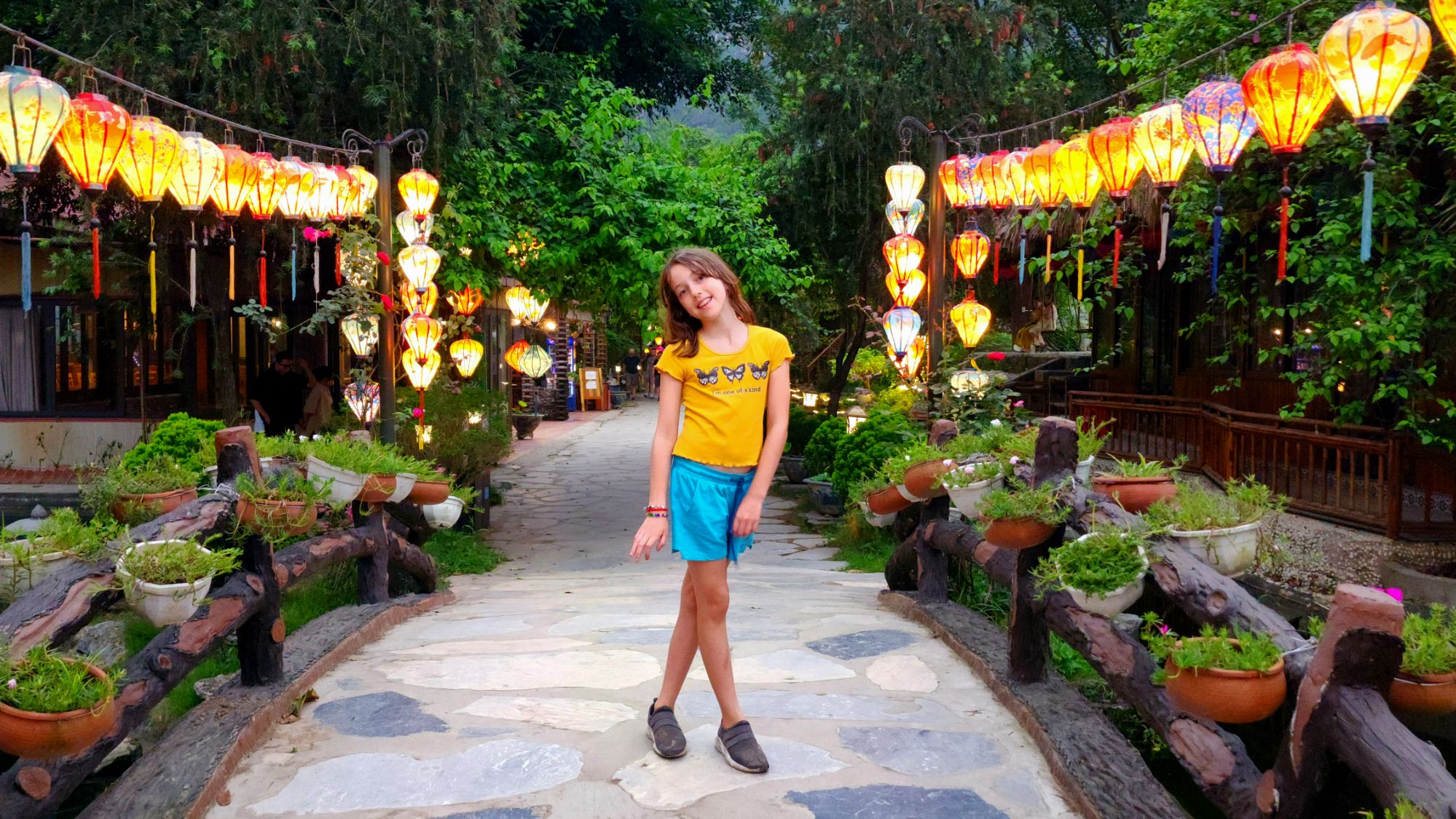
On our second day in Ninh Binh, we woke to misty rain but decided to continue with our plans to go on another boat ride to Tam Coc. Perhaps due to the weather, it was not as crowded as we had anticipated. Our guides invited us onto their sampans which they rowed with their feet. Our trip along the Ngo Dong River took us out of town, past small temples into a valley lined with tall limestone karsts and surrounded by rice paddies. Our boats passed through low-hanging caves adorned with stalactites and stalagmites before we u-turned and paddled back the way we came.
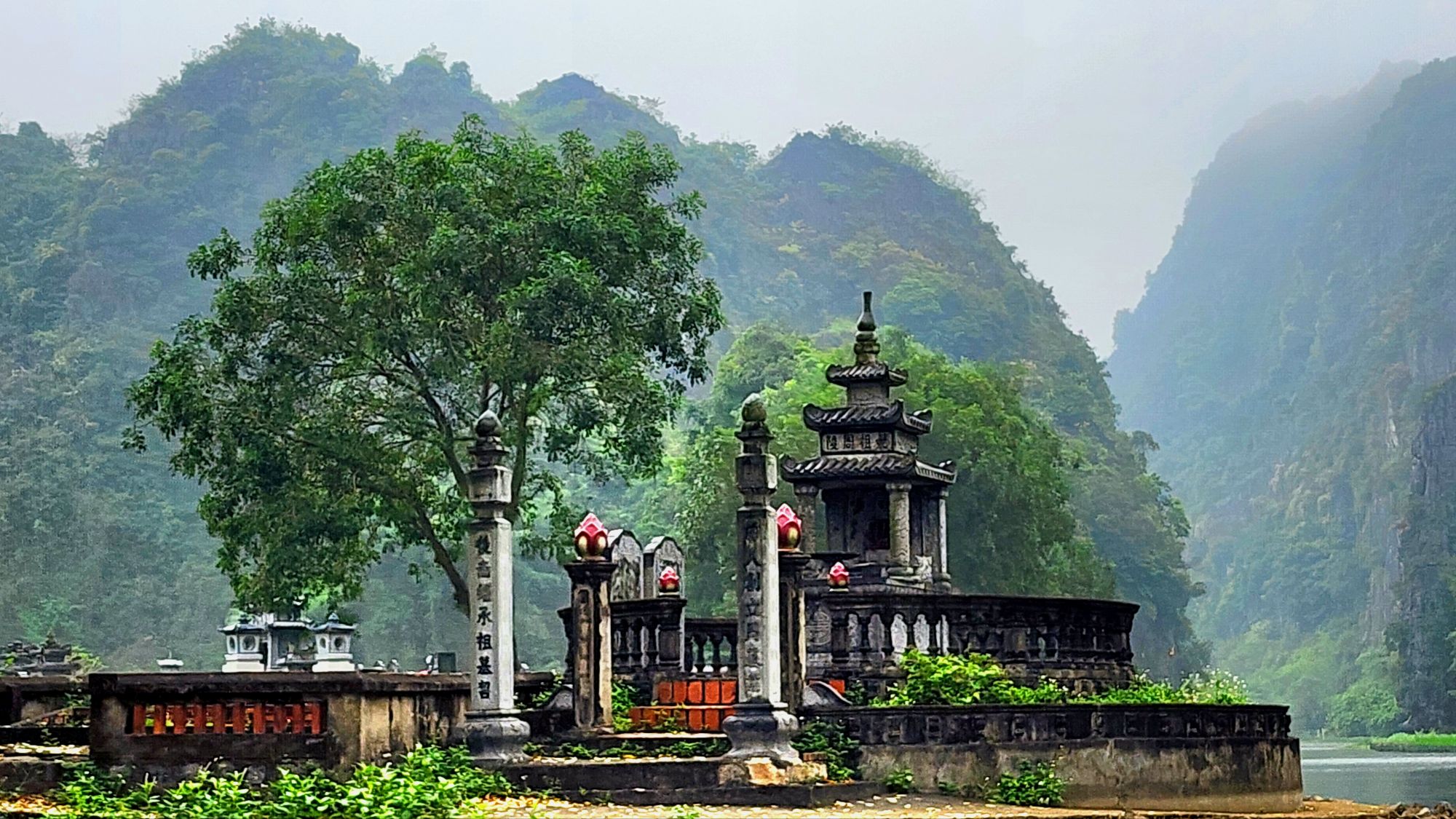
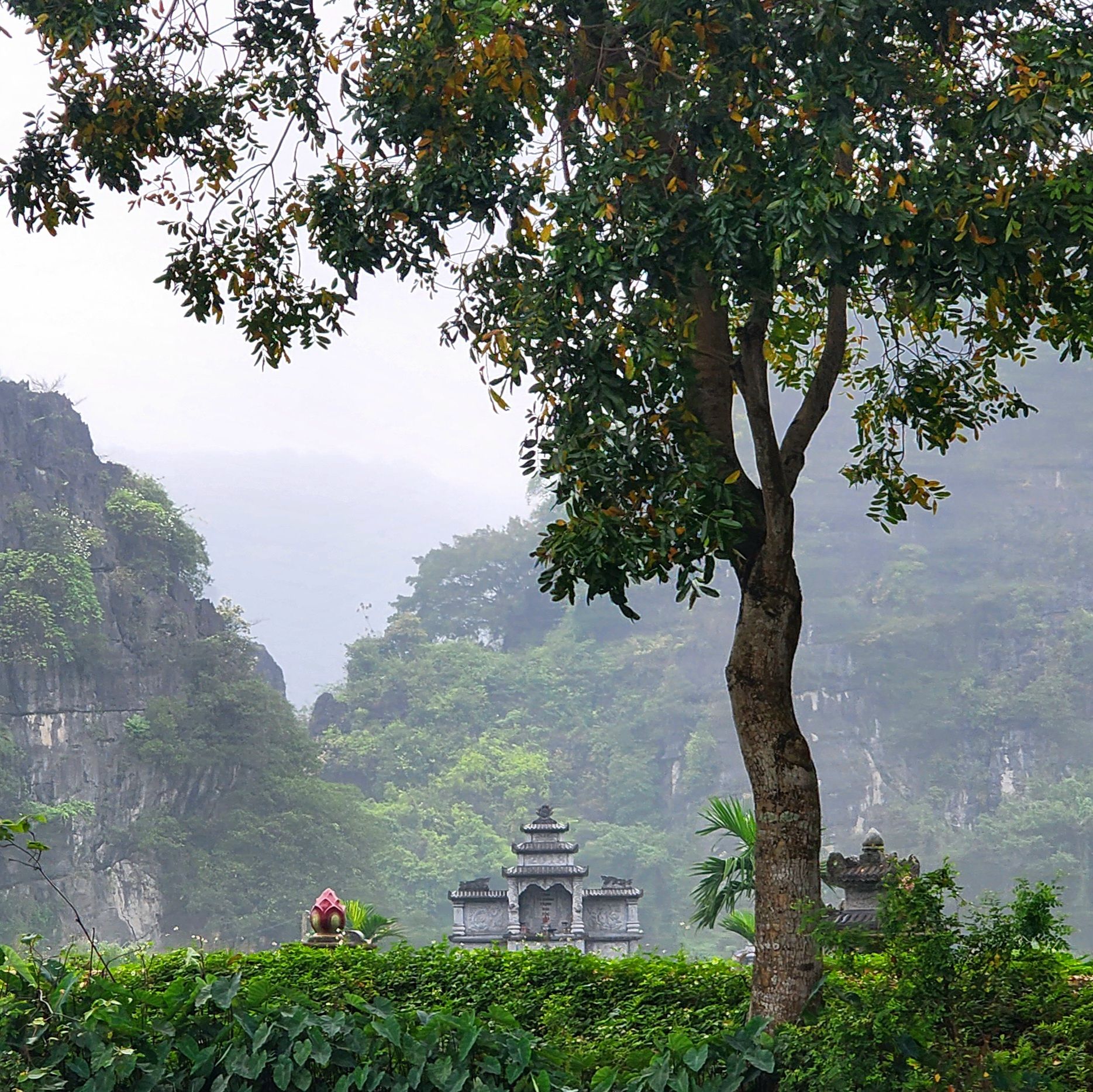
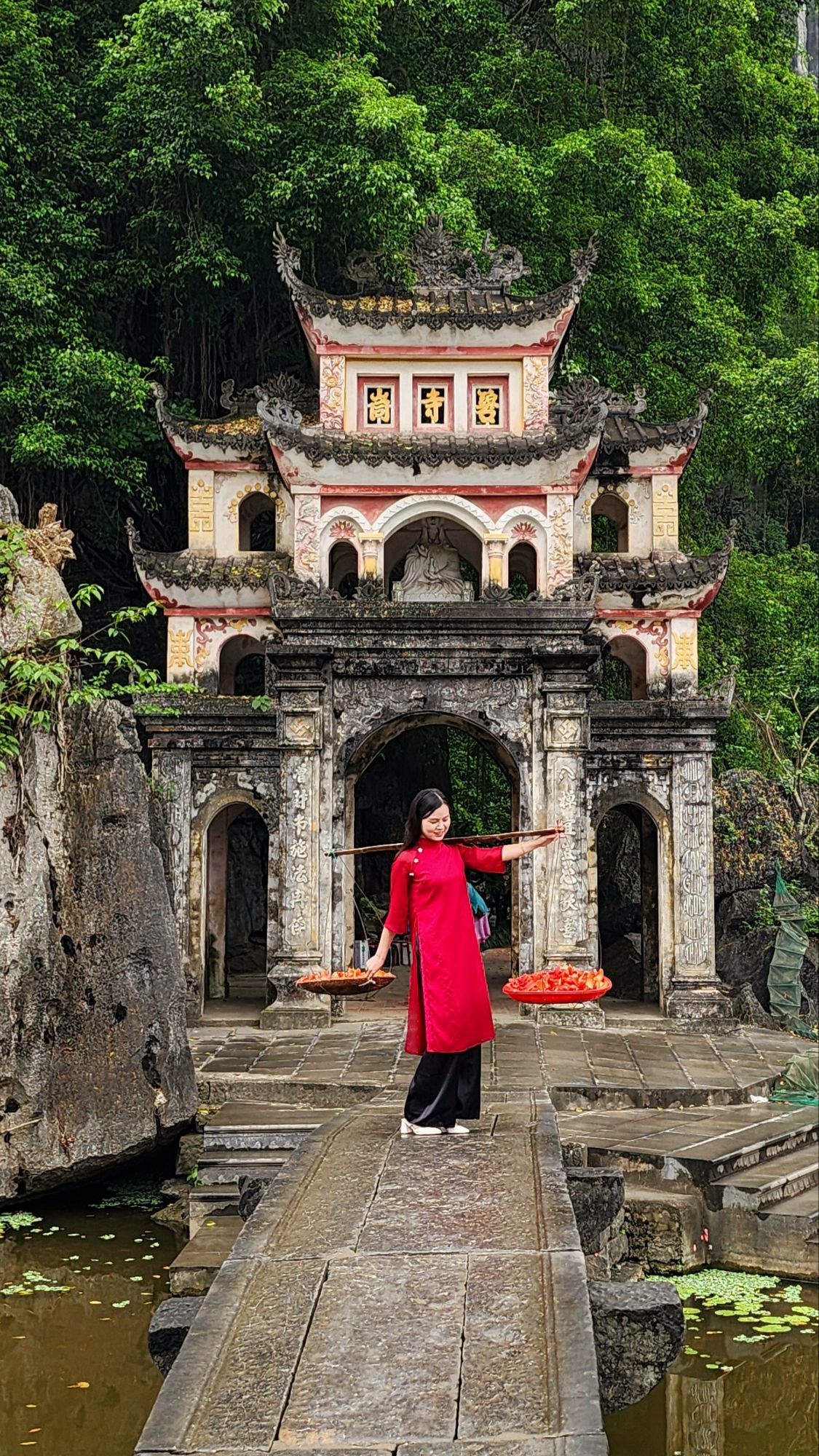
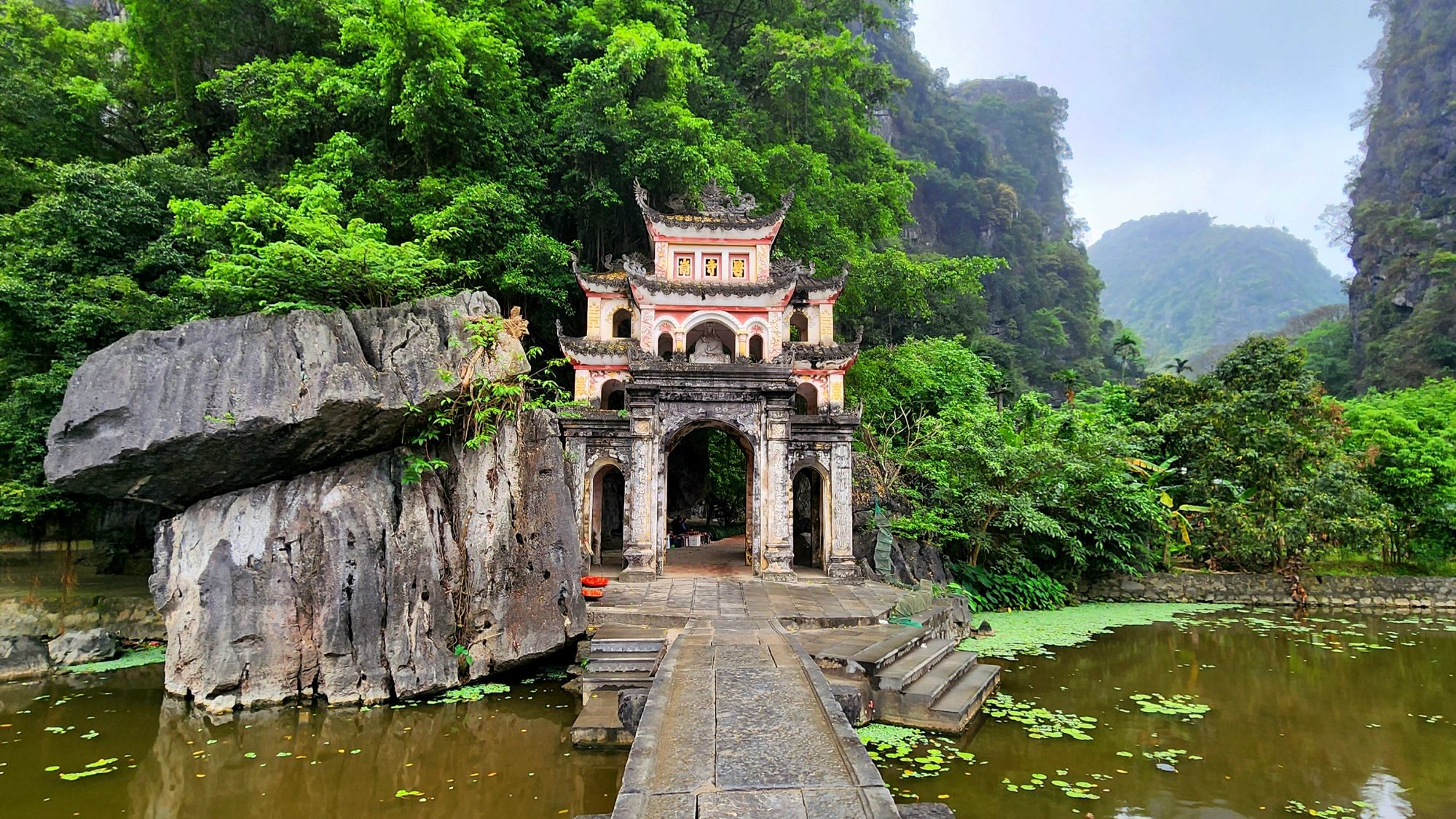
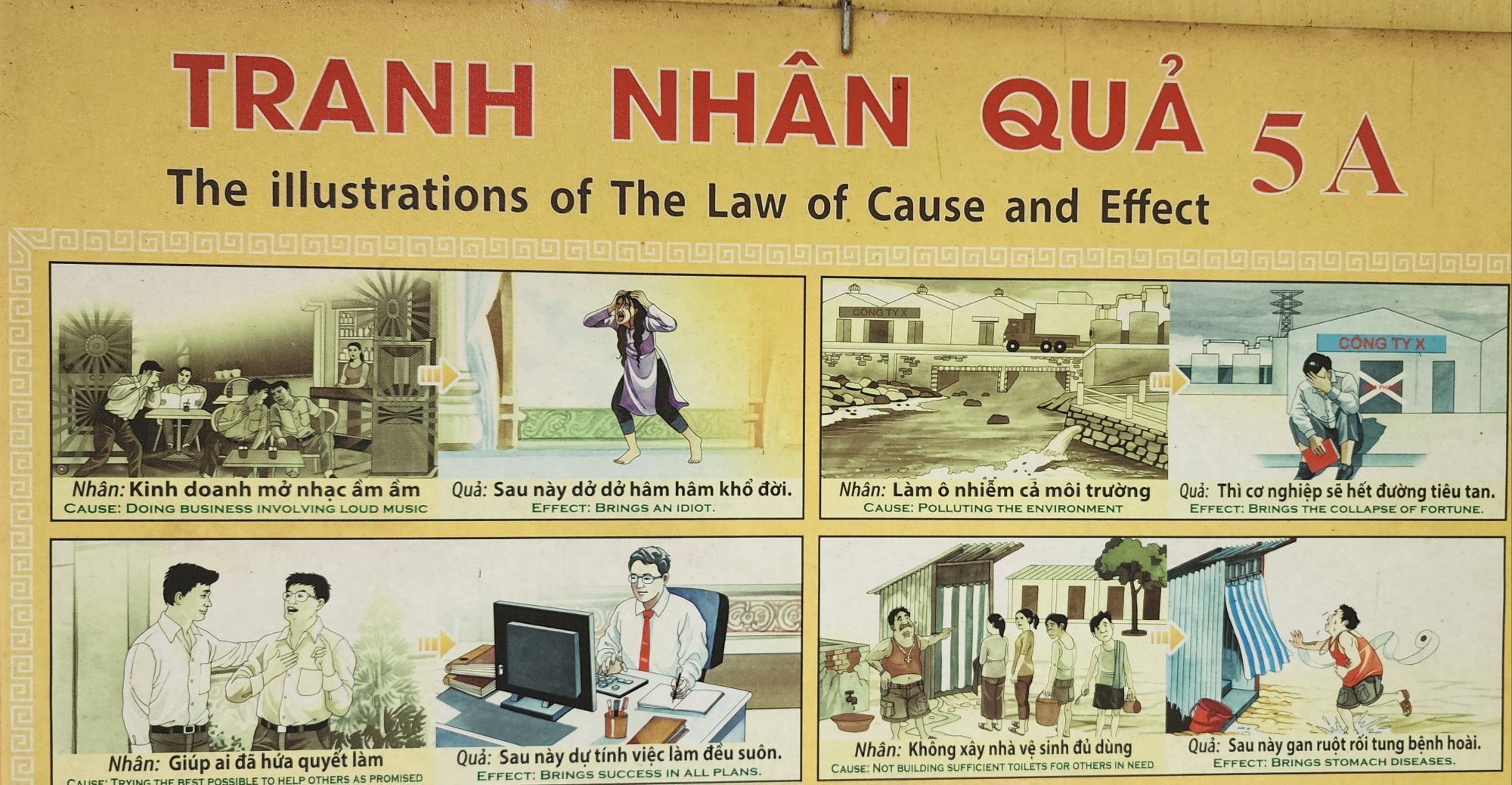
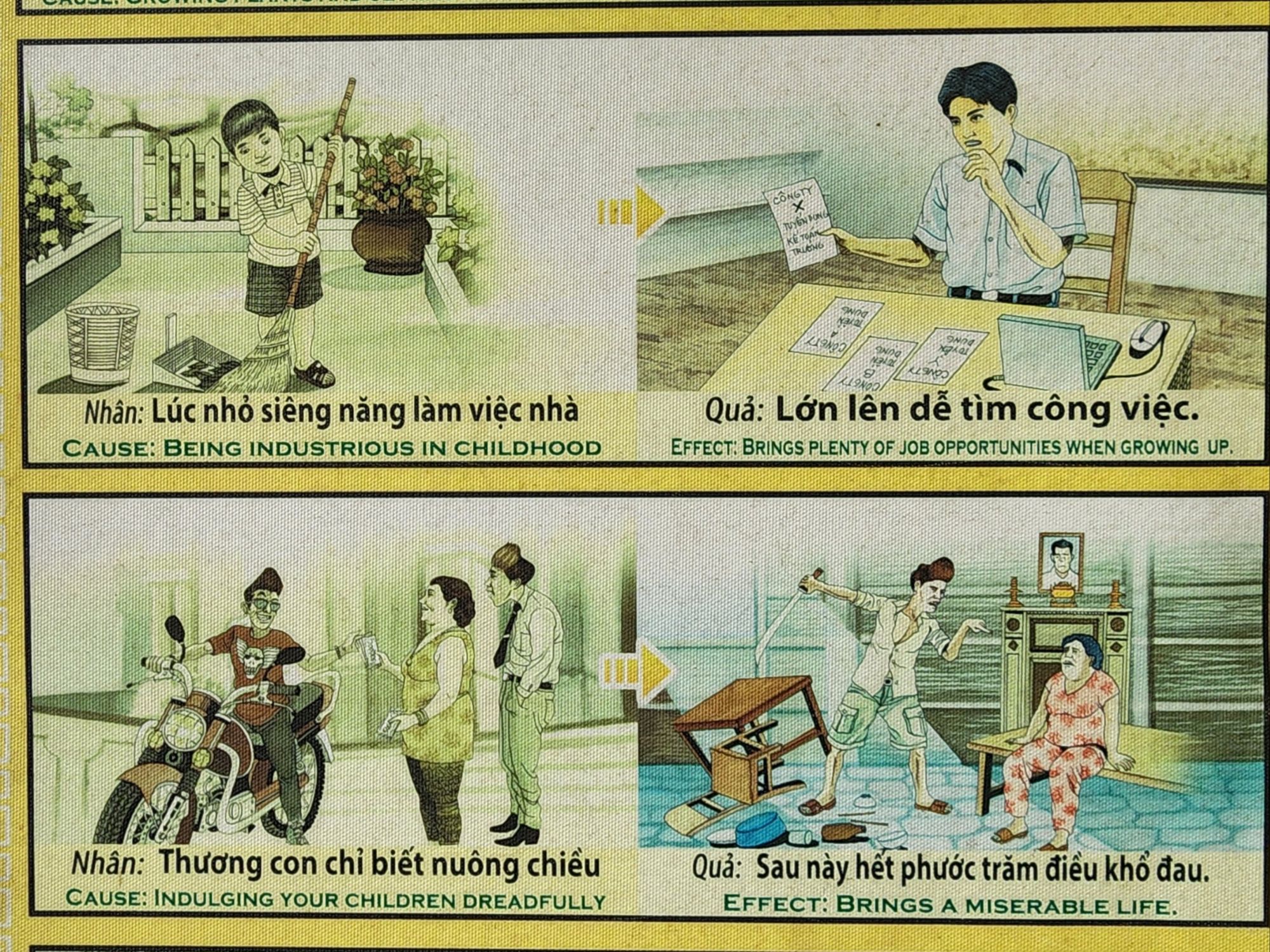
On the way back we stopped at the Bich Dong pagoda. This Buddhist complex was originally built in 1428 and then rebuilt and expanded in the 1700s to consist of three pagodas (lower, middle, and upper). By the middle pagoda was an area lined on both sides with long walls plastered with fascinating posters of “The illustrations of The Law of Cause and Effect.” They depicted various ways that karma could come back to you, for good or for bad. I will refrain from overly indulging my children and instead encourage their industriousness!
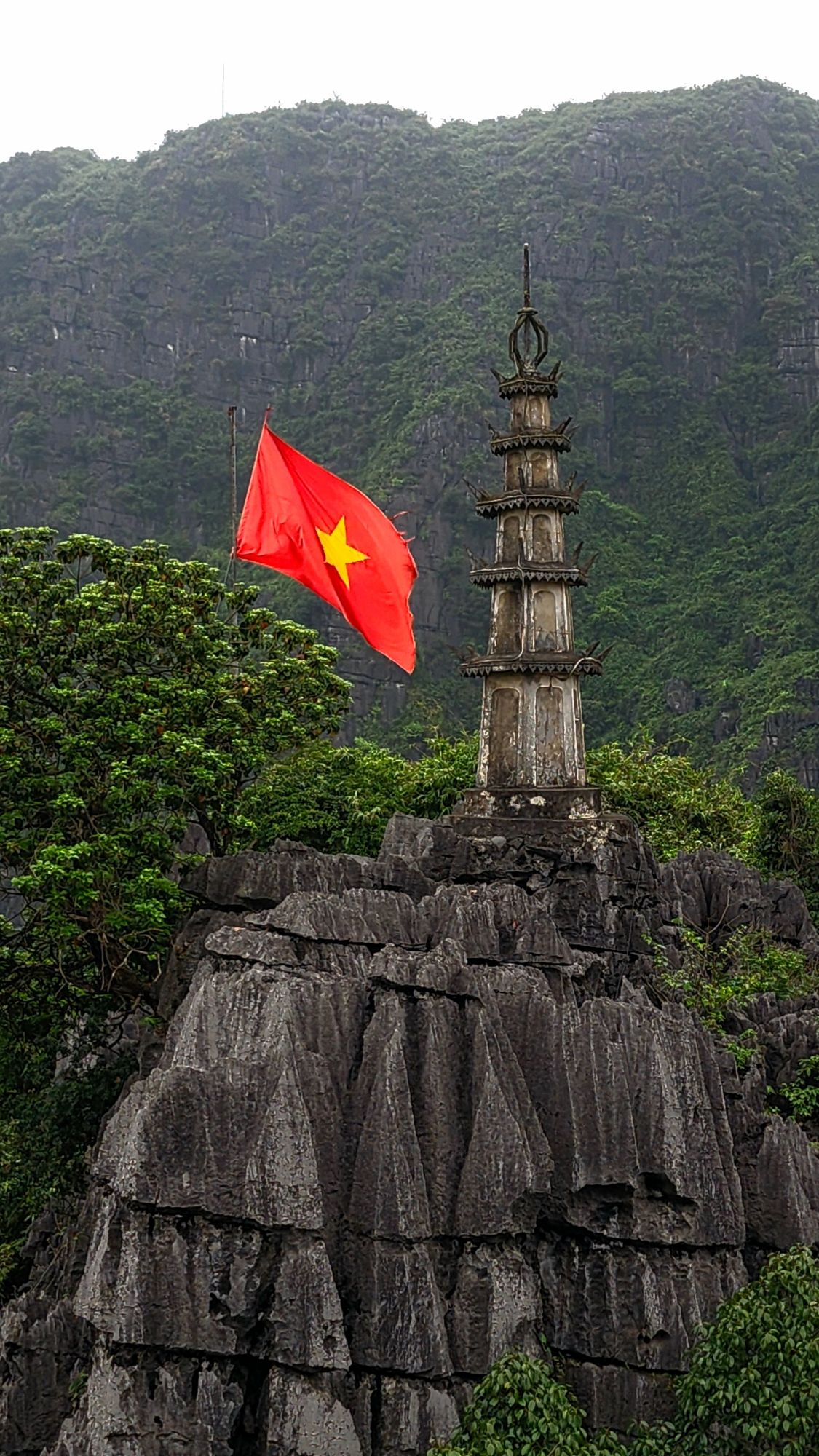
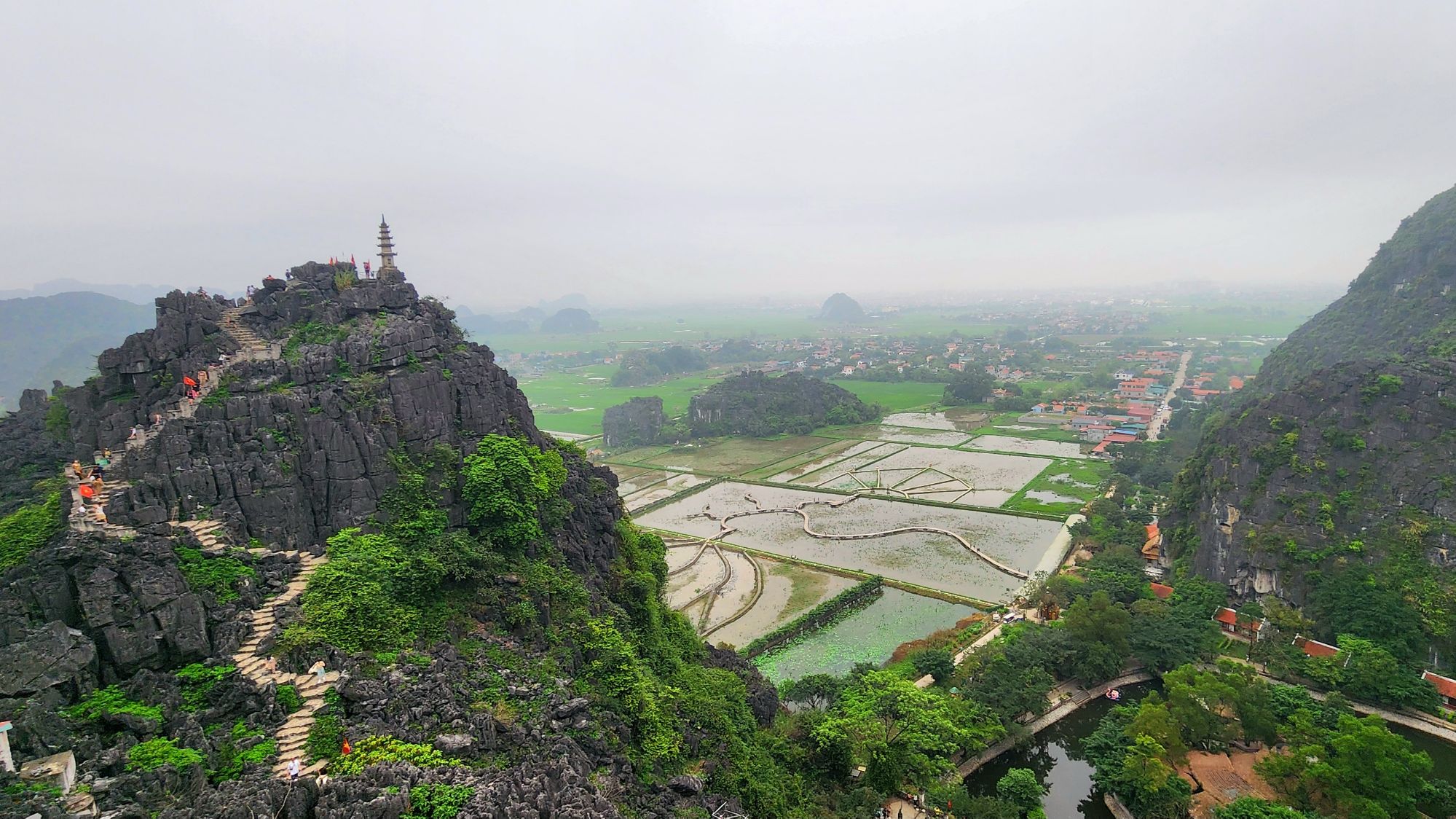
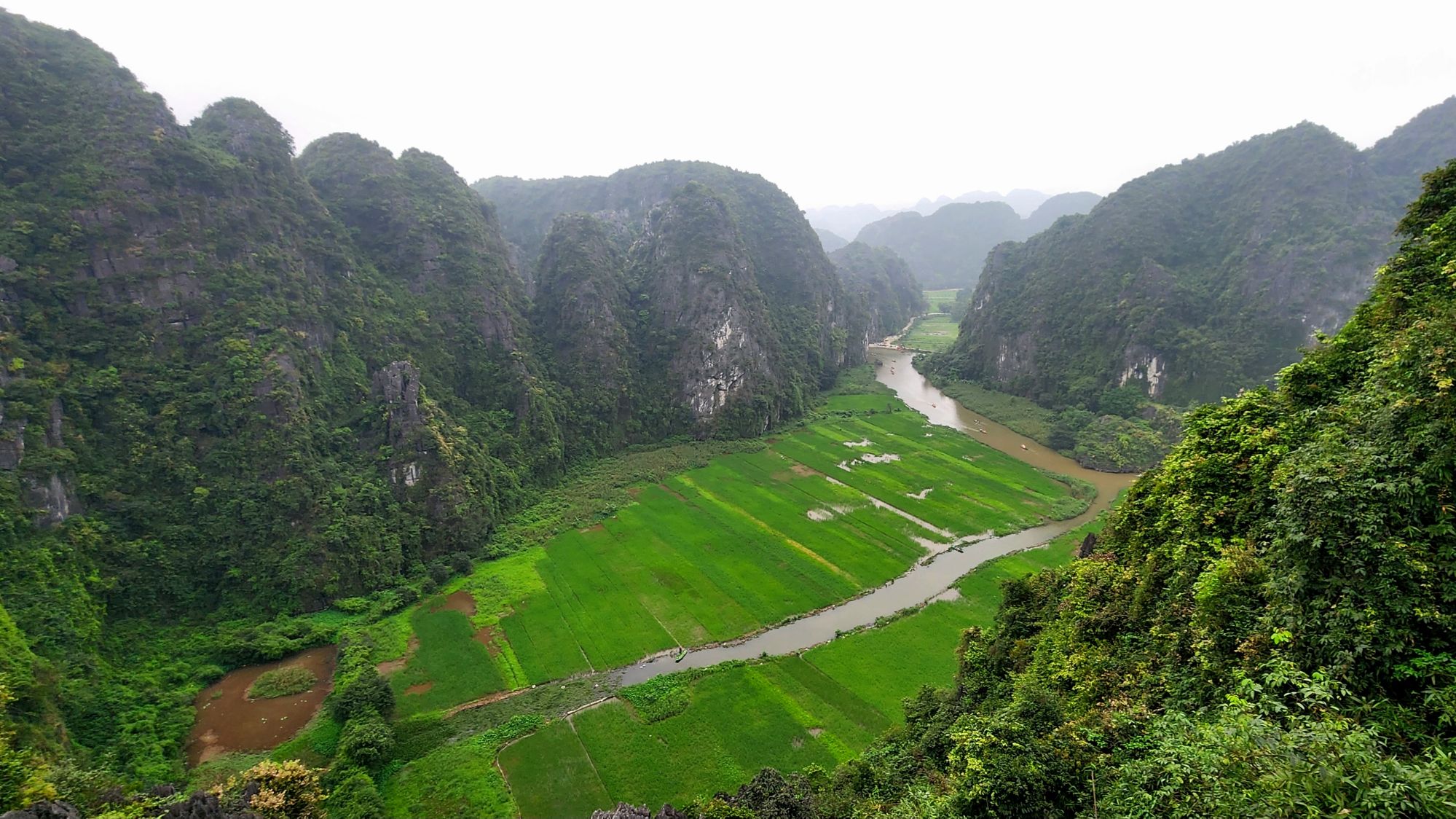
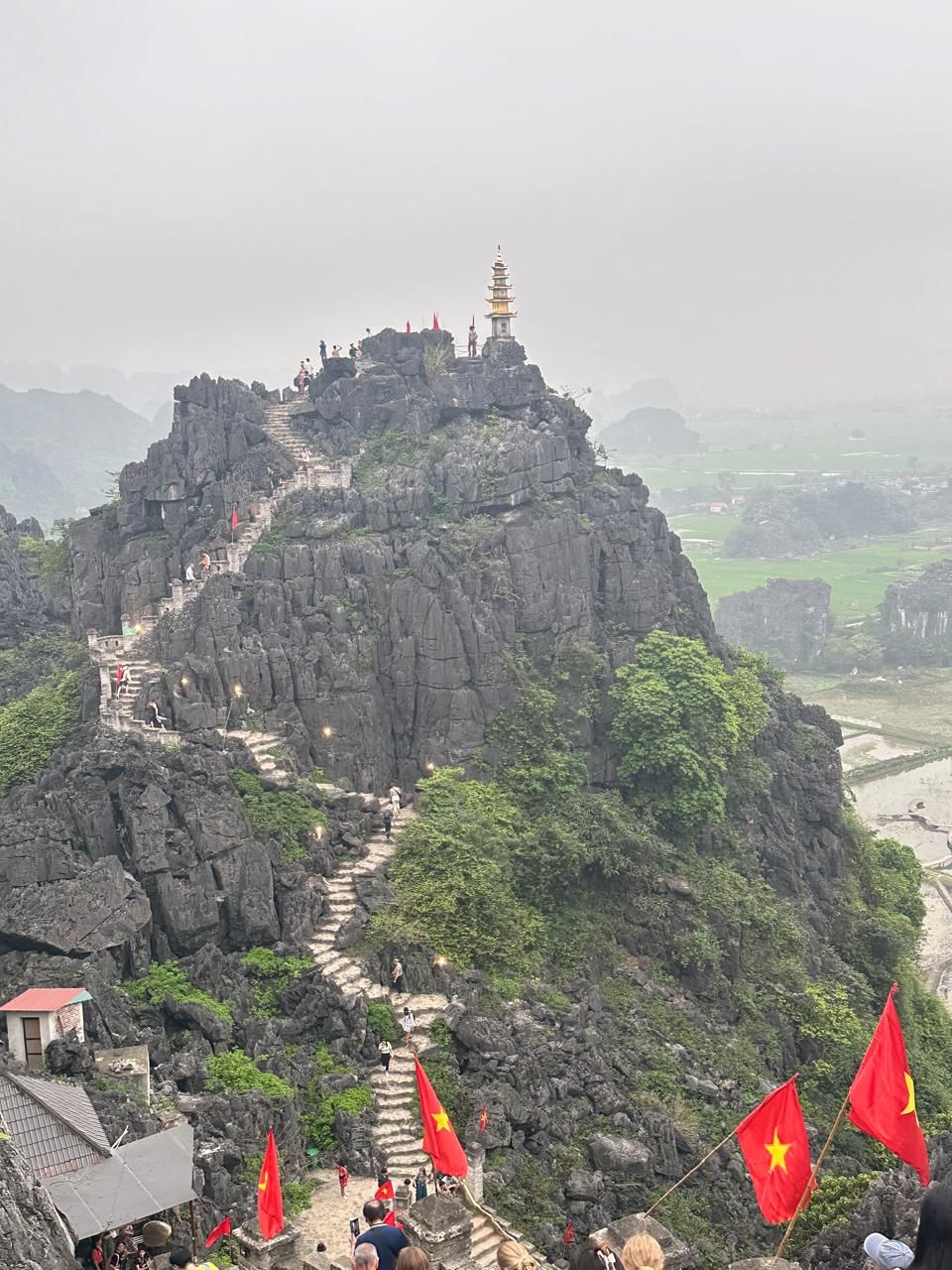
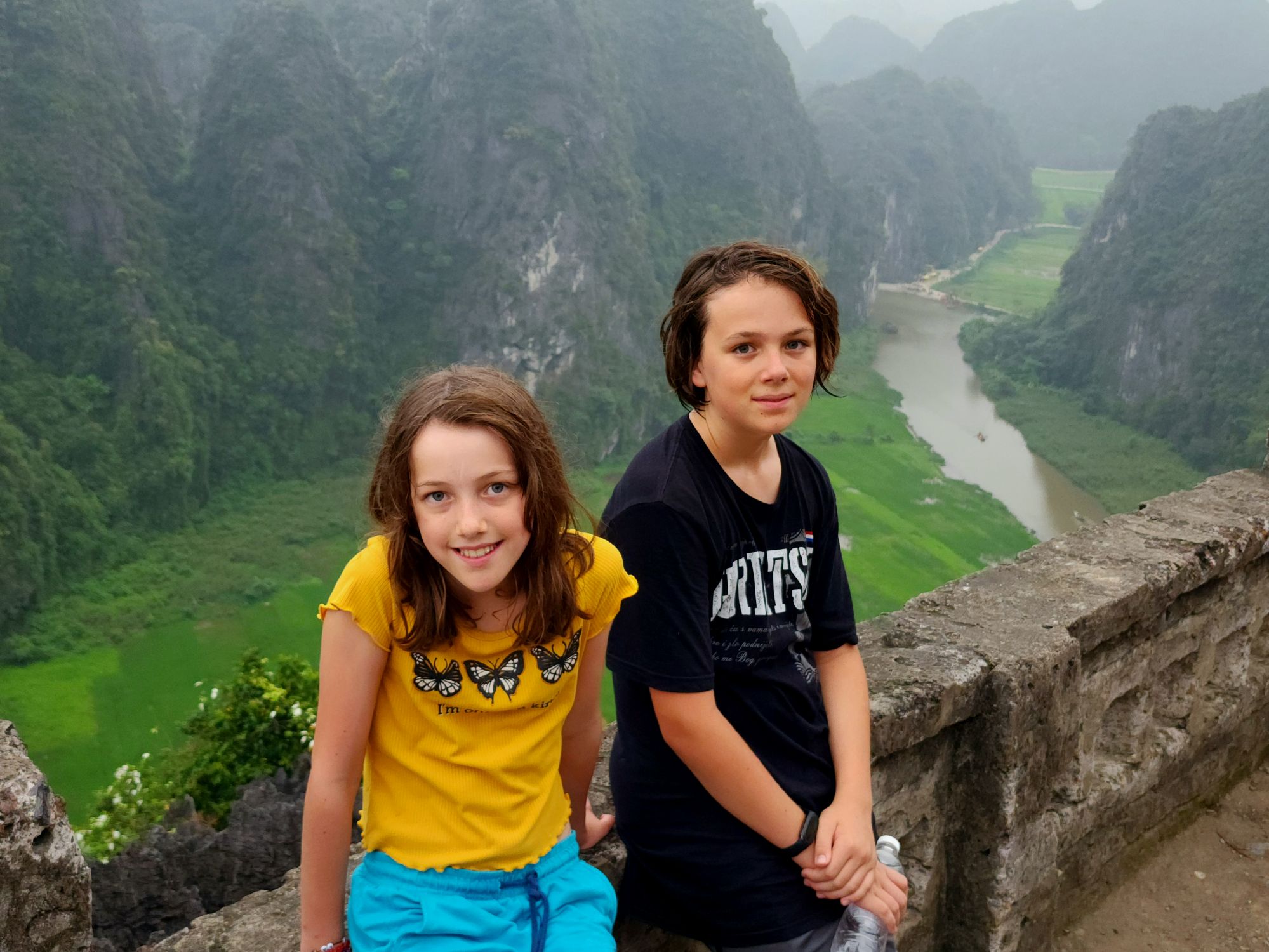
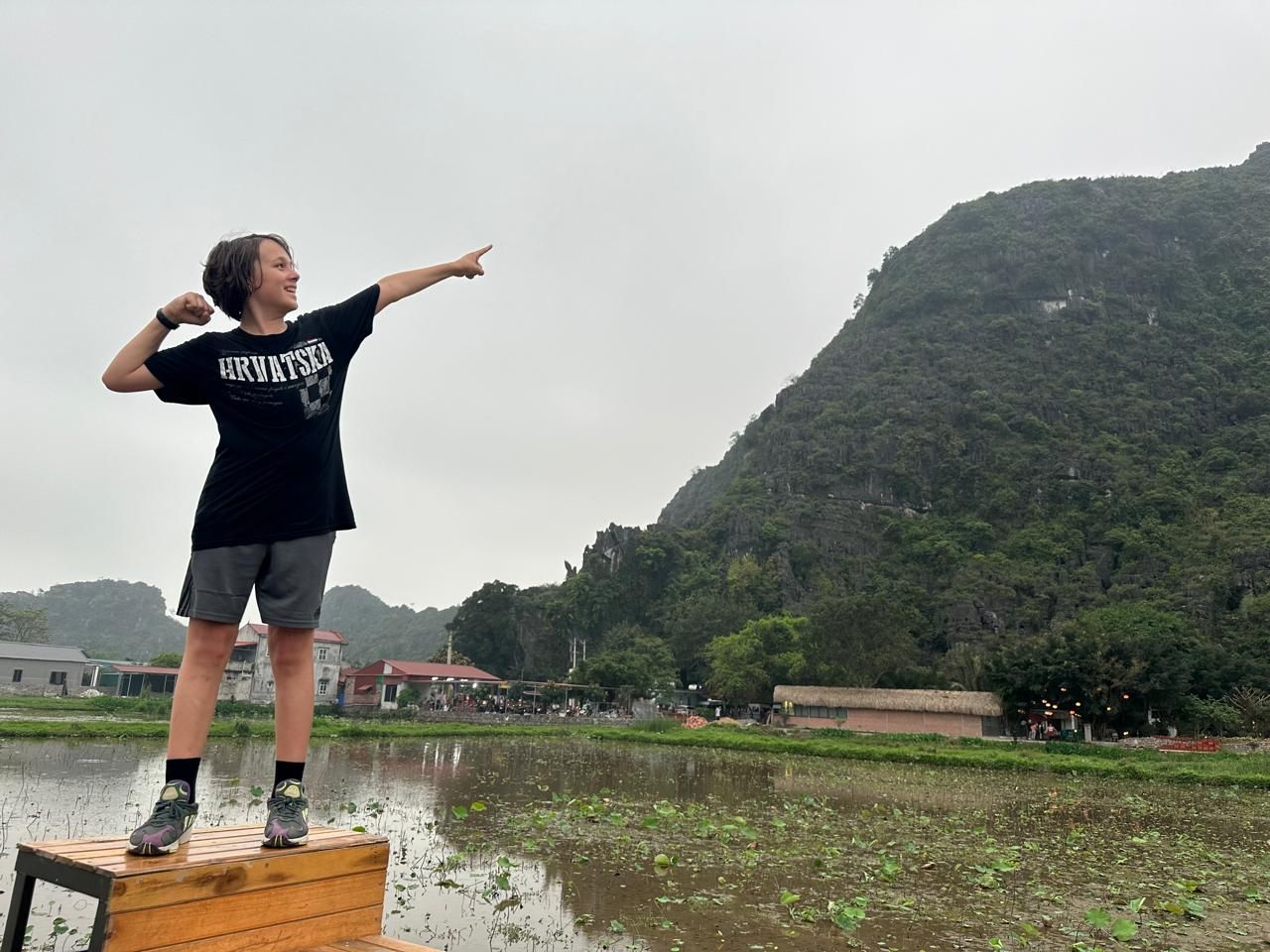
Fortunately, over our two days in Ninh Binh, my foot healed and we could hike to the top of Hang Mua on our last evening. It was near our homestay, so we hopped on bikes and rode to the entrance where we joined throngs of other tourists to climb the approximately 500 steps to the top (Mila counted them all as she climbed). Though quite crowded, we enjoyed the atmosphere and the spectacular views from the top.
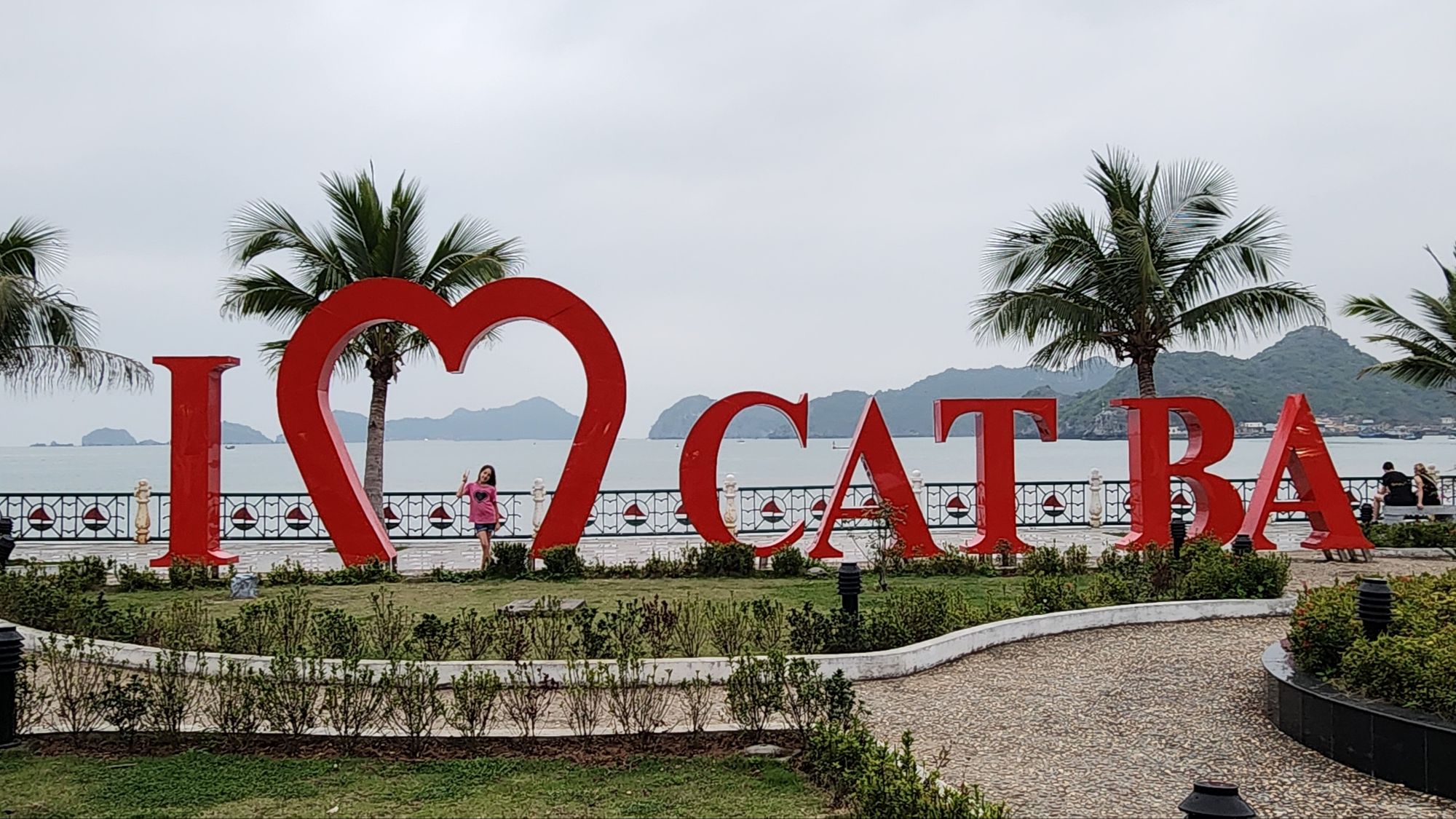
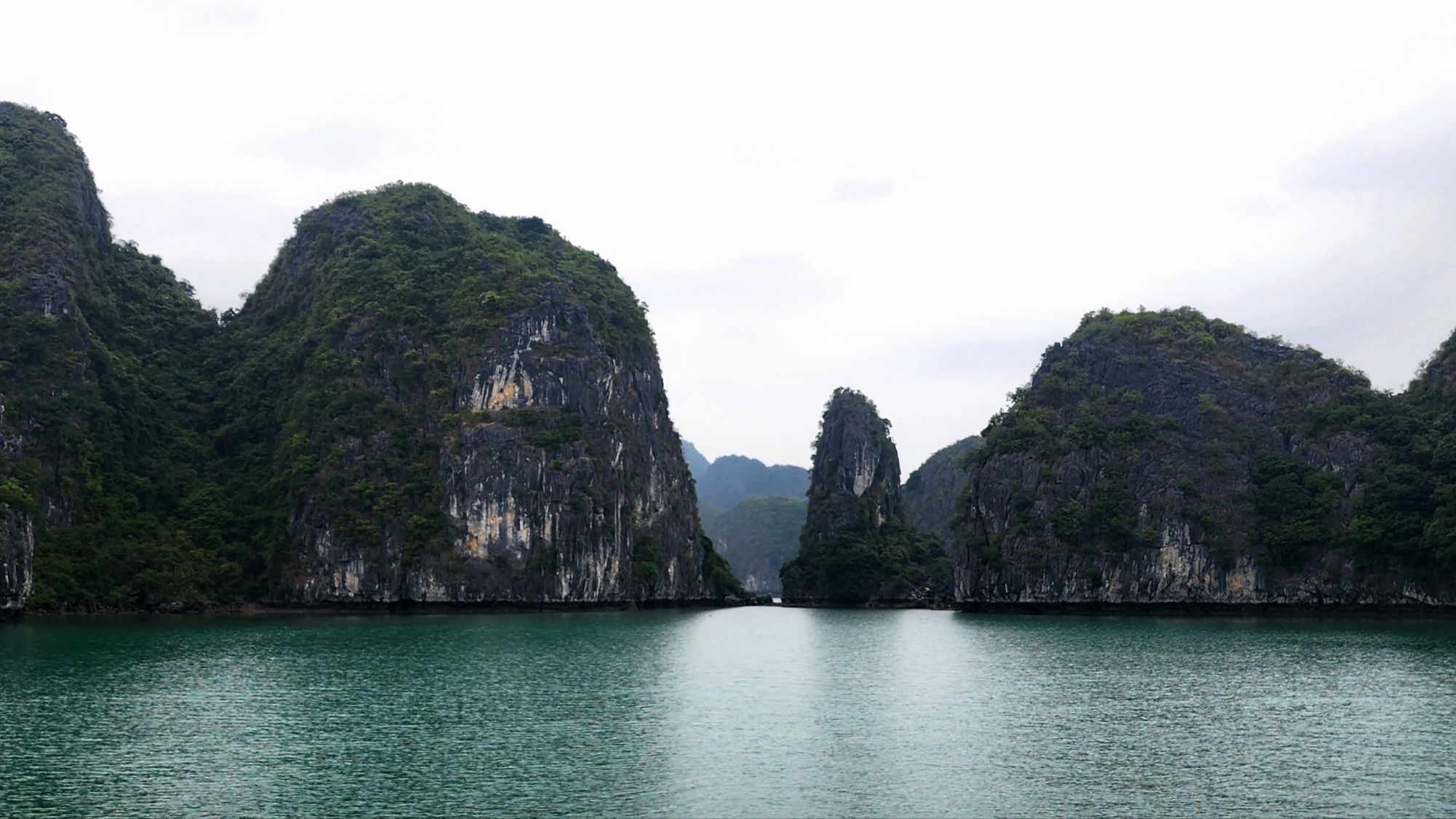
When planning our trip we read a lot about Ha Long Bay, famous for its emerald waters and towering rocky islands. Though it sounded beautiful, we had read that overcrowding and pollution can detract from the experience. We were also concerned about taking Mila on an overnight cruise due to her motion sickness. We opted instead to head to Cat Ba Island, the largest island in the bay, accessible by ferry. The island is home to a large national park, beaches, and a port for daytime or overnight trips to Halong Bay.
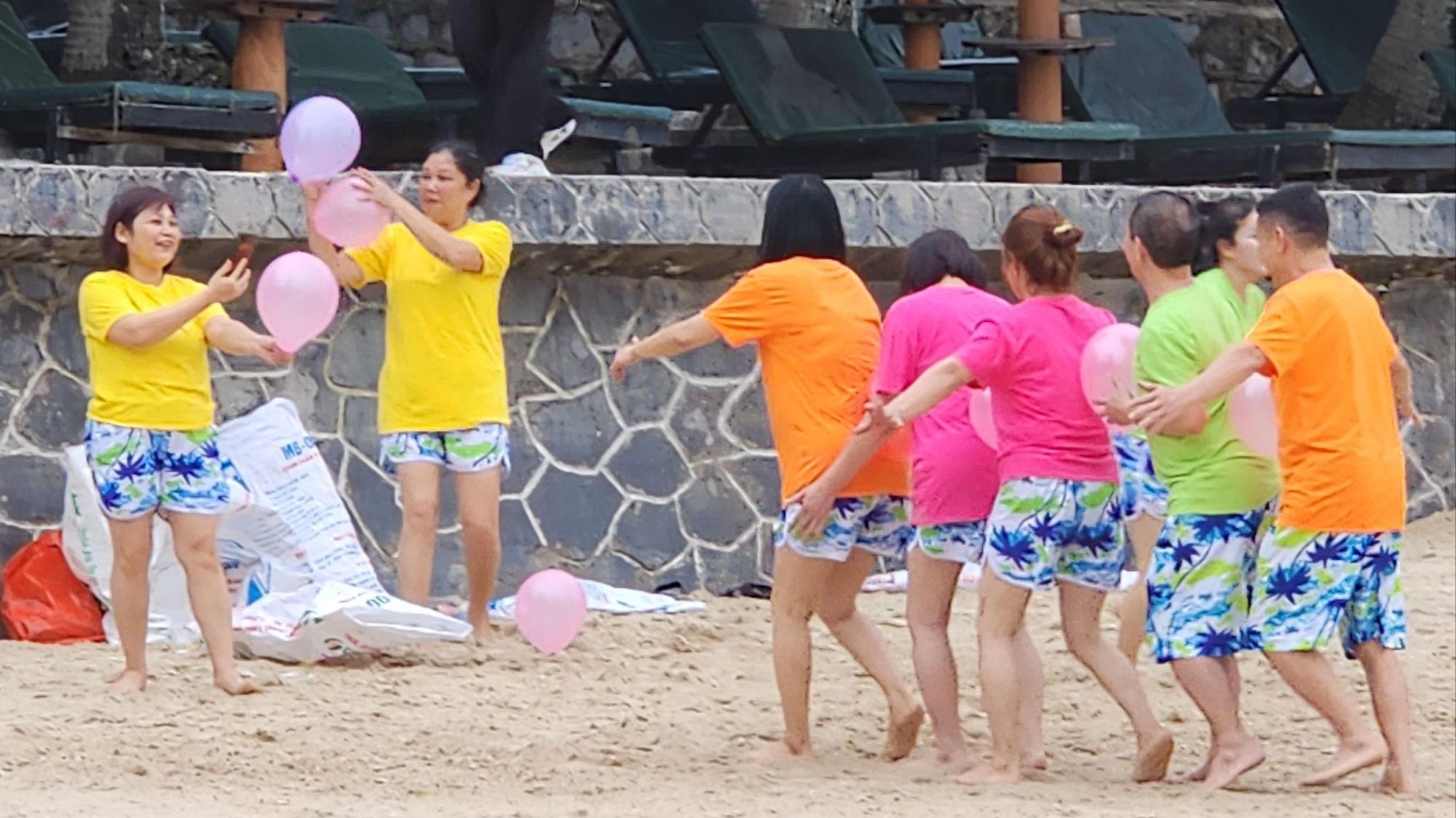
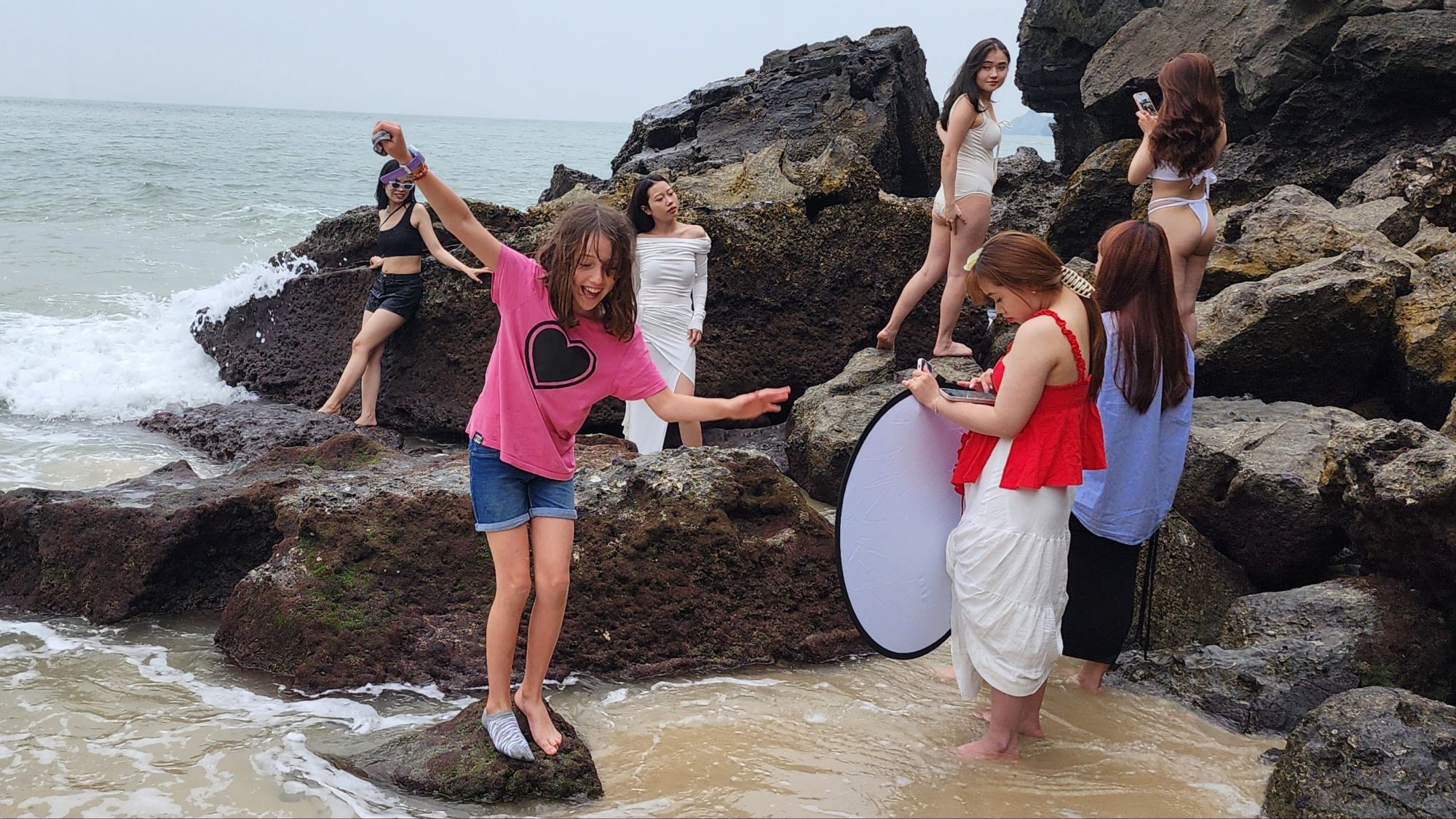
I had hoped to do a night kayaking trip on our first night to see bioluminescent plankton, but sadly the trips were cancelled on both nights that we were in Cat Ba. Instead, Mila and I went for a long walk along the coastline stopping at two beaches loaded with visitors including a few groups of employees on corporate retreats engaged in animated team-building exercises and women dressed in fancy outfits taking glamour shots on the rocks.
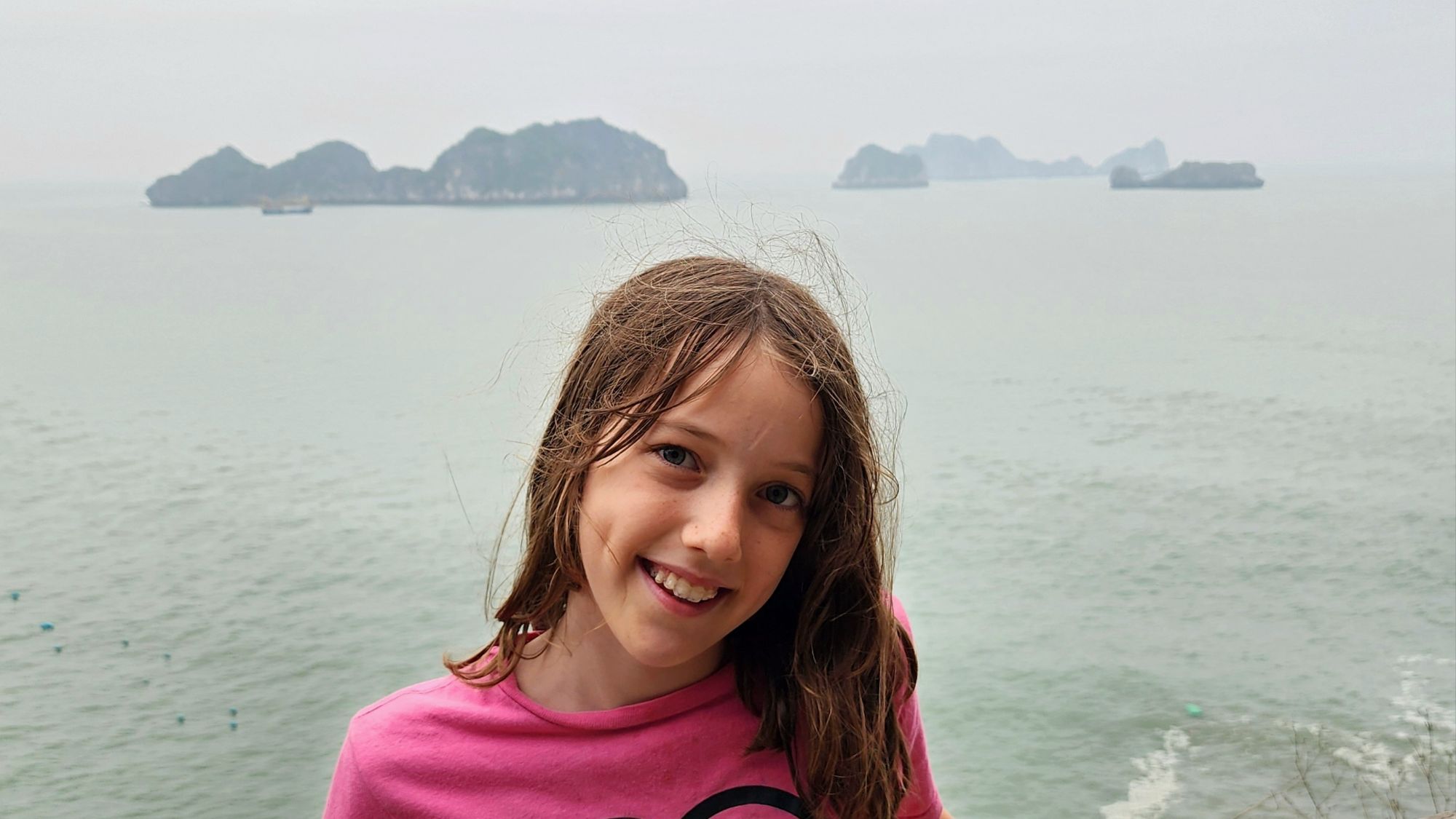
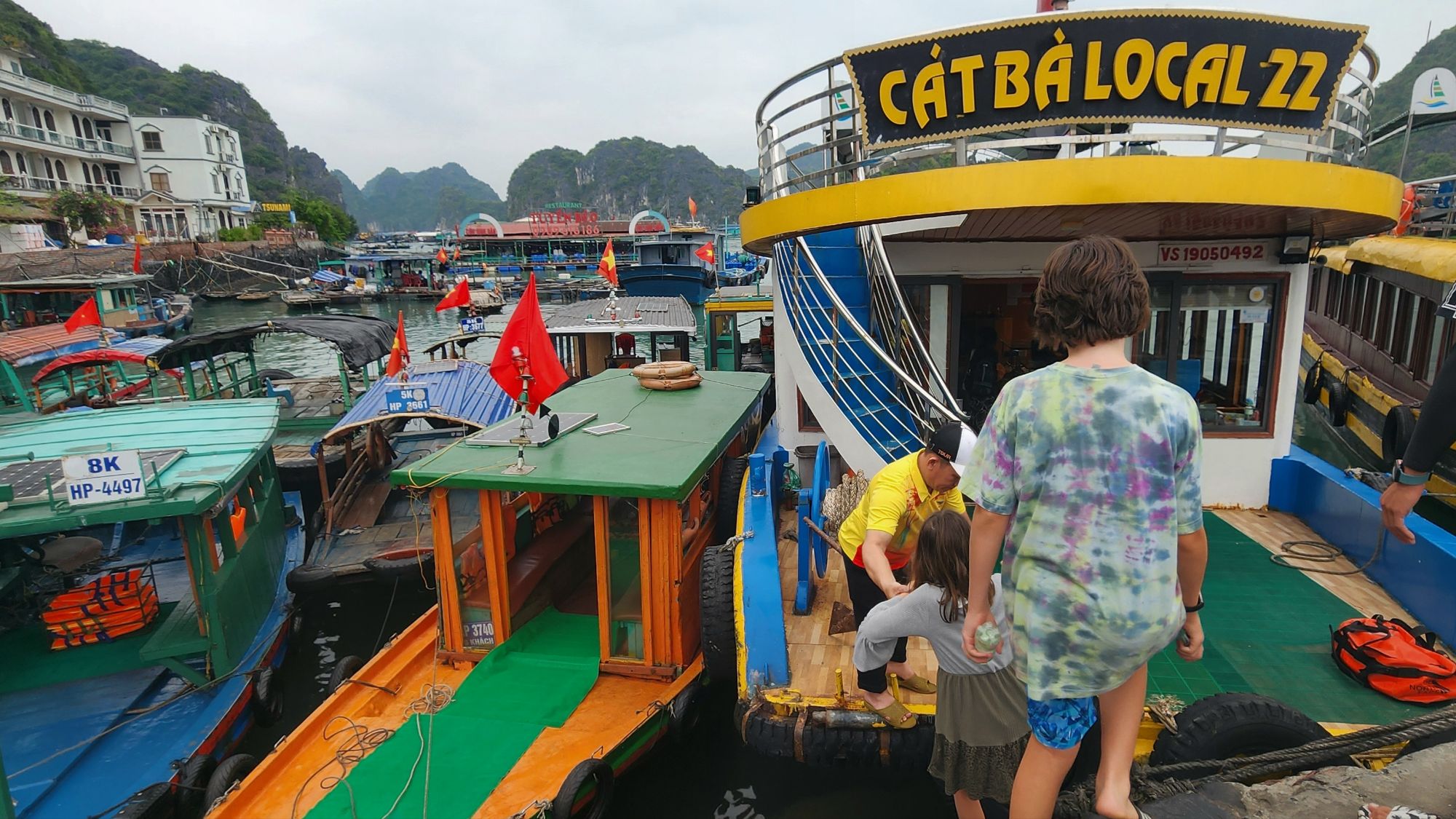
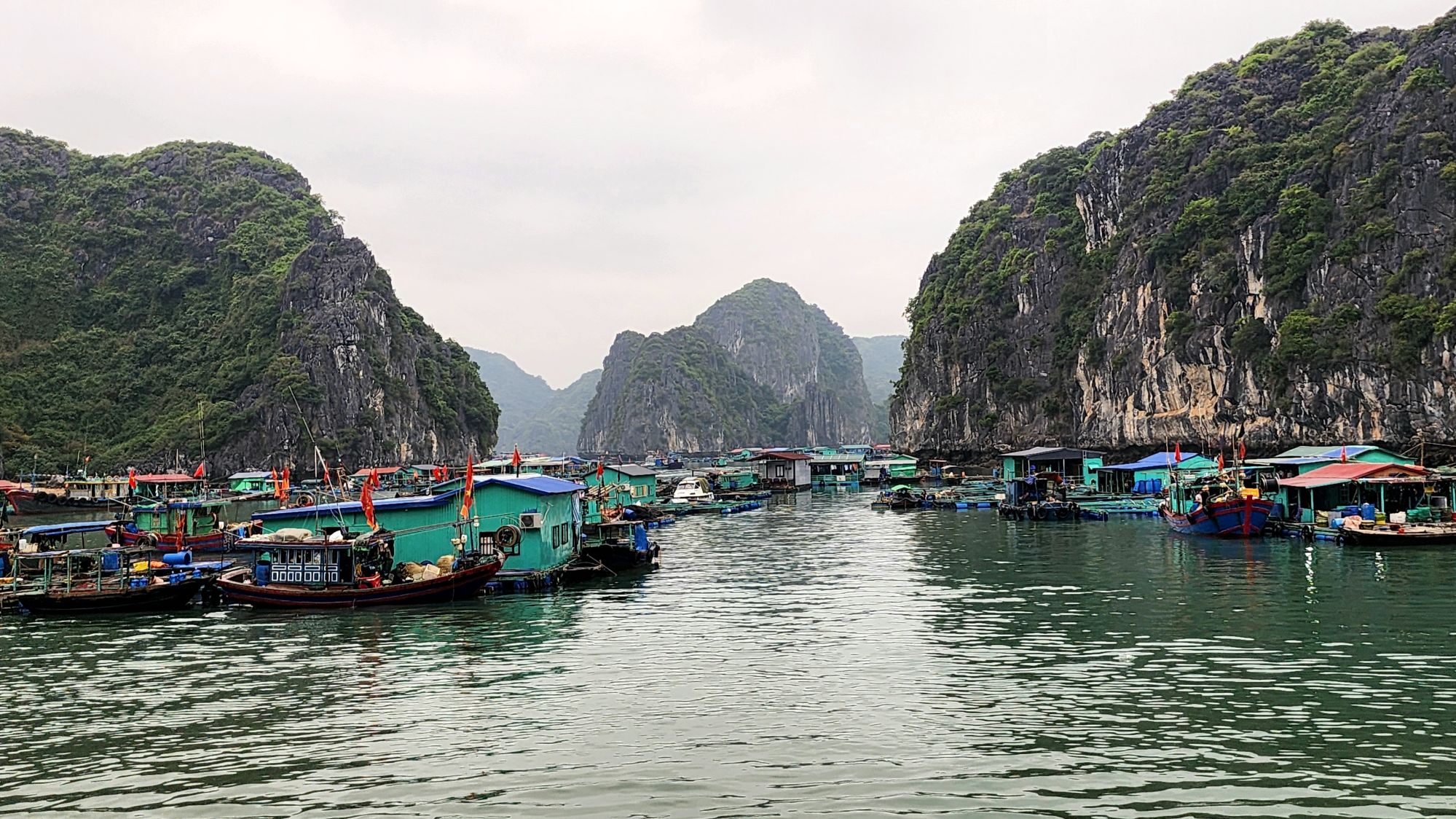
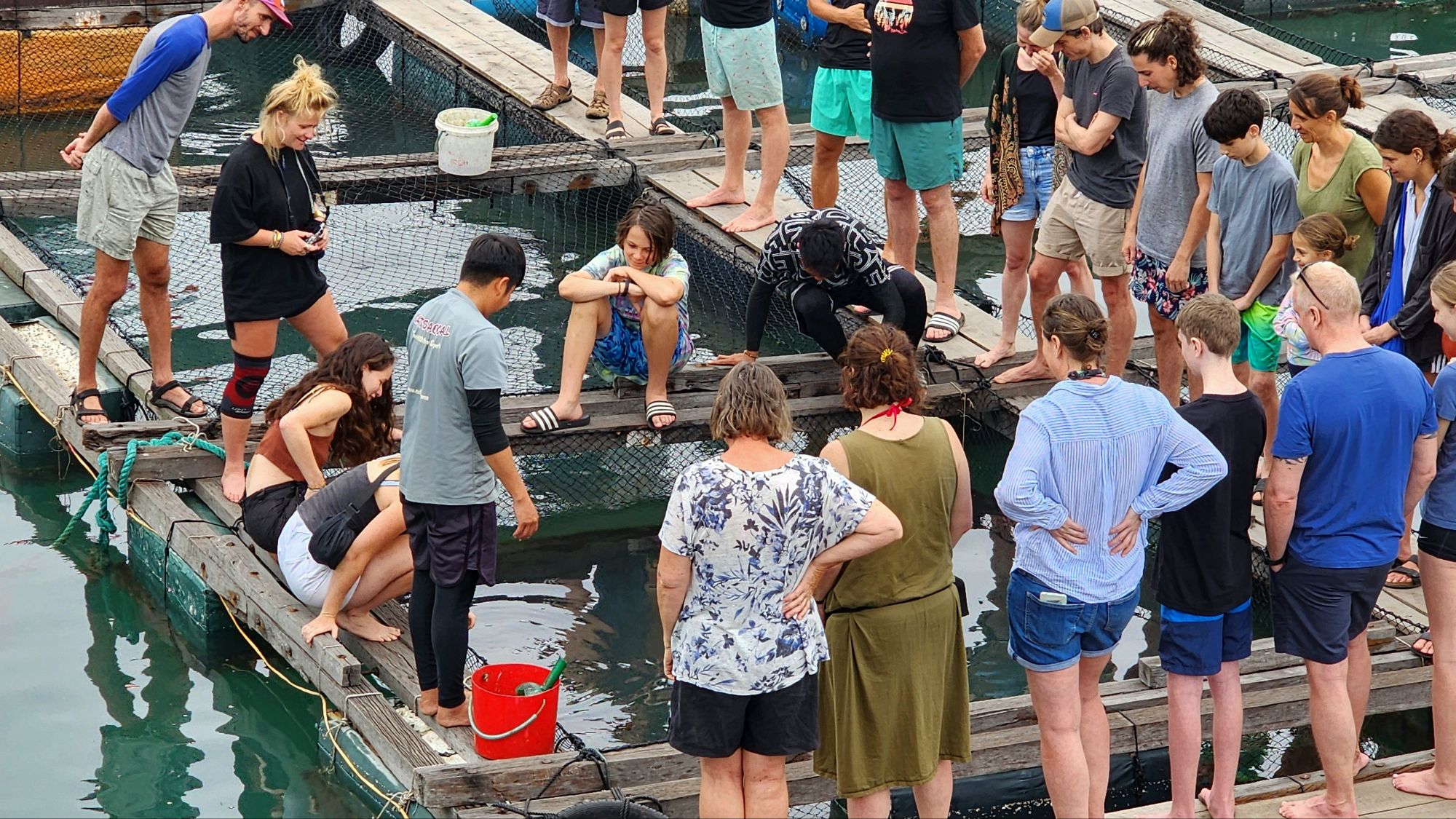
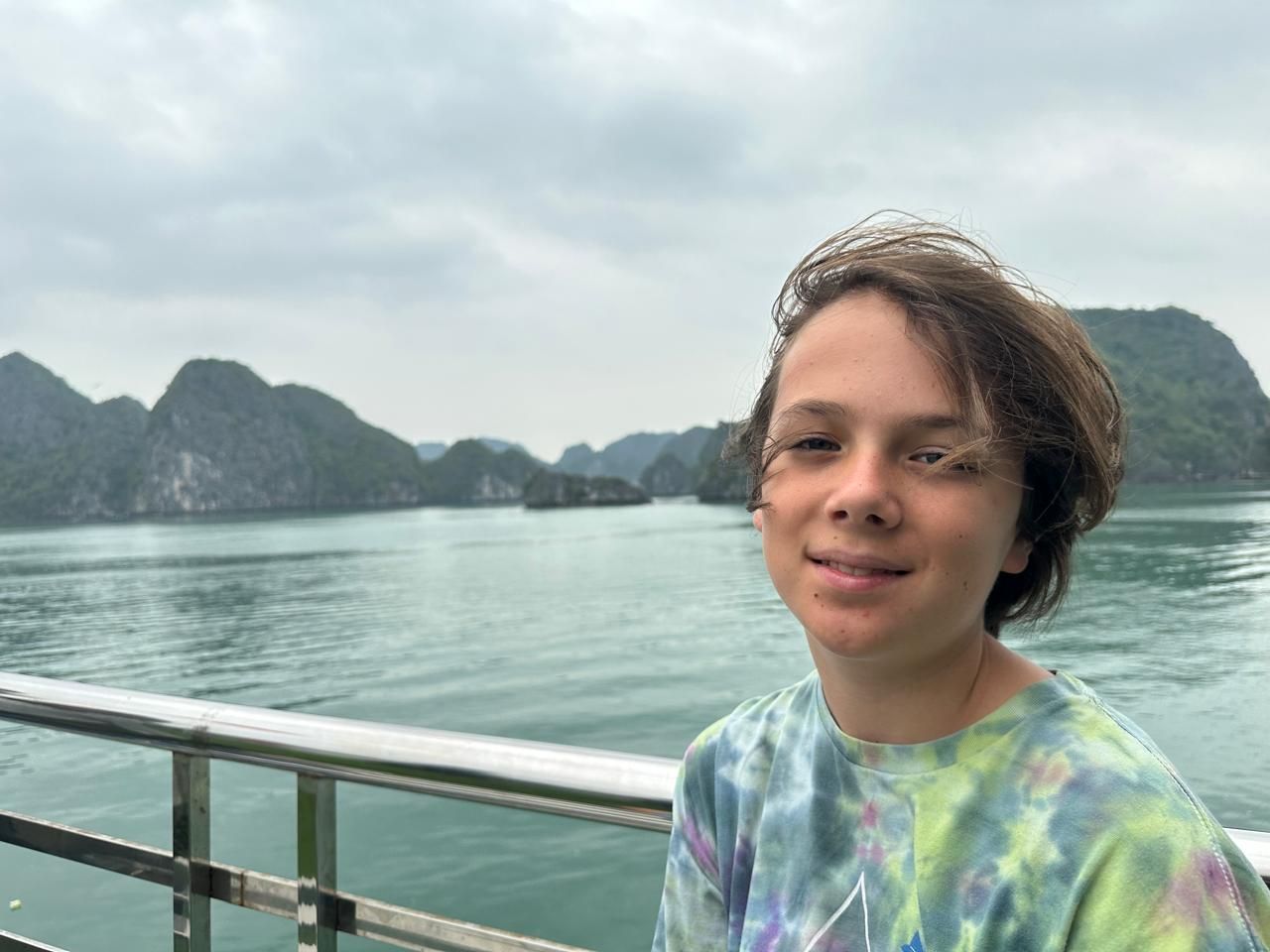
We woke up early the next morning and headed to the port where we climbed aboard Cat Ba Local 22 for our day trip into the bay. As we made our way out of the port, it was clear that pollution is a significant issue, with litter and plastic waste marring the otherwise stunning waters and shores, reminding us of the environmental challenges facing this beautiful area. We passed floating villages and visited a floating fish farm where our guide showed the traditional fishing methods and lured some of the fish close to the surface with promises of a snack. I wondered about the impact of tourism on the fish farmers and of the impact of both on the marine ecosystems of the bay.
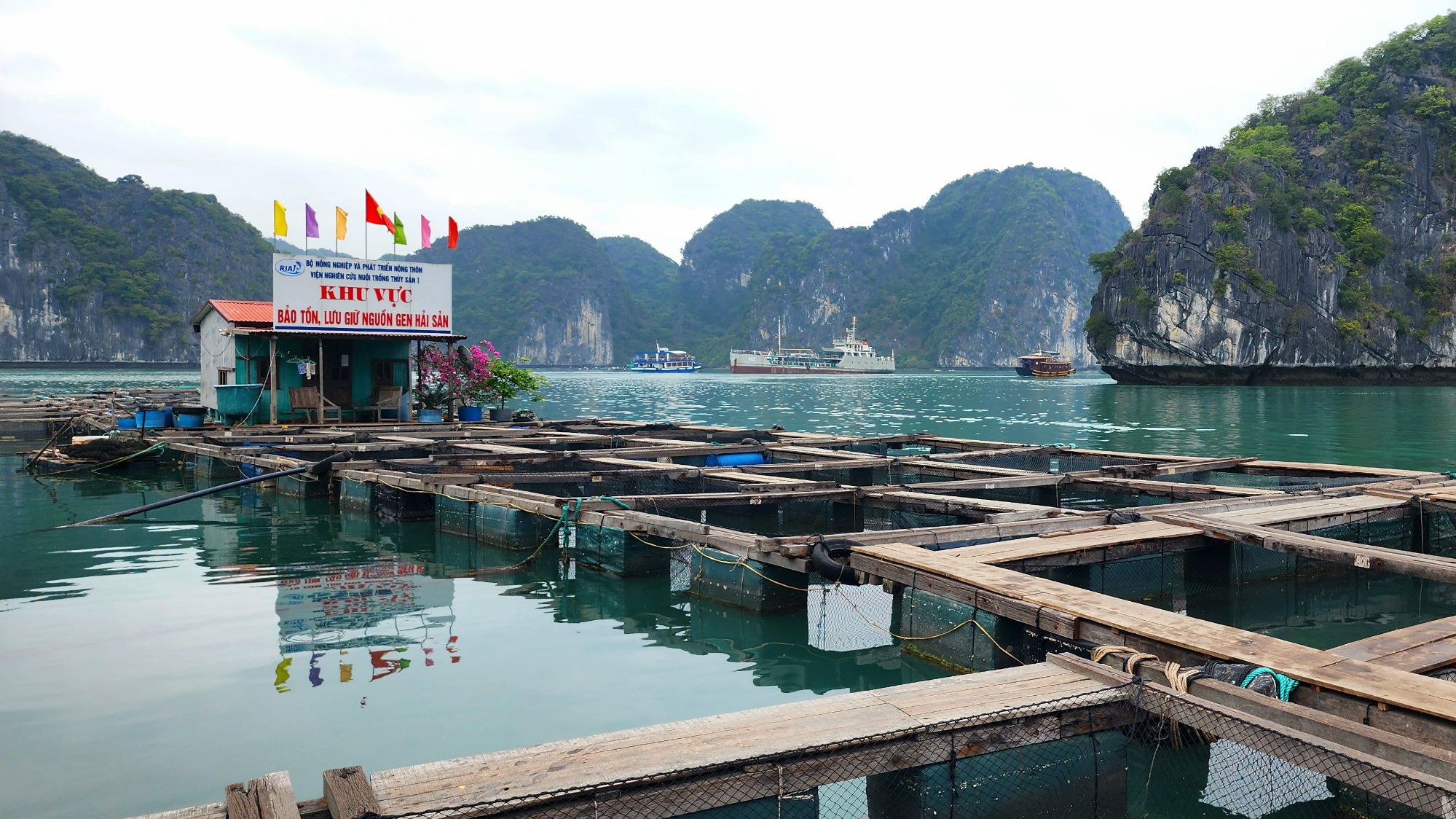
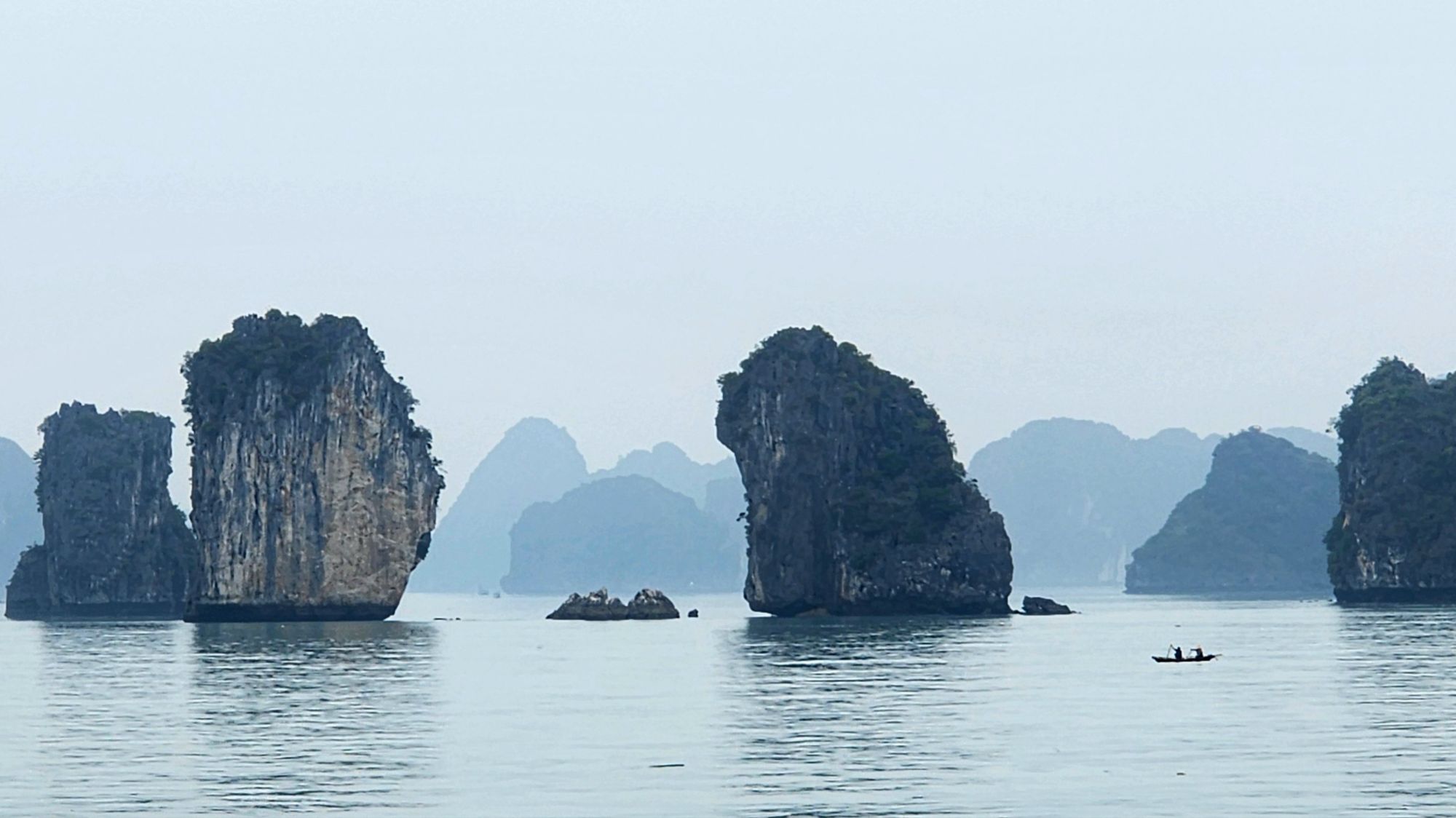
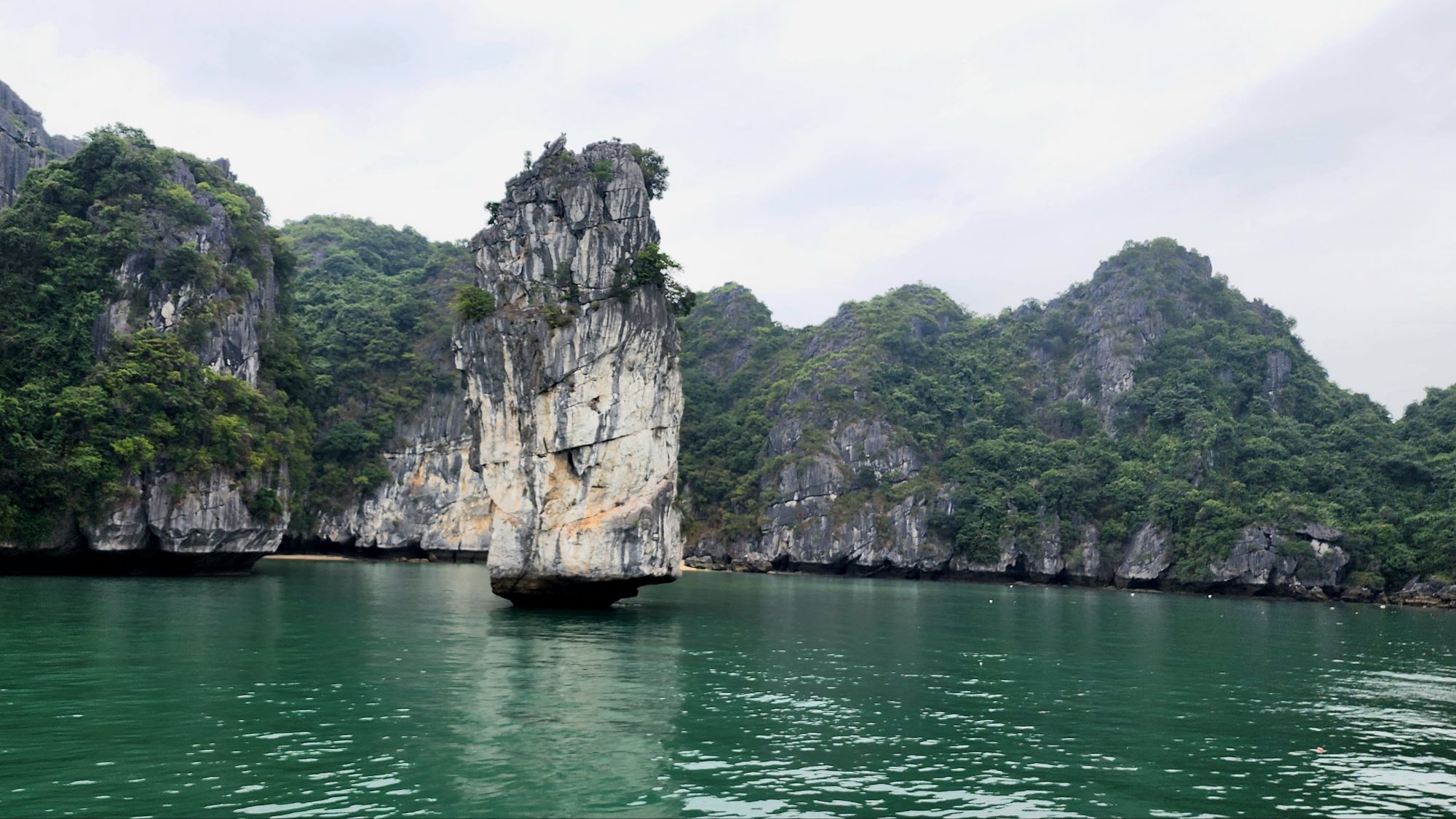
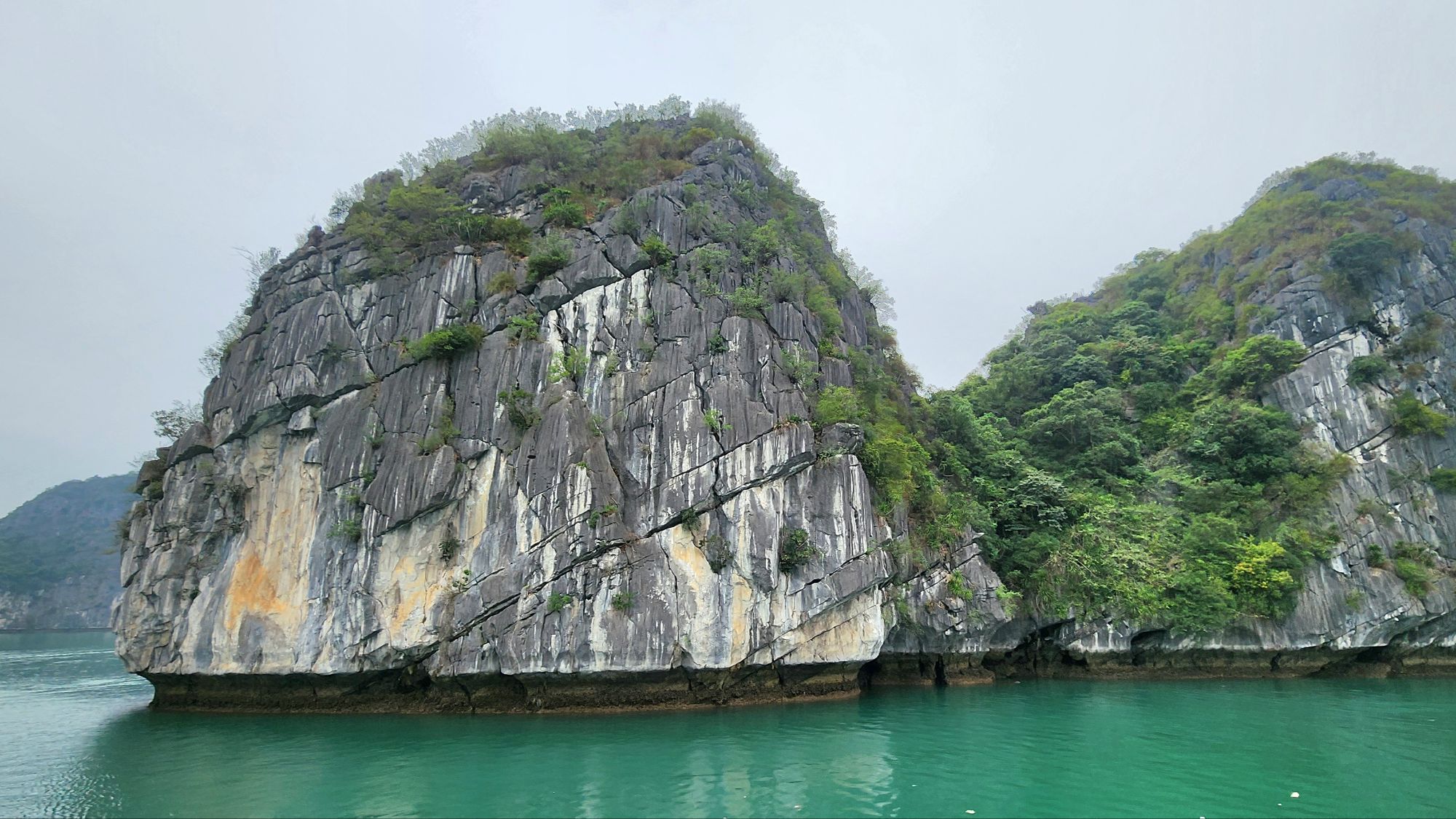
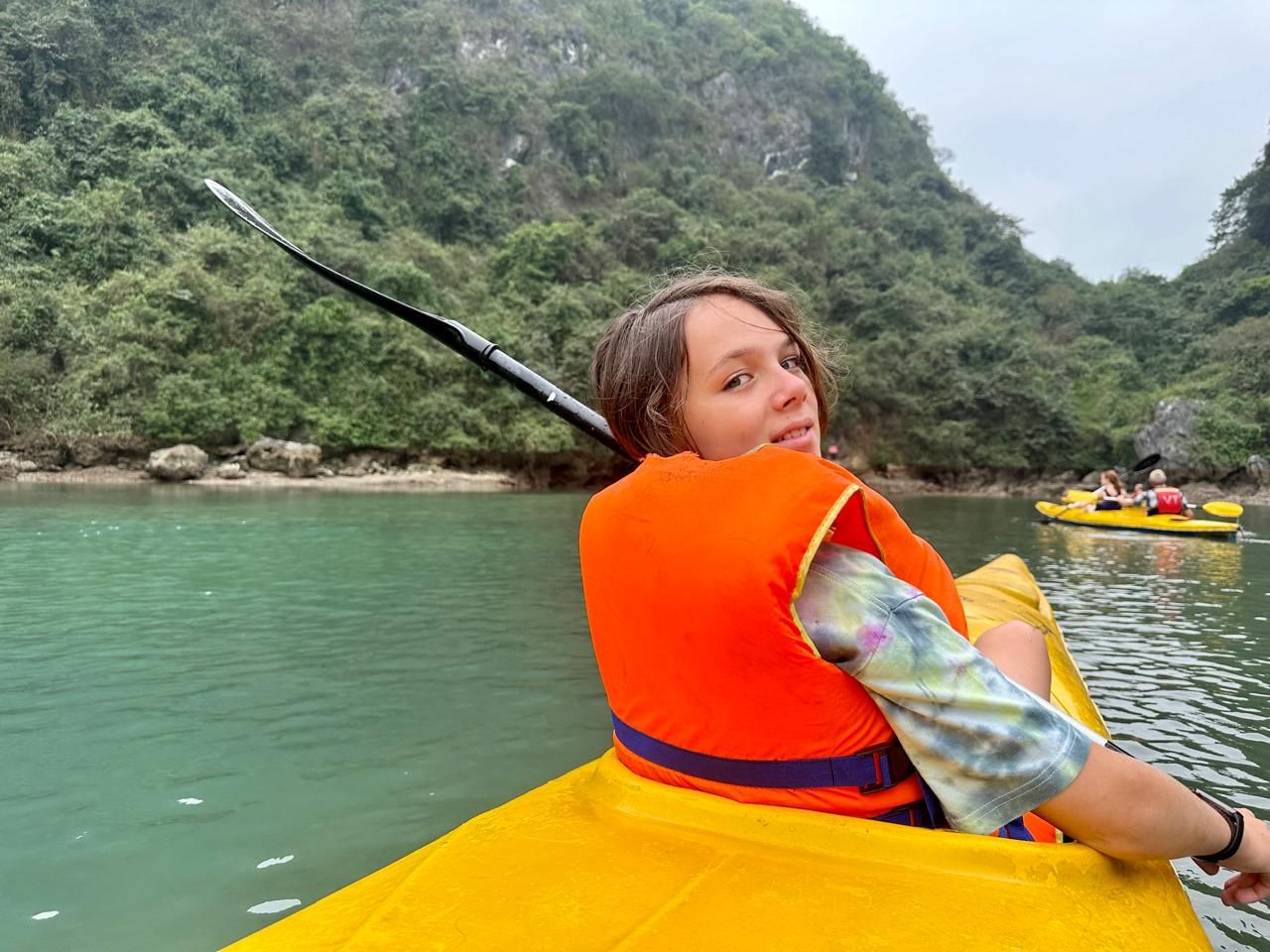
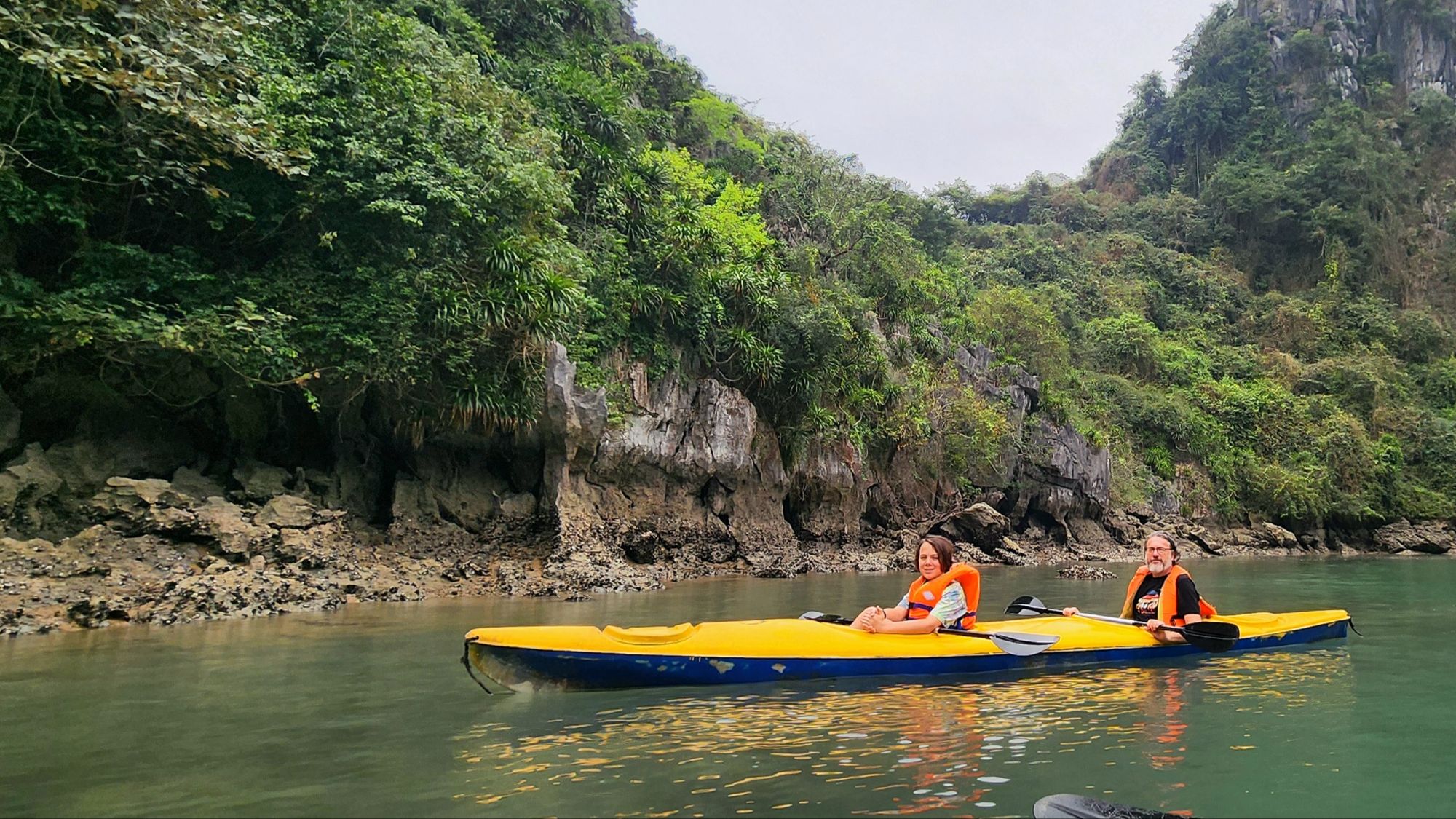
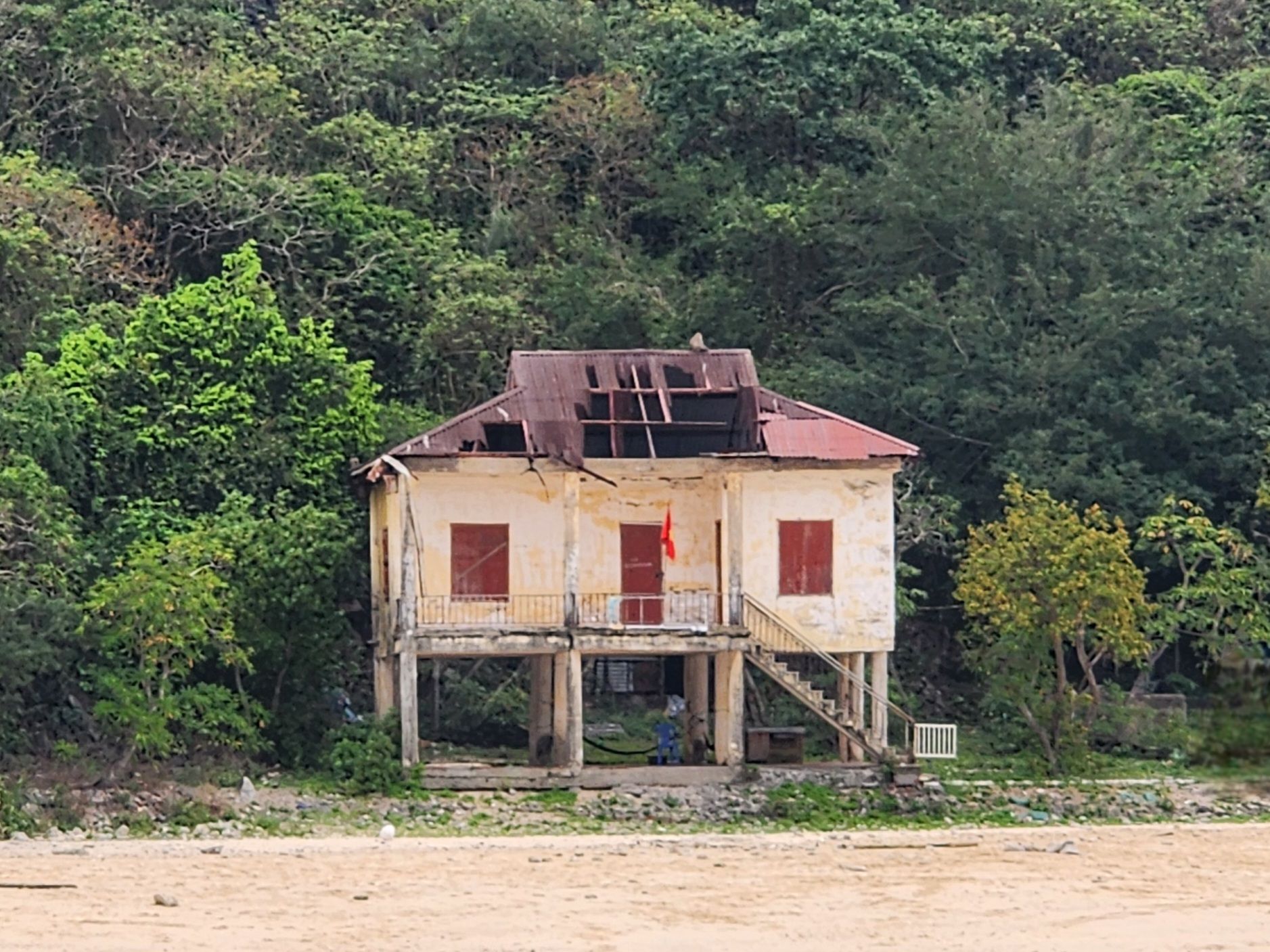
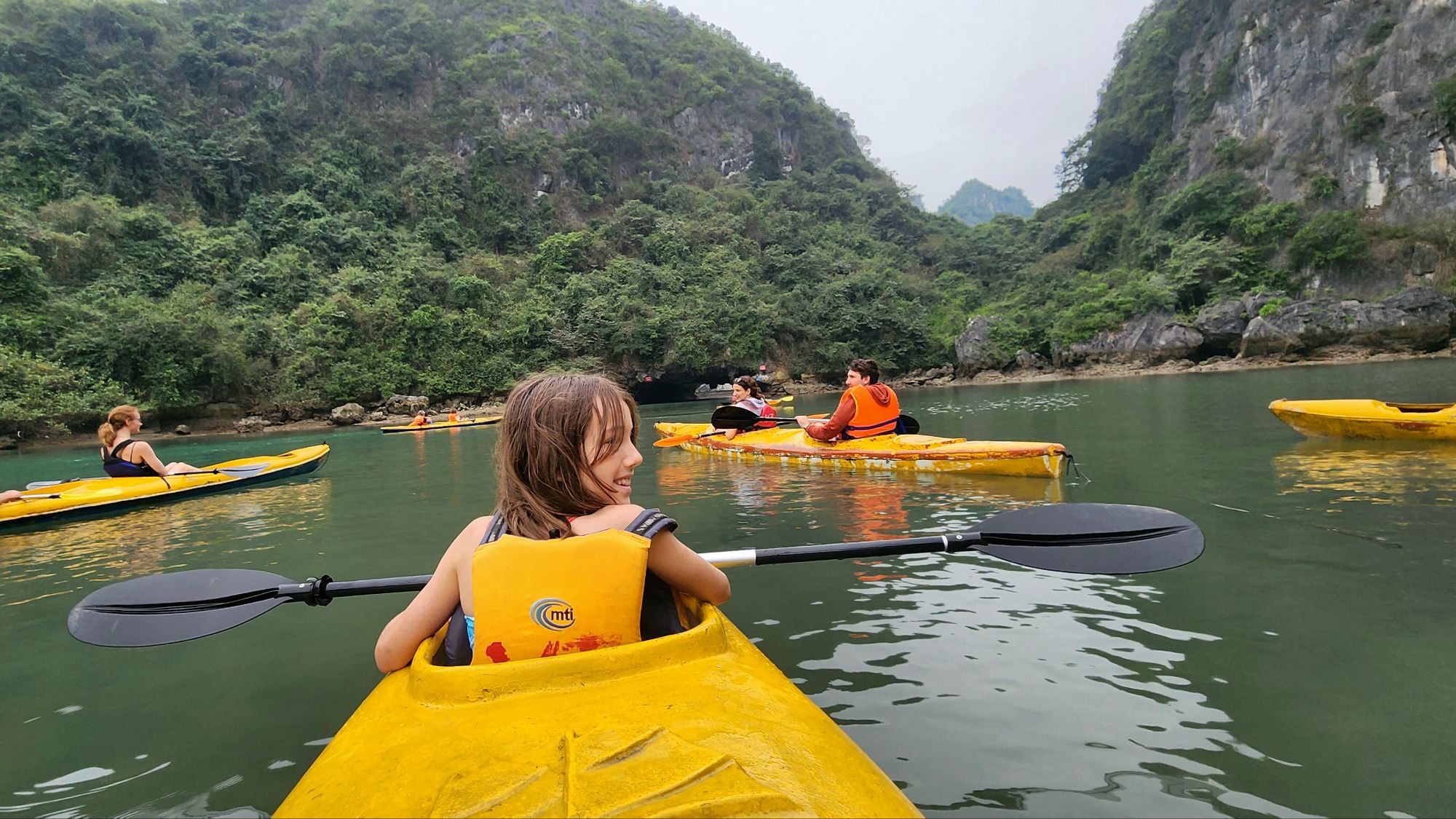
We kayaked in the bay, visiting a hidden lagoon accessed by paddling carefully through a narrow channel in a cave. On the way, we watched a family of macaque monkeys playing in the trees. Later, back on the boat, we passed by the abandoned site of Monkey Island Resort, which our guide told us had closed a few years ago along with all of the other resorts on the smaller islands due to environmental concerns. One building remained and had been reclaimed by the monkeys who scurried and swung their way up to the top of the roof.
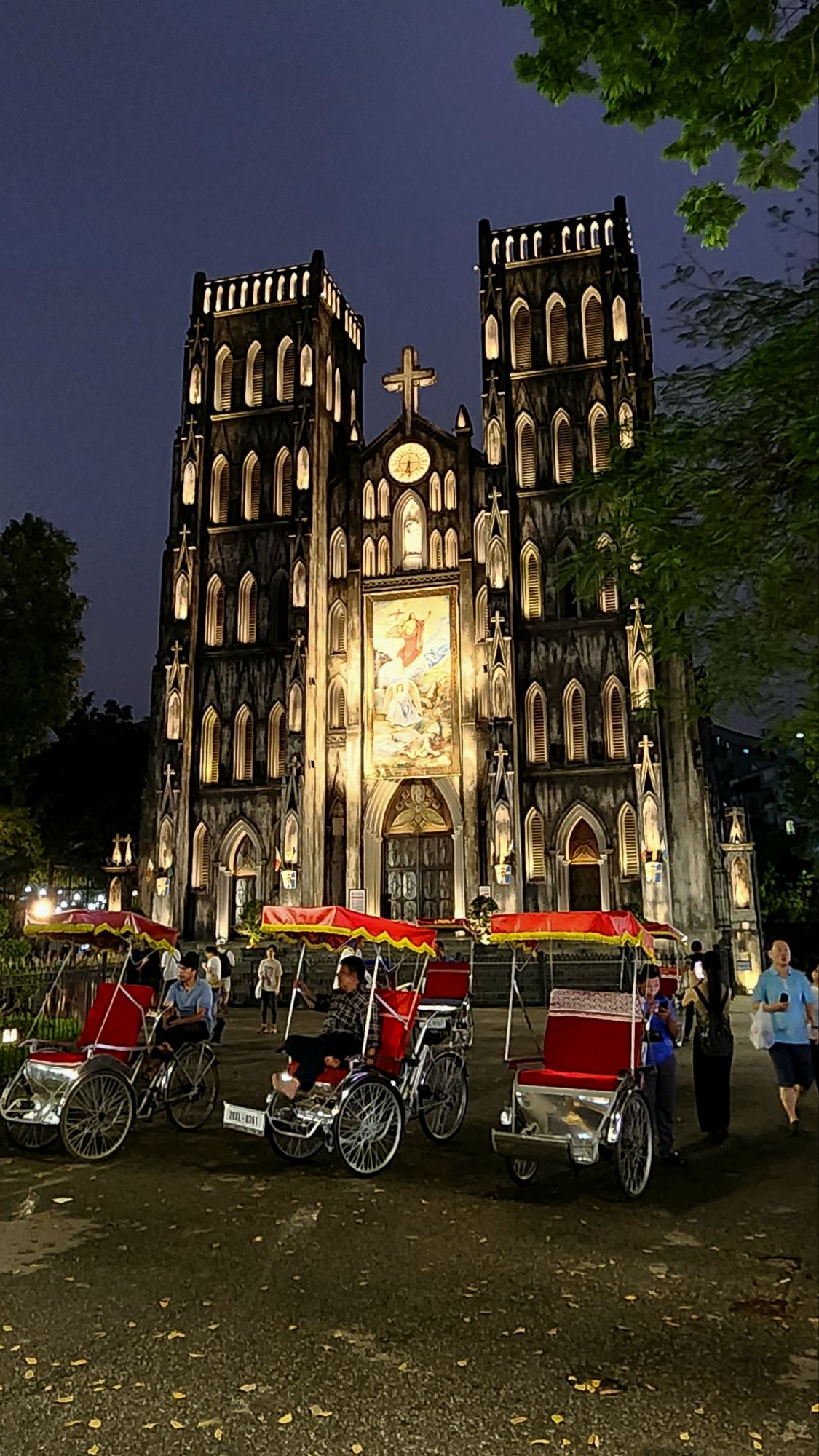
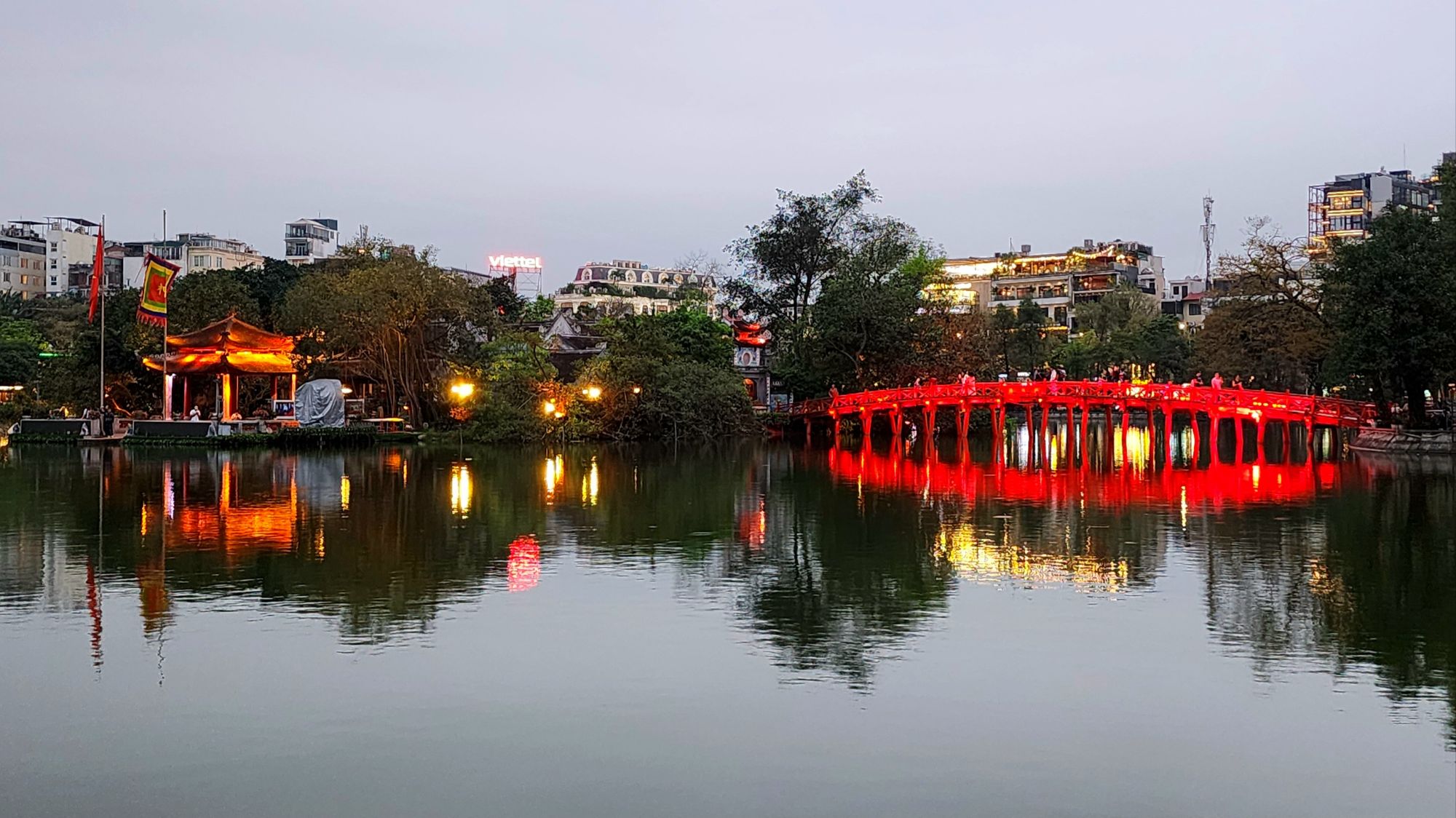
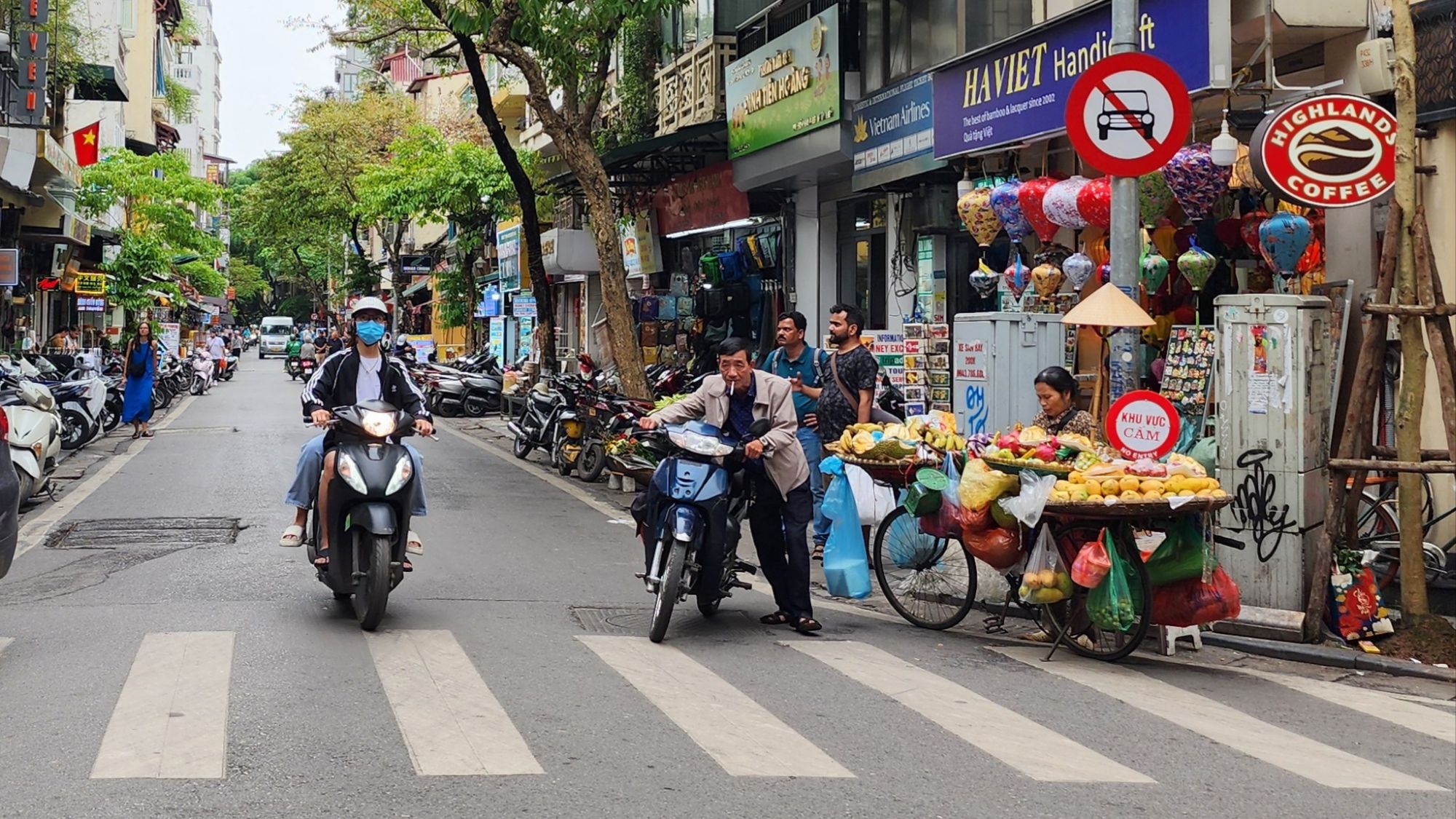
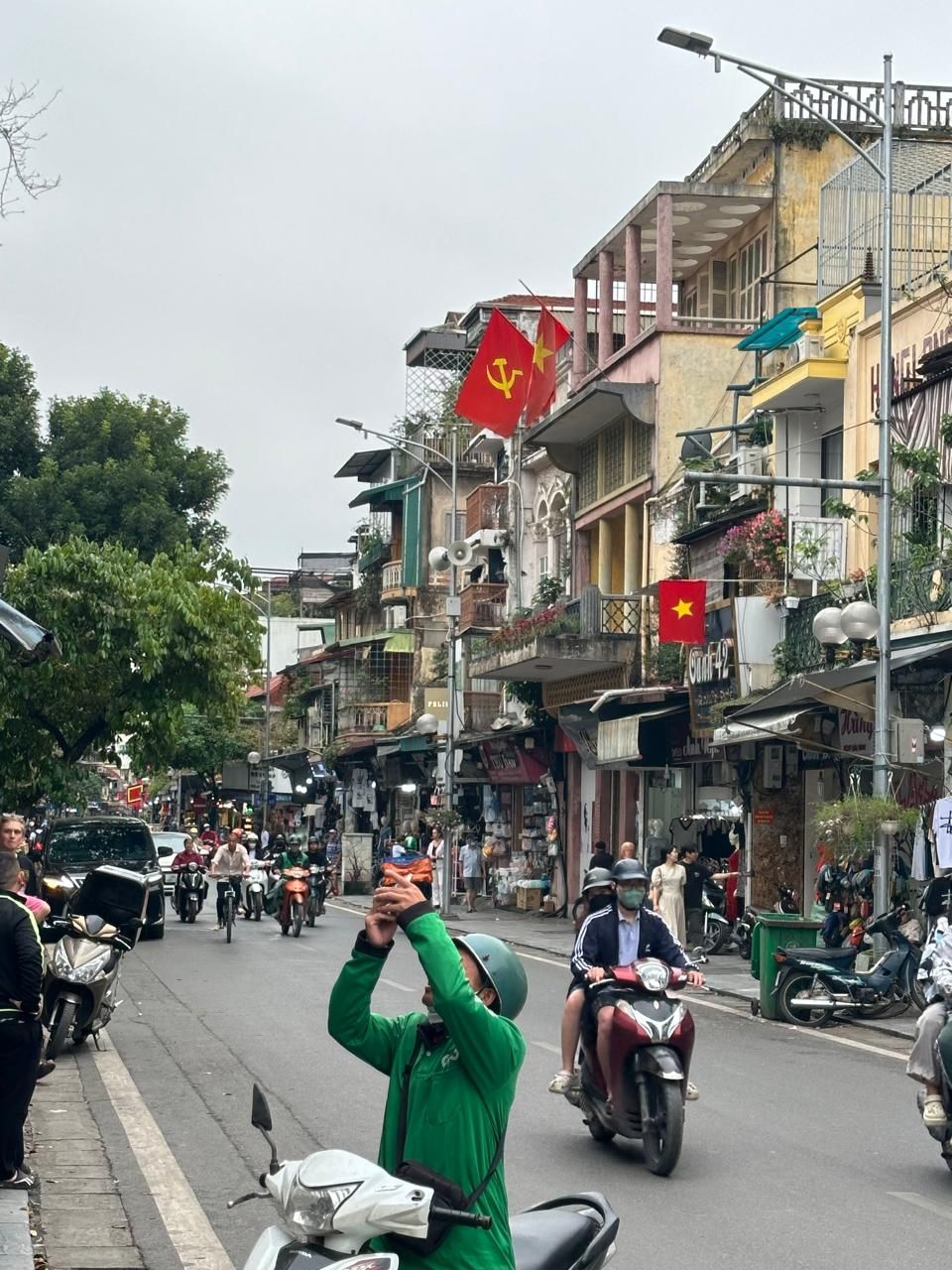
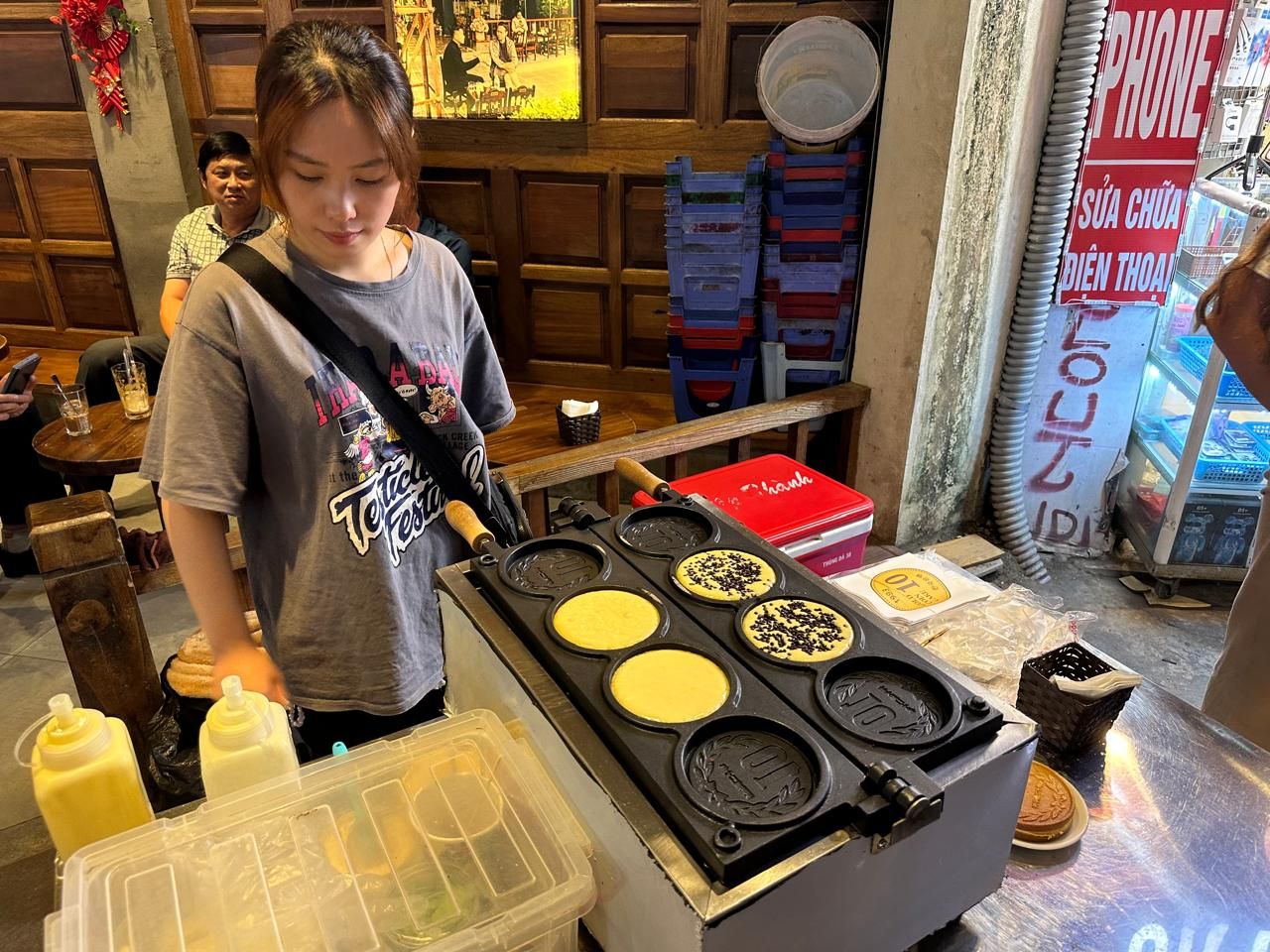
On the bus ride to Hanoi, Mila started feeling feverish and nauseous and Alden soon started feeling unwell too. They rested at the hotel while Simon and I took quick strolls around the city, checking out some neighborhood sites, enjoying the local flavors, and searching out the kids’ food requests.
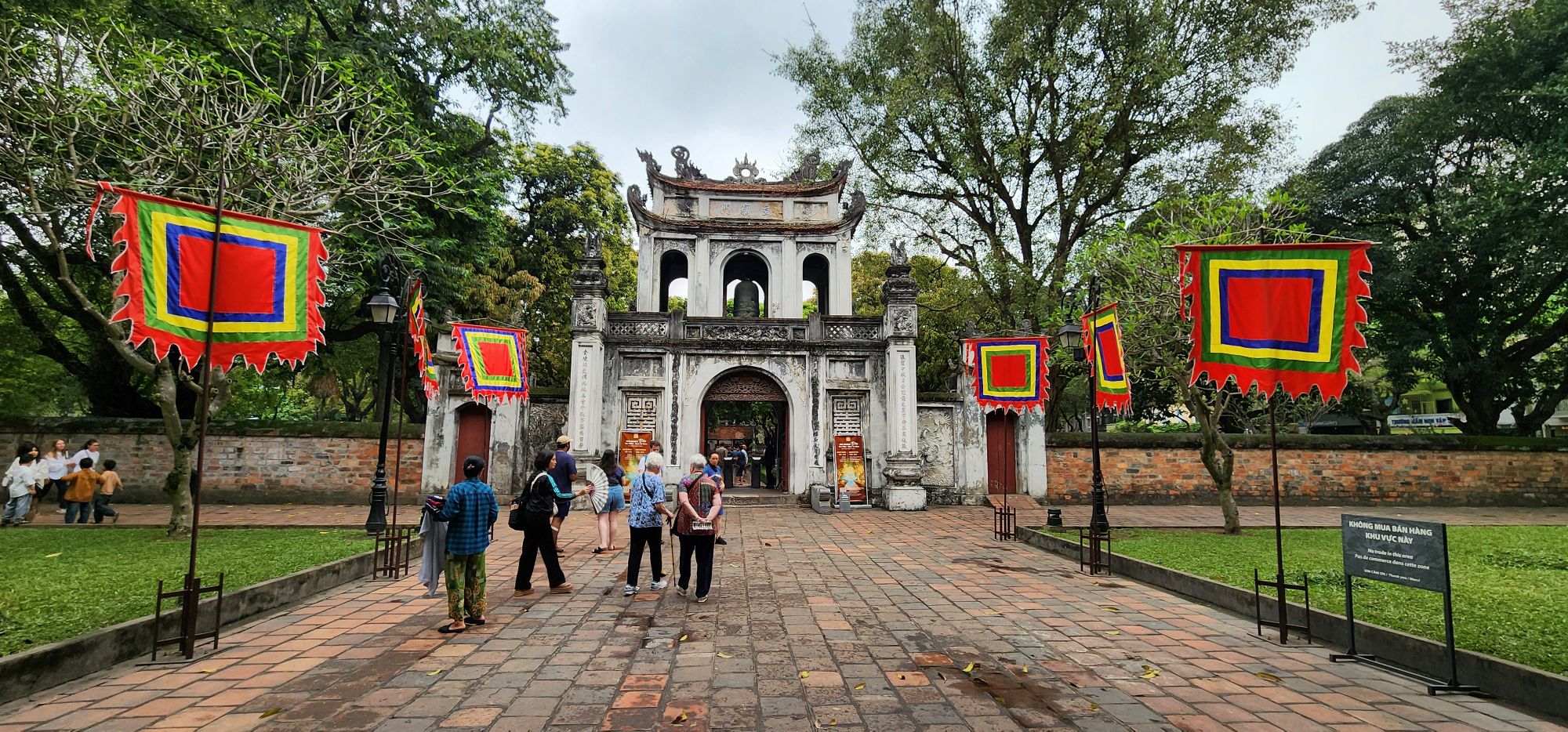
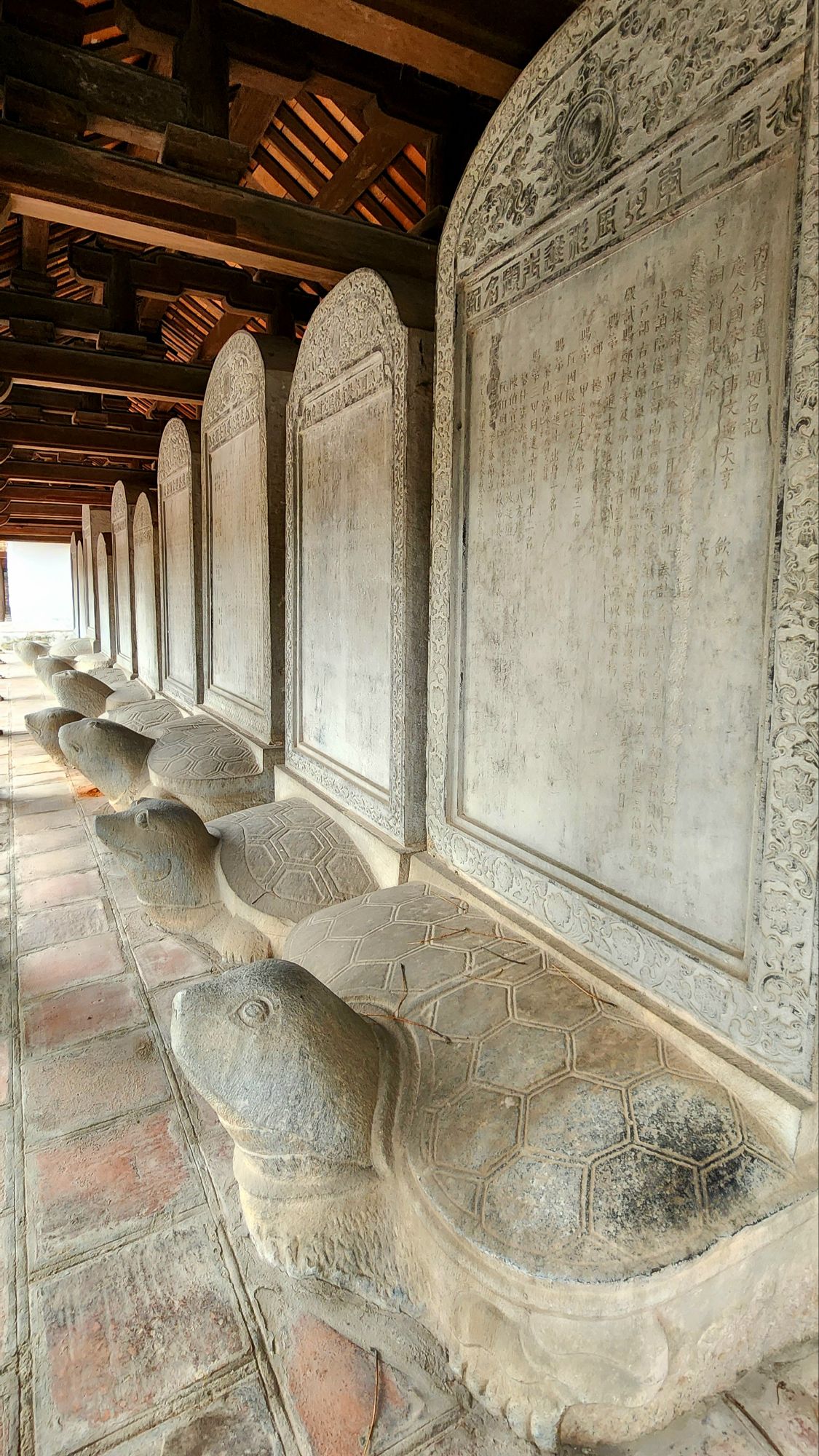
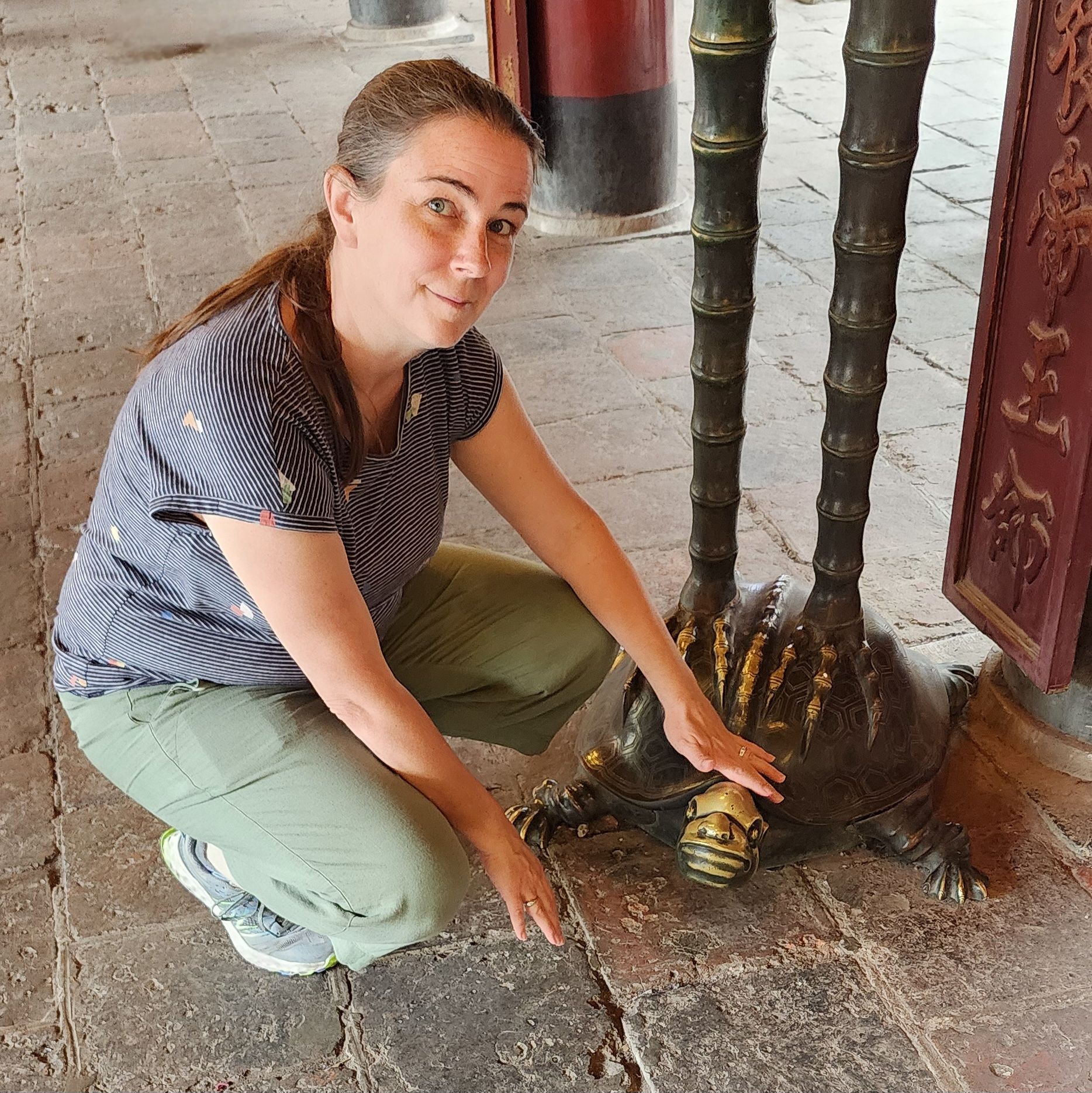
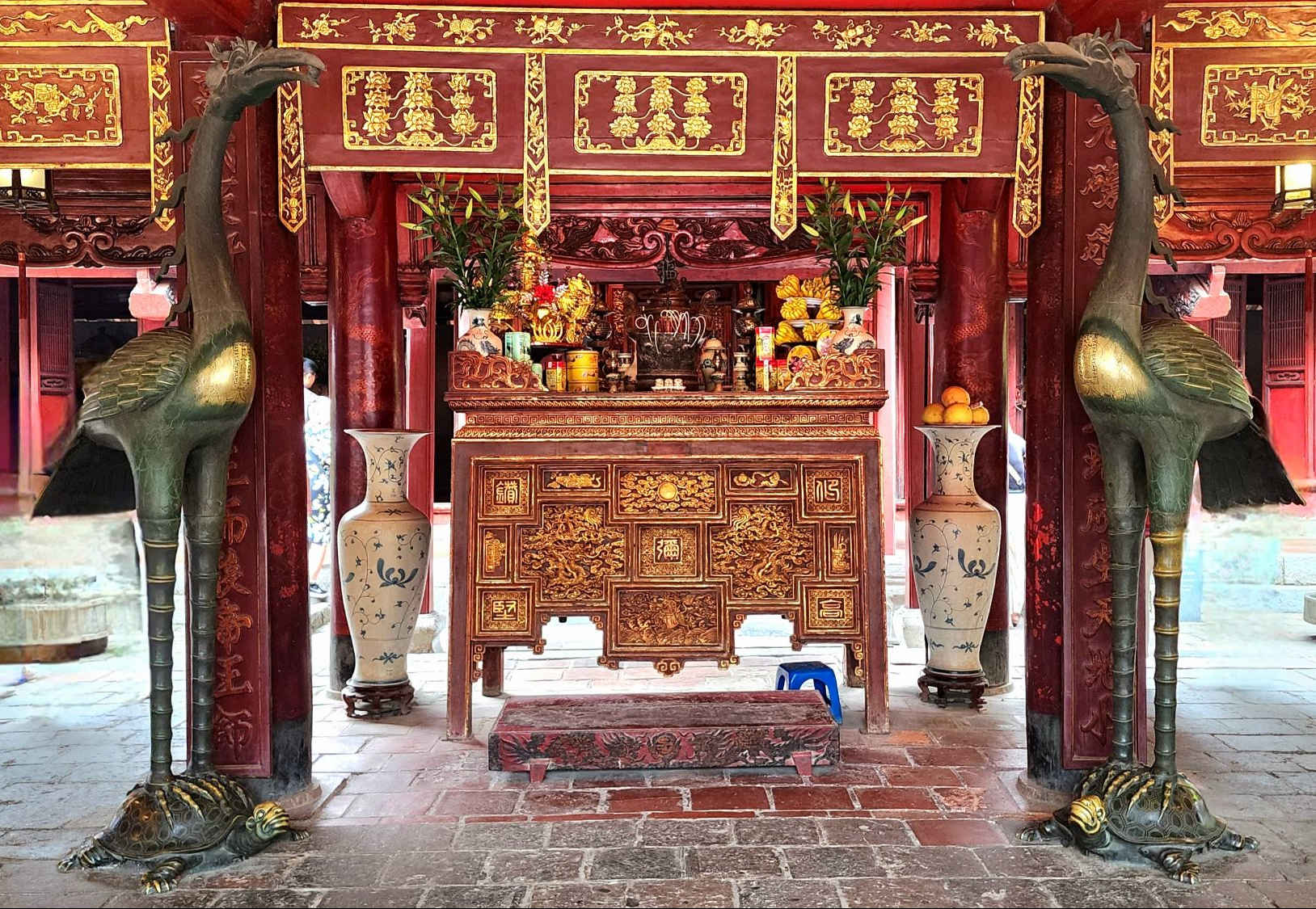
They felt better the next day but not well enough to be dragged sightseeing. Simon and I headed to the Temple of Literature, a Confucian temple built in 1070, which became the country’s first university in 1076. Once inside the gates, you can walk around the tranquil gardens and admire the intricate pavilions. In one chamber, 82 steles propped on stone tortoises provide a historical record of exams between 1442 and 1779. It became a tradition for students to come to the temple before exams to pray and rub the heads of the tortoises. Today, the tortoises are protected and can’t be touched, but students and their parents continue to visit the temple to pray for good grades. Visitors leave offerings and pray at the temple altars. Two bronze statues stood by one of the alters, depicting cranes perched on tortoises. Both animals are symbols of longevity and we joined in the local tradition of rubbing the belly of the crane and the head of the tortoise for good luck.
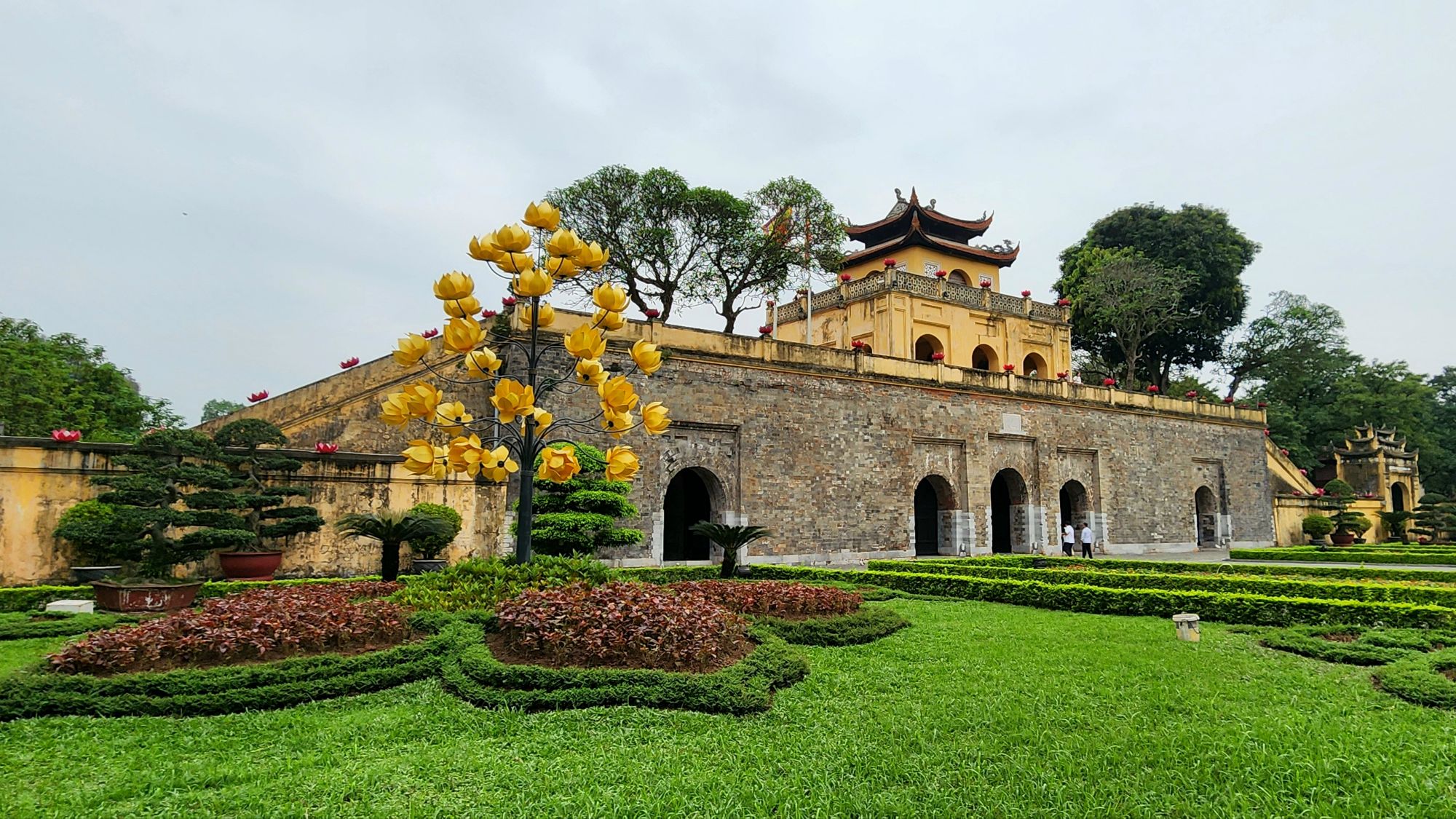
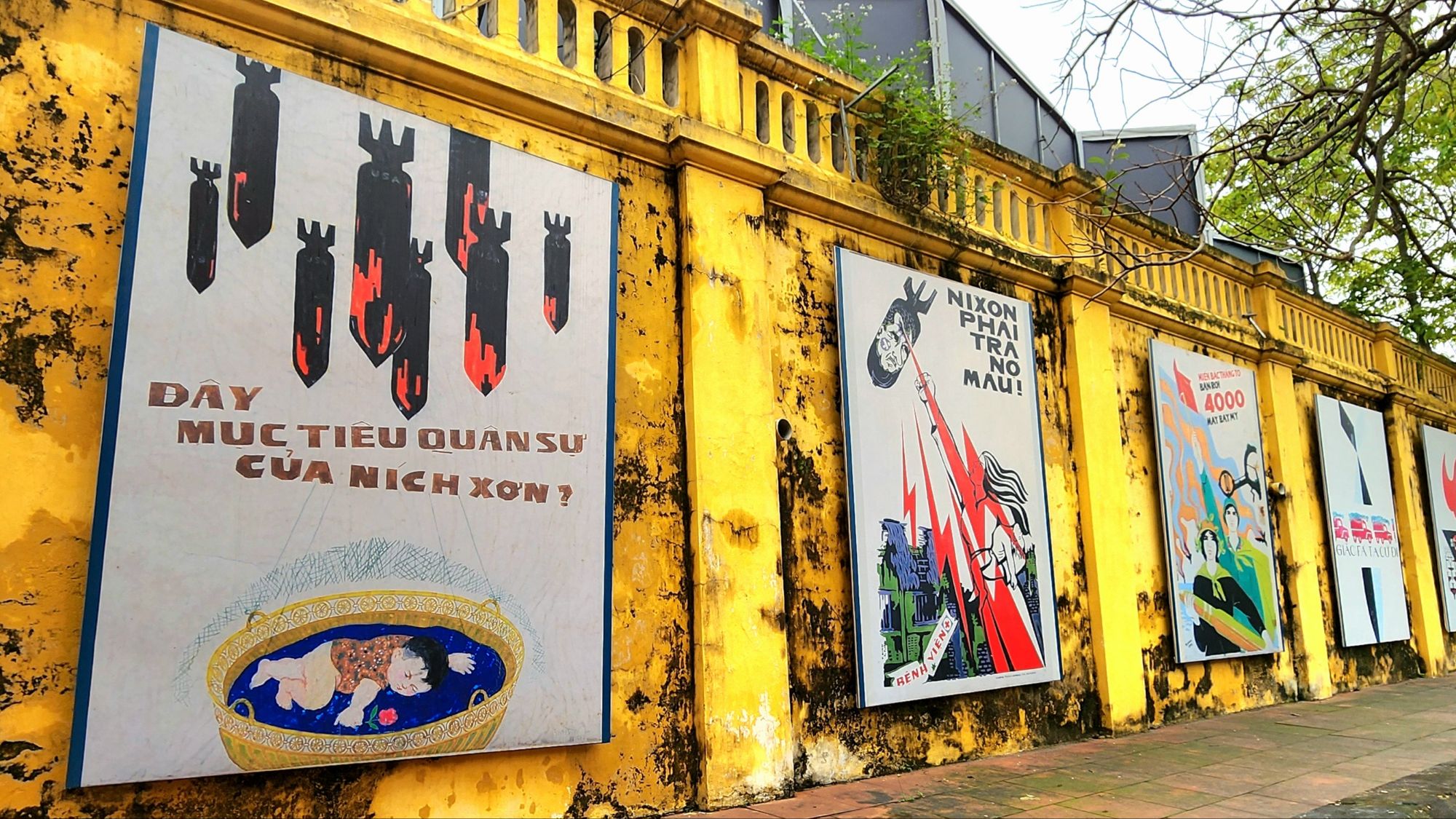
We headed next to the Imperial Citadel where we wandered the grounds and explored artifacts on display. The Citadel was built in the 11th century and was home to the Royal Palace and government courts until the new capital was built in Hue. During the war, the People’s Army of Vietnam built hidden bunkers under the citadel which were used as their headquarters. We went into one of the bunkers and saw some artifacts from that time. Outside the bunkers were some interesting antiwar posters.
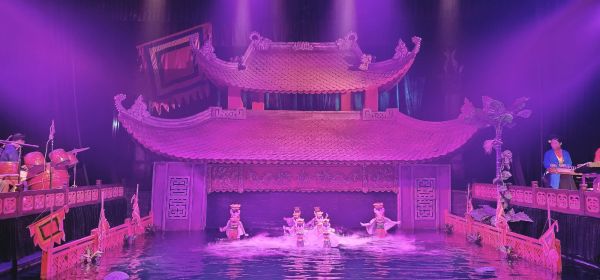
The kids wanted to save their energy to meet our friends for dinner, so Simon and I sold their water puppet show tickets and went on our own to enjoy the intriguing show. The water puppet tradition began during rice harvest festivals with the original stages set in the harvested rice fields. The puppeteers stand in the water and skillfully operate the puppets using bamboo sticks and strings. They were accompanied by live music with traditional instruments, modern instruments, and singers. The show told a story set in rural Vietnam, narrated all in Vietnamese, but brought to life visually with the puppets.
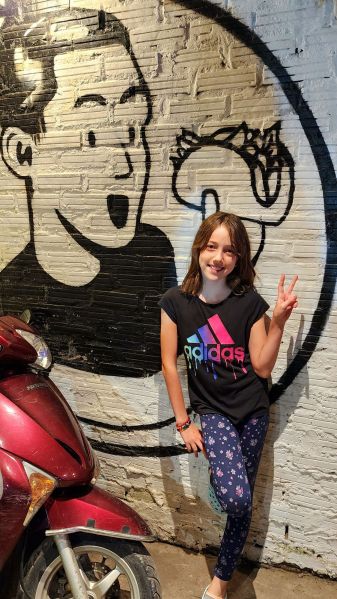
The kids rallied to meet Richard, Aislyn, and Zoe for dinner at Bao Wow where we enjoyed our last dinner in Vietnam. We don’t know when our paths will cross again with their family, but it was certainly fun to reunite and meet Zoe!
As we stepped from the airconditioned airport back into Bangkok, we were once again engulfed by the intense heat and humidity. In Northern Vietnam, we had a short respite from the sweltering heat. We were thankful that our hotel in Hanoi had a pool where we could cool off during the hottest parts of the day. In the evening we walked over to the infamous Khaosan road, taking in the bustling scene. We couldn’t convince the kids to try a scorpion skewer, nor could we persuade them to get a sidewalk family massage session. But we didn’t have to twist their arms too hard to grab a refreshing mocktail at one of the inviting open restaurants.
We tried to get out early to beat the heat and visit the Grand Palace. We grabbed coffee at the hotel coffee shop and ended up chatting with a fellow traveler, originally from the US but living in Bristol and traveling with his family. He mentioned that his family had visited the Grand Palace the day before. He told us that when they first arrived, they were told by a local that the palace was closed temporarily for a special Buddhist holiday. They were convinced to go on a short tour of some other temples while waiting for the palace to open. After their tour, he led them to some fabric and jewelry shops hoping they would buy something.
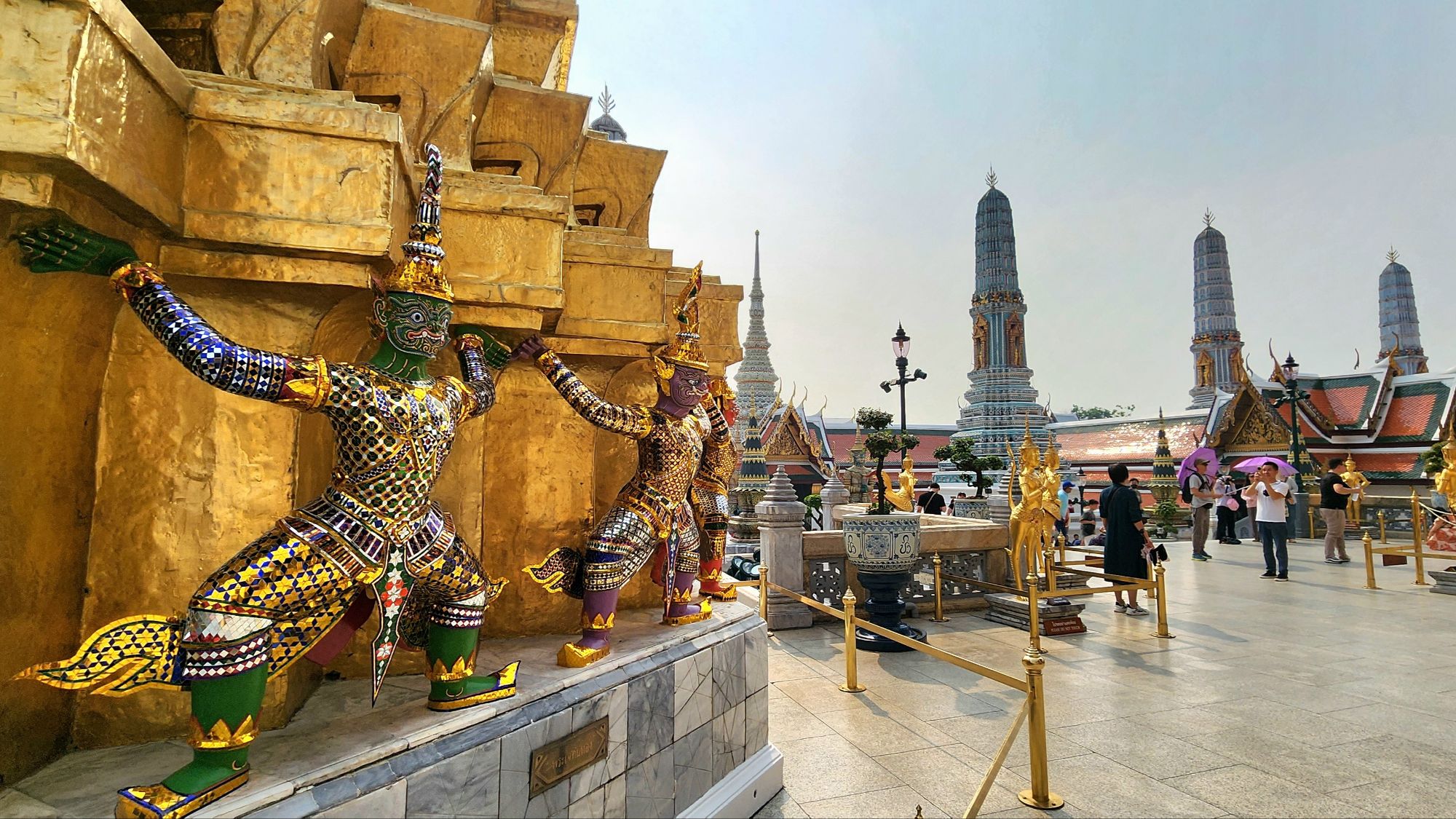
Though nothing seemed too nefarious in his story, we were skeptical when a local approached us as we walked towards the palace and warned us that it was closed for a couple of hours for a ceremony. We decided to go check it out anyway and sure enough, it was open. We walked around the impressive site, admiring the architecture and taking in as many highlights as our kids’ heat tolerance would allow. The Emerald Buddha and the surrounding two kilometers of meticulous murals depicting the Ramakien were particularly memorable. We cooled off in the Queen Sirikit Museum of Textiles, admiring her exquisite dress collection.
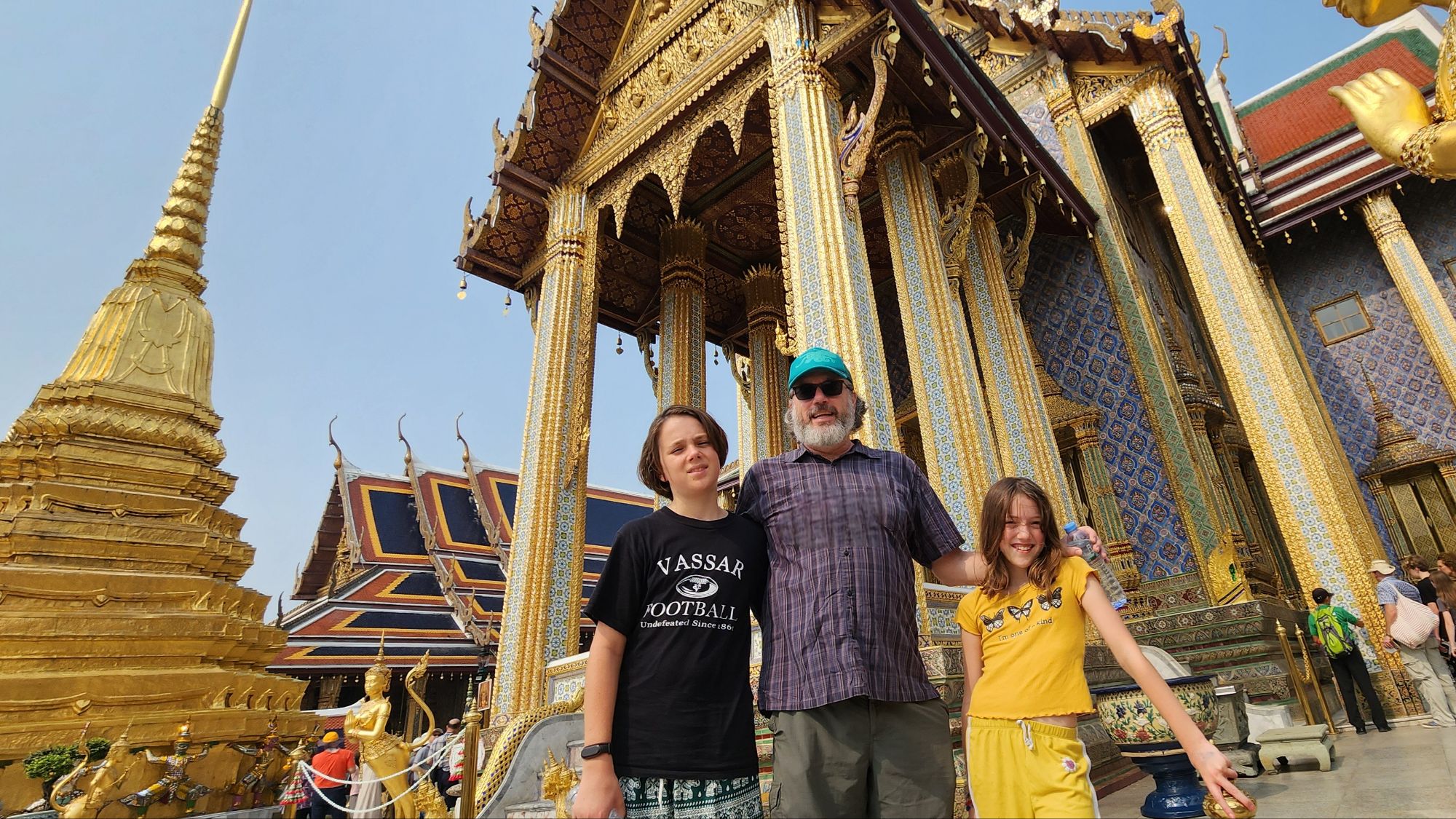
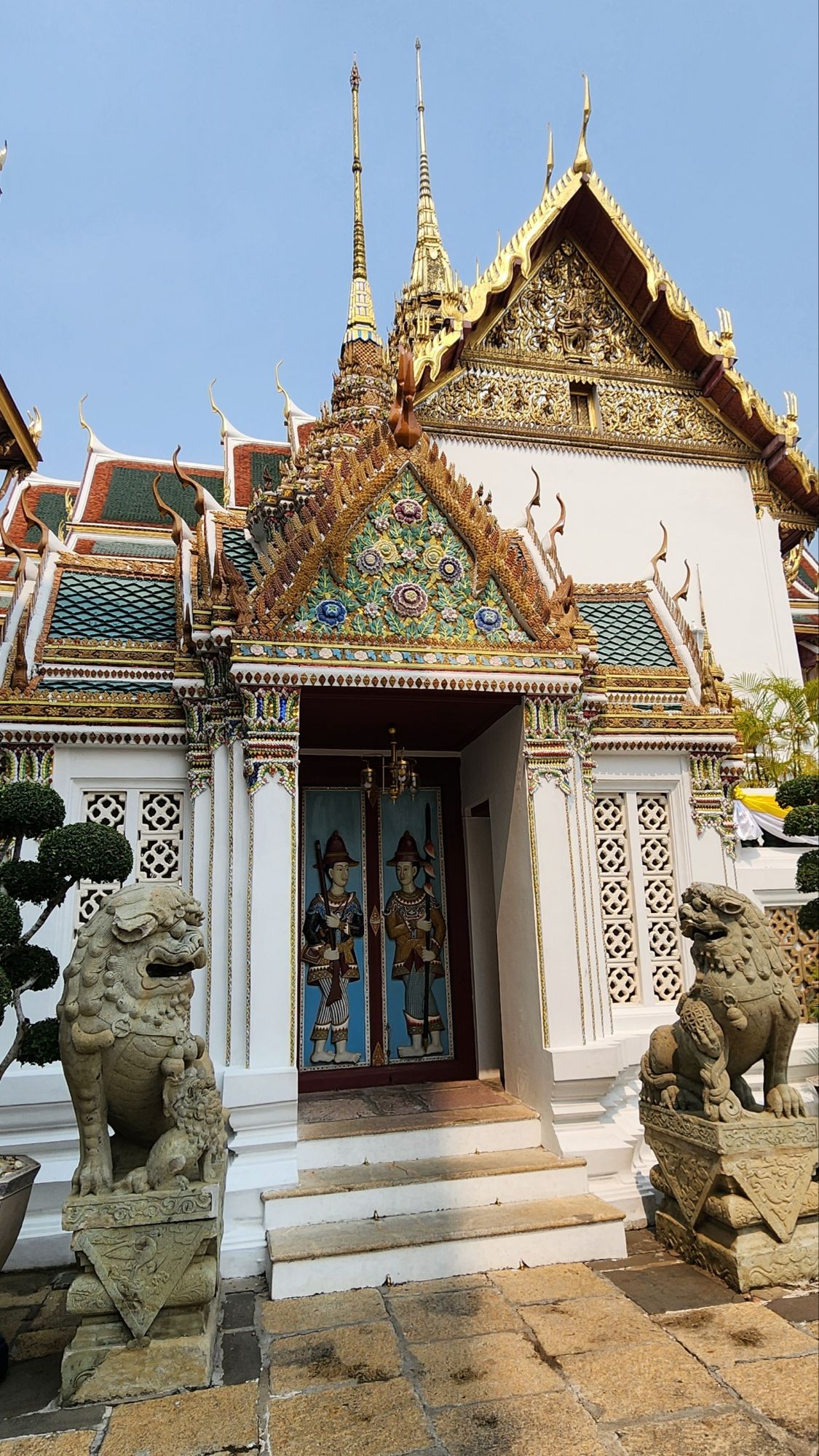
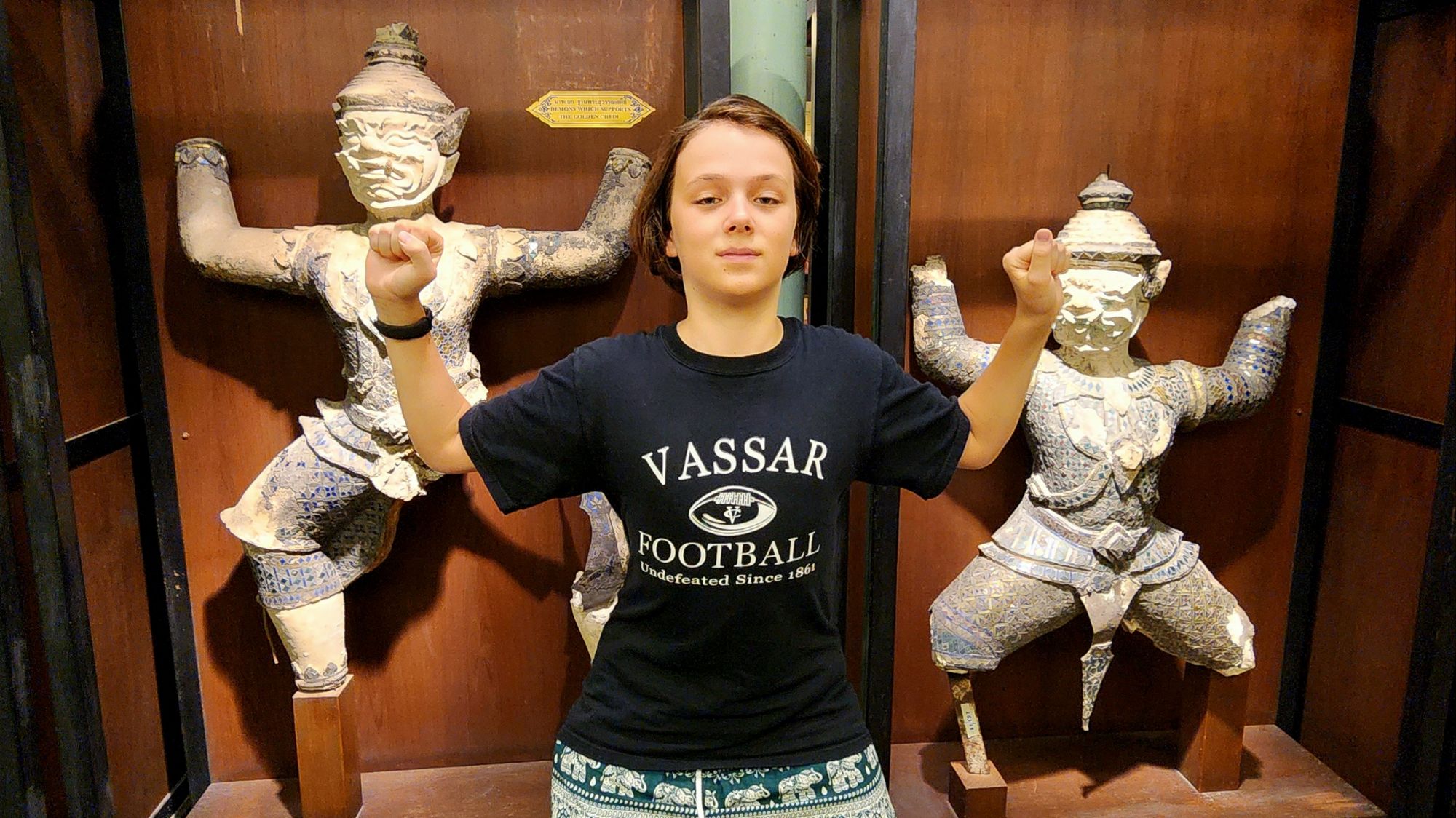
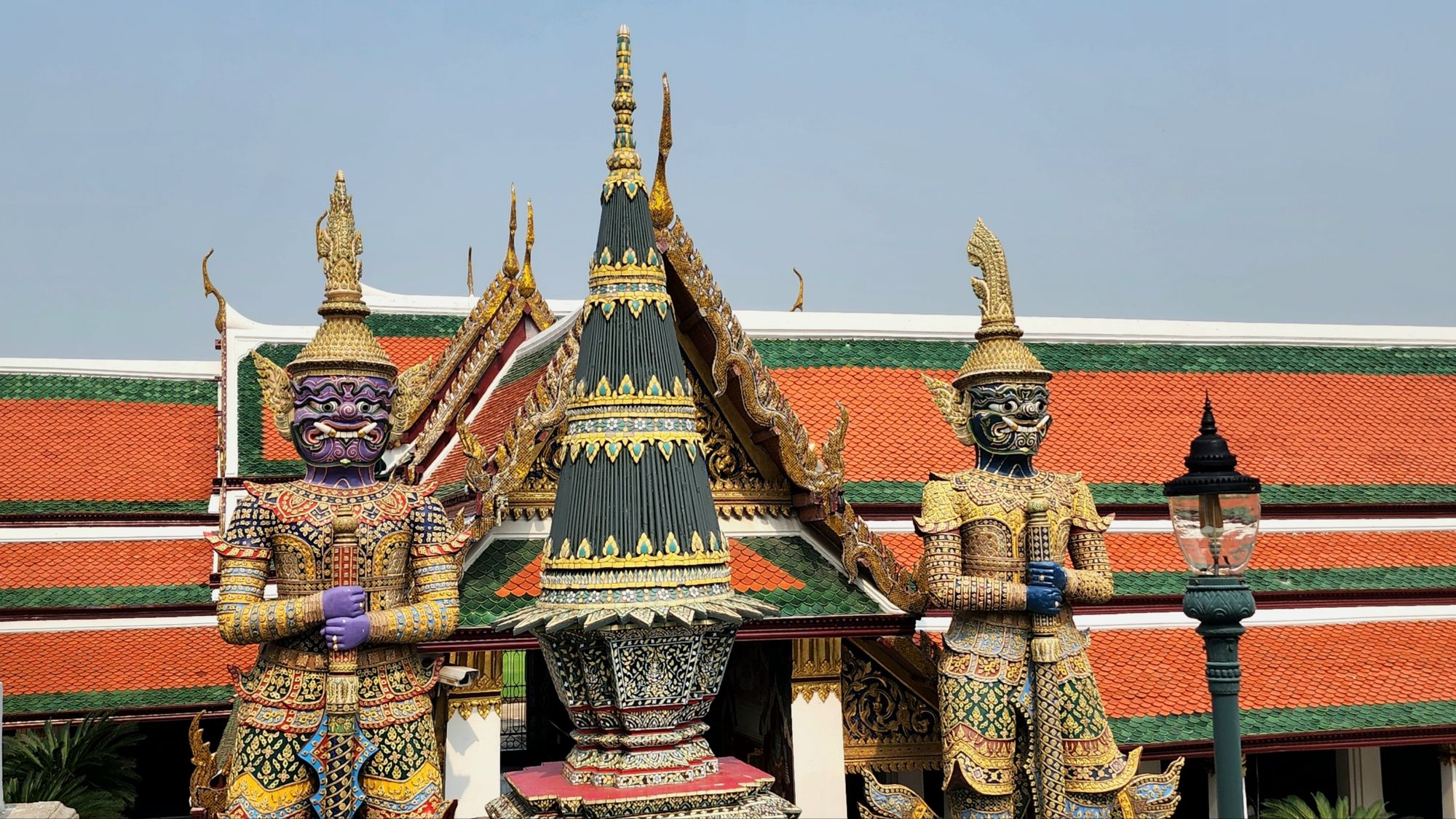
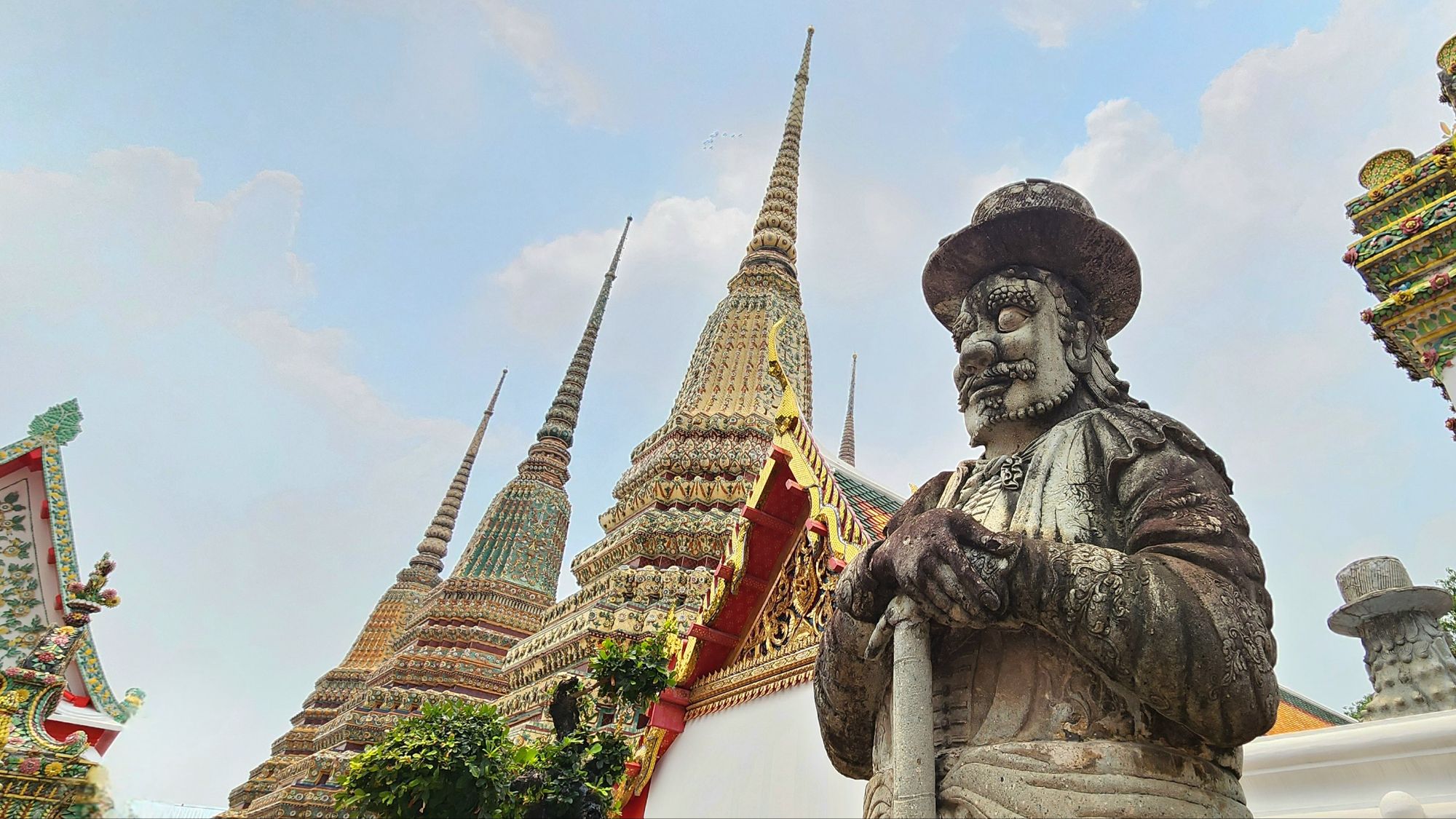
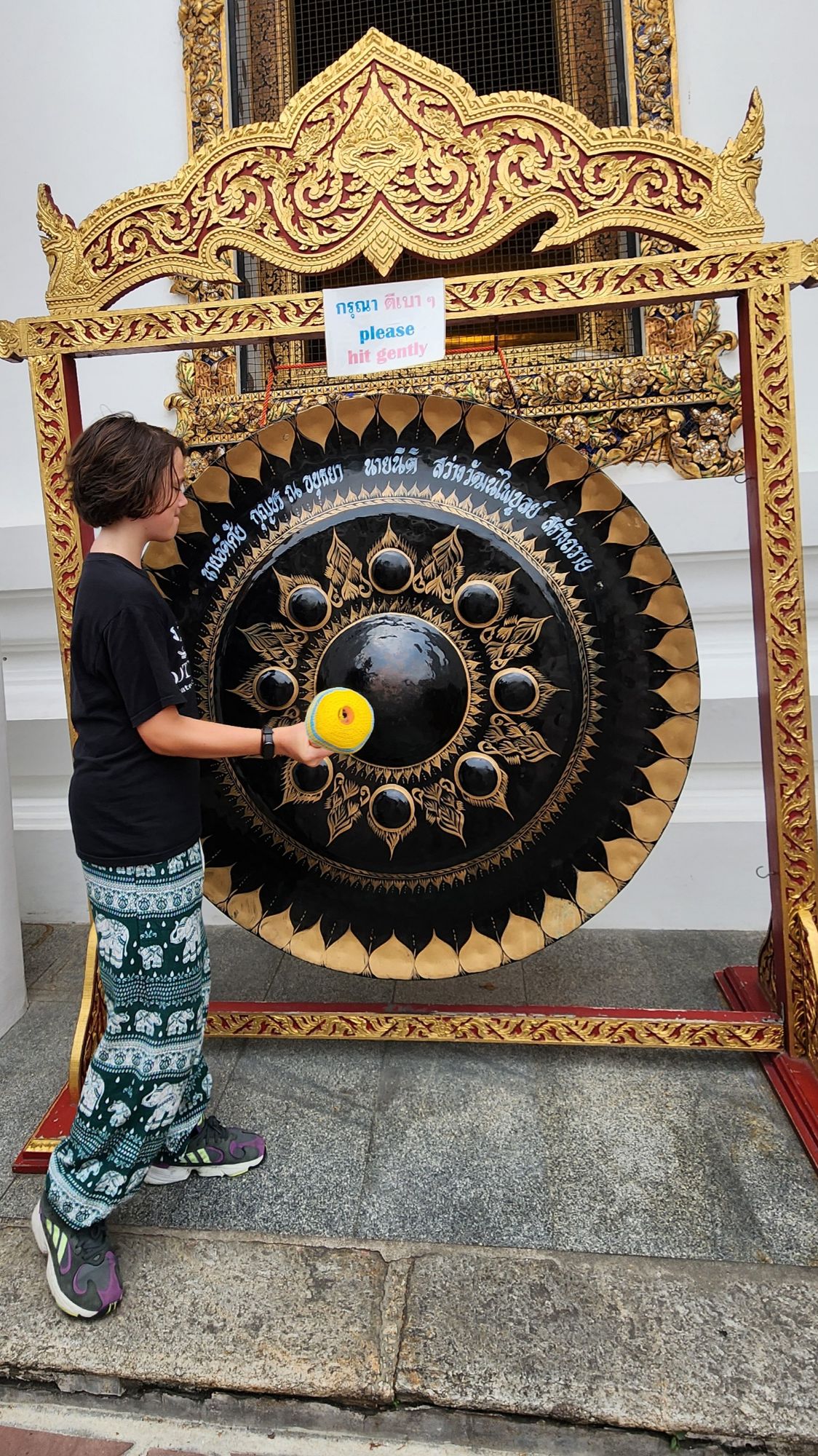
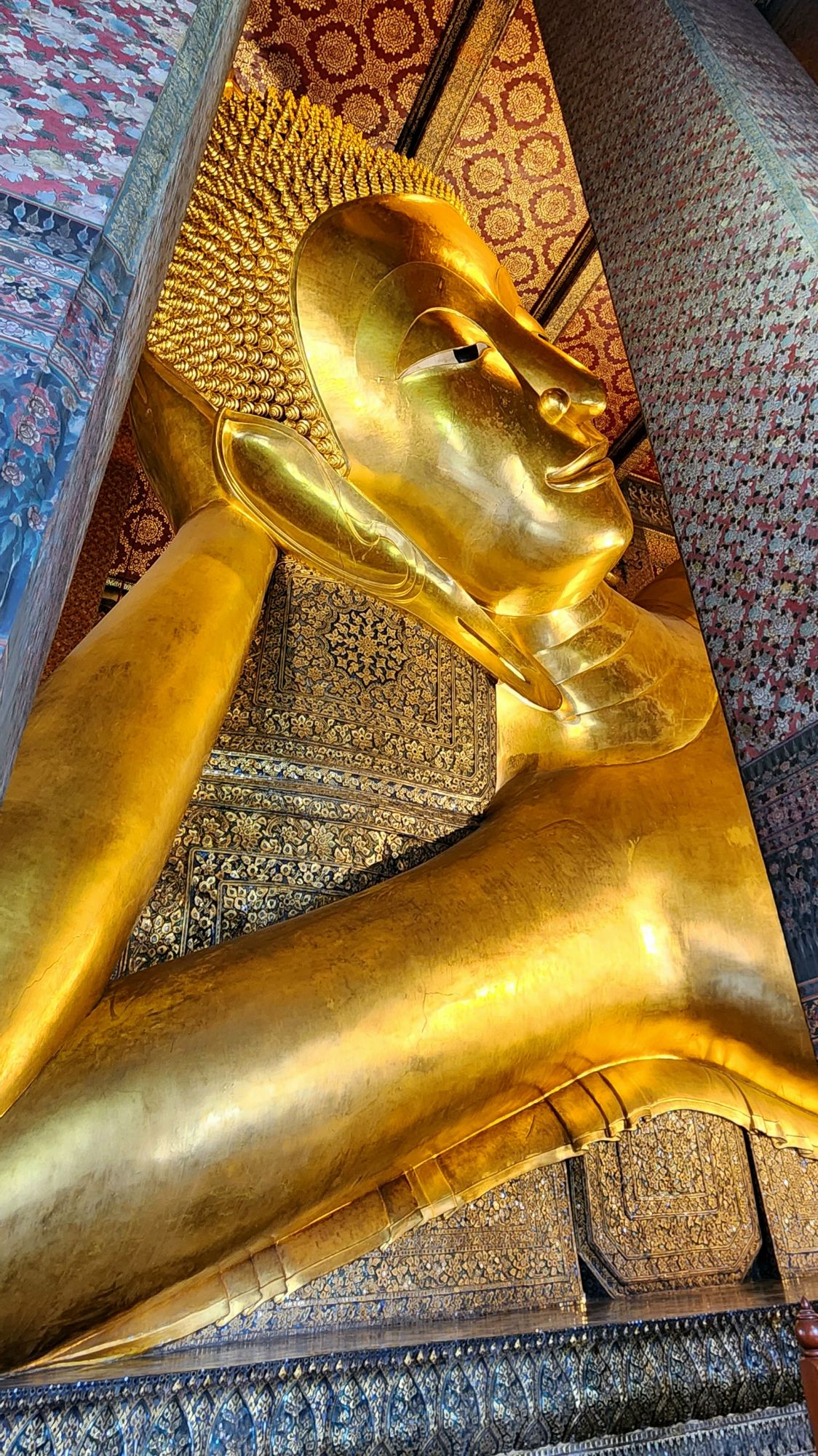
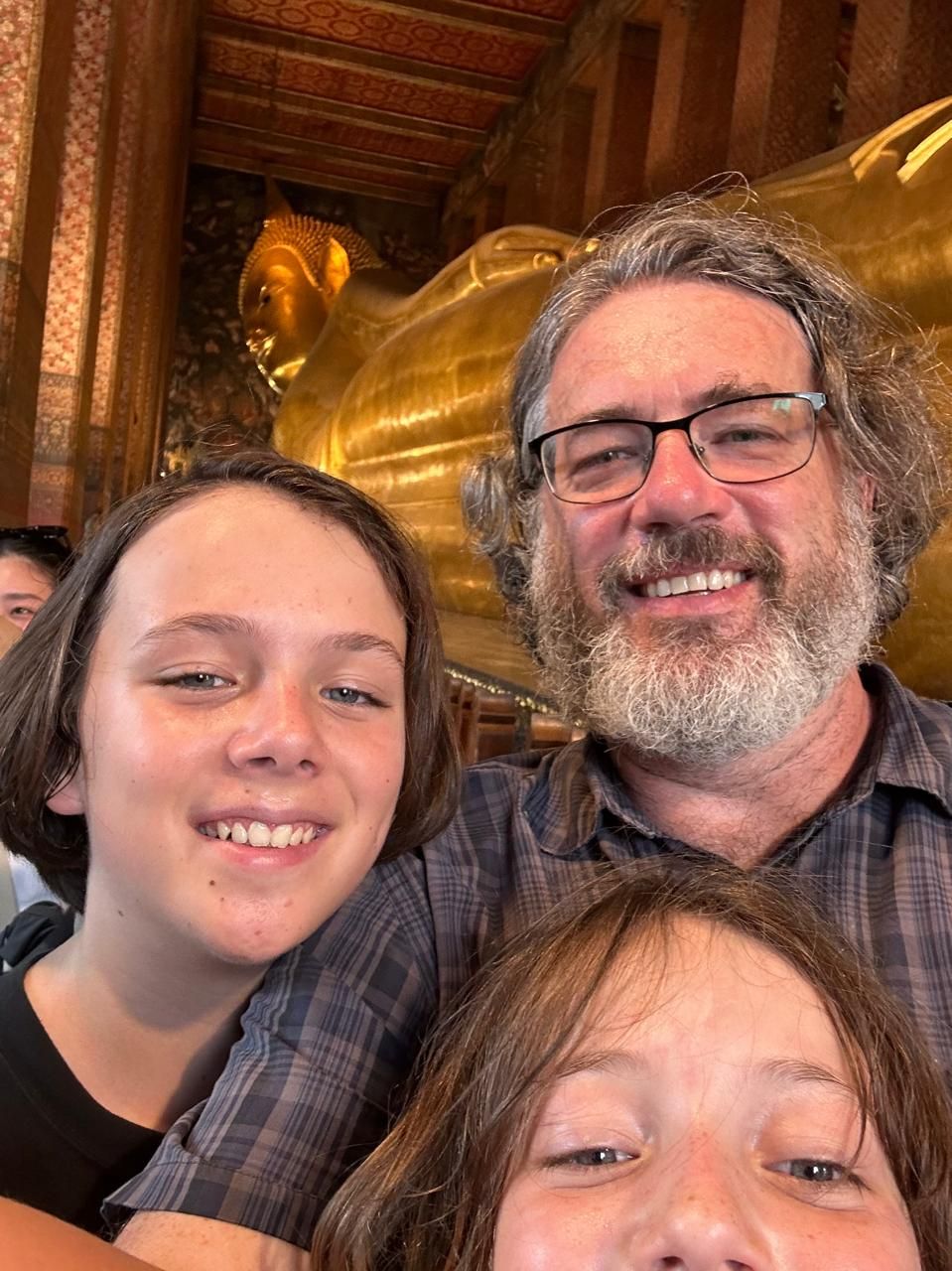
After cooling down and refueling at a local restaurant we headed to Wat Pho, the oldest temple in Bangkok and the home of the enormous Reclining Buddha. On our walk there, we were again approached and told that Wat Pho was temporarily closed. We decided to see for ourselves and were unsurprised to find it open and welcoming visitors. The Reclining Buddha is 15 meters high, 46 meters long, and covered in gold leaf. It portrays the Buddha lying calmly just before his death, awaiting the afterlife. Photos can’t quite capture how grand it is.
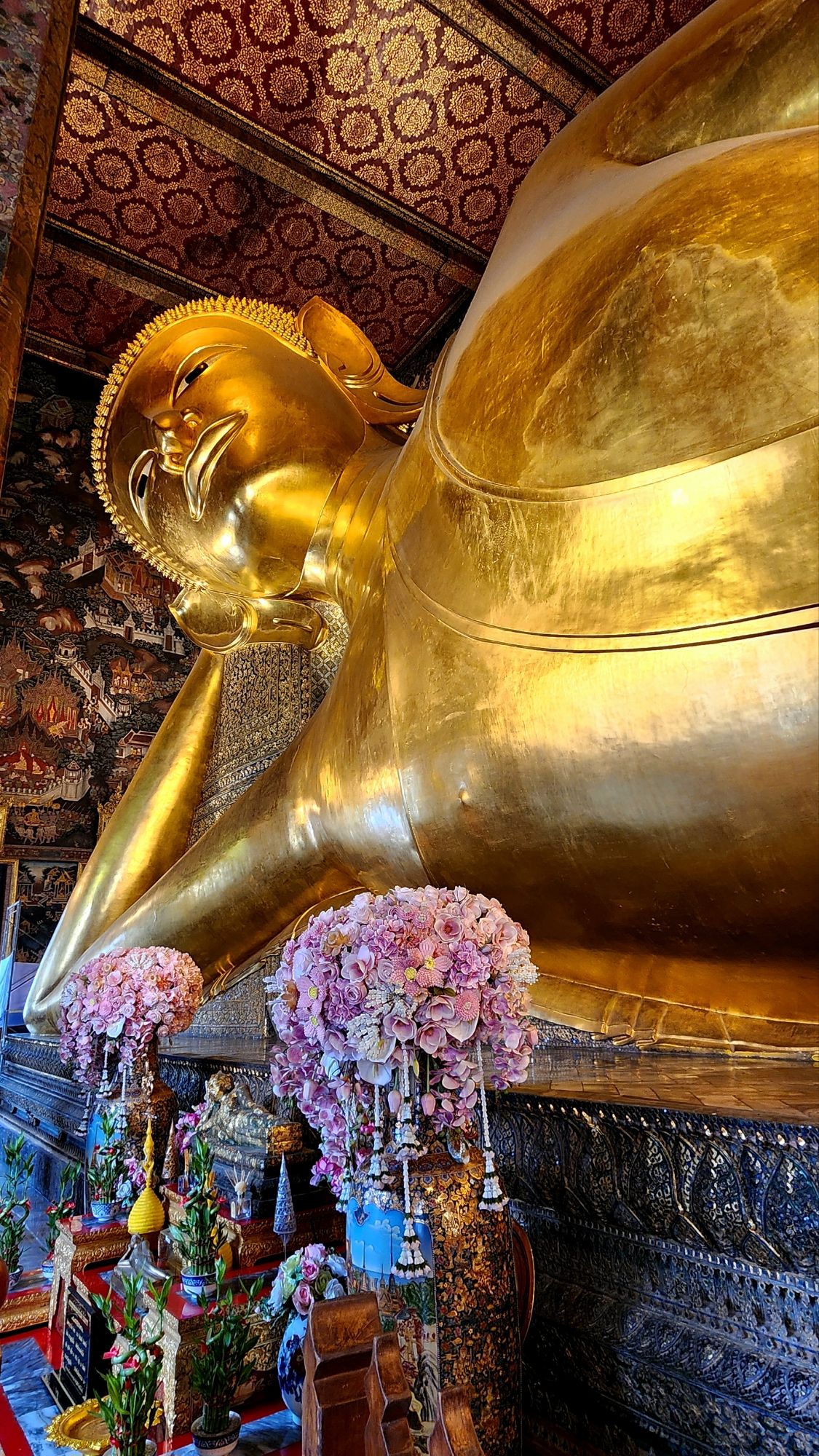
Returning to the hotel pool to escape the heat and indulge in happy hour, we reconnected with our new friend from the coffee shop, this time with his kids. The kids had fun playing together in the pool while the adults chatted. We made plans to rendezvous later to explore some of the food spots Simon had researched.
Before dinner, we squeezed in one last temple, Wat Arun, located just across the Chao Phraya River which we accessed by taking a short ferry ride. Here, we climbed up and around the temple building, admiring the impressive mosaics made from broken, multicolored Chinese porcelain. Many locals, dressed in traditional costumes, were there for photo shoots.
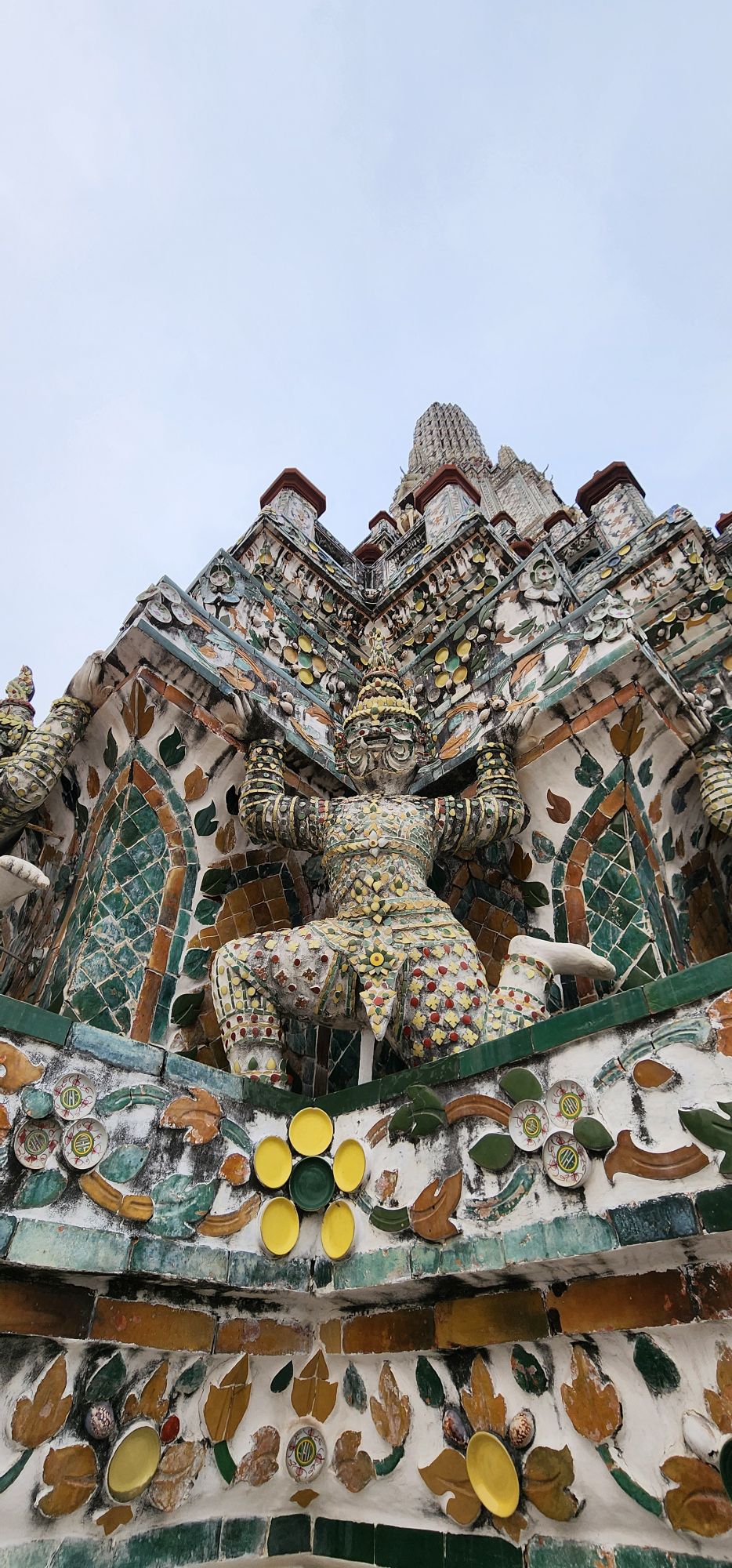
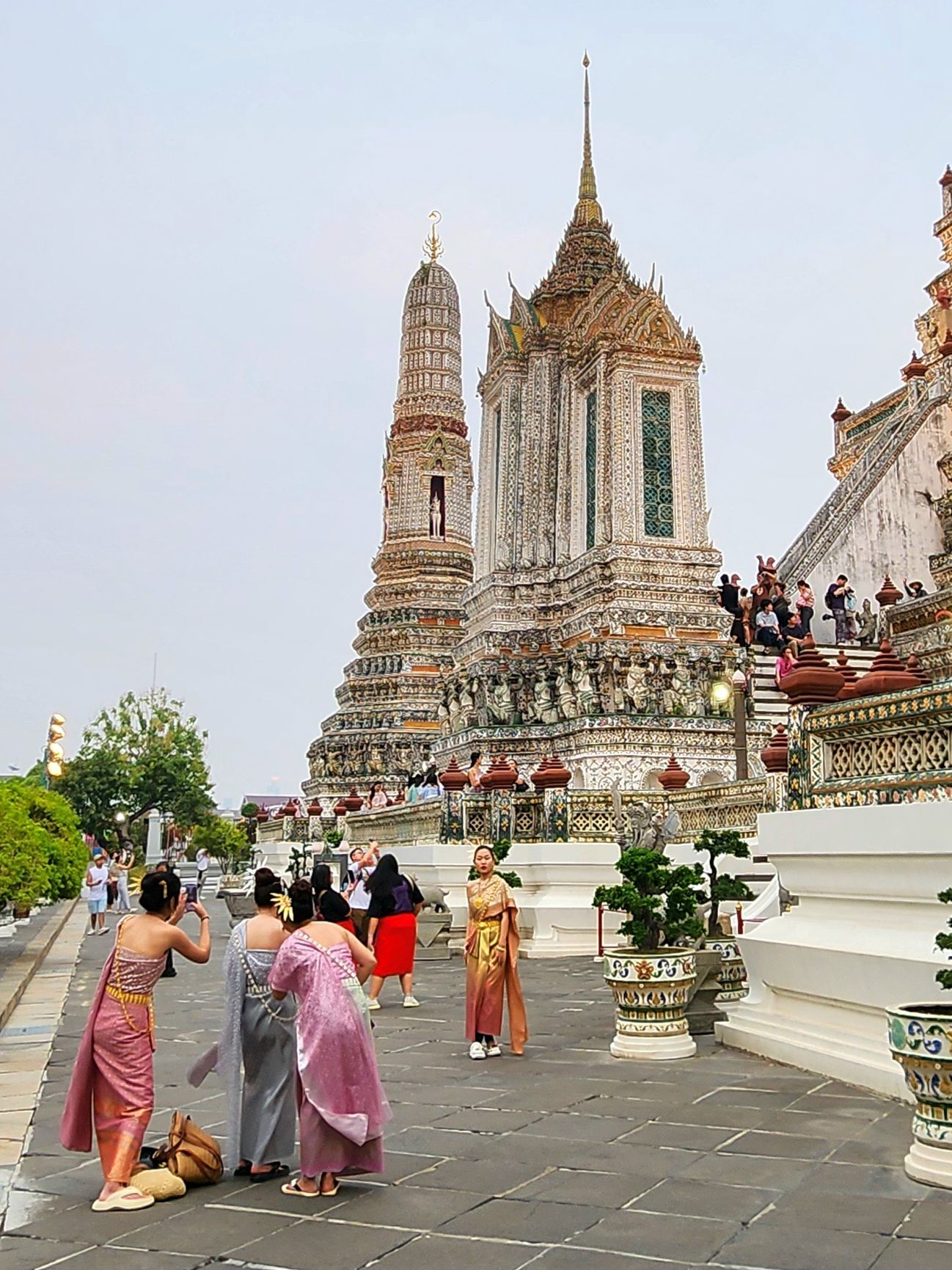
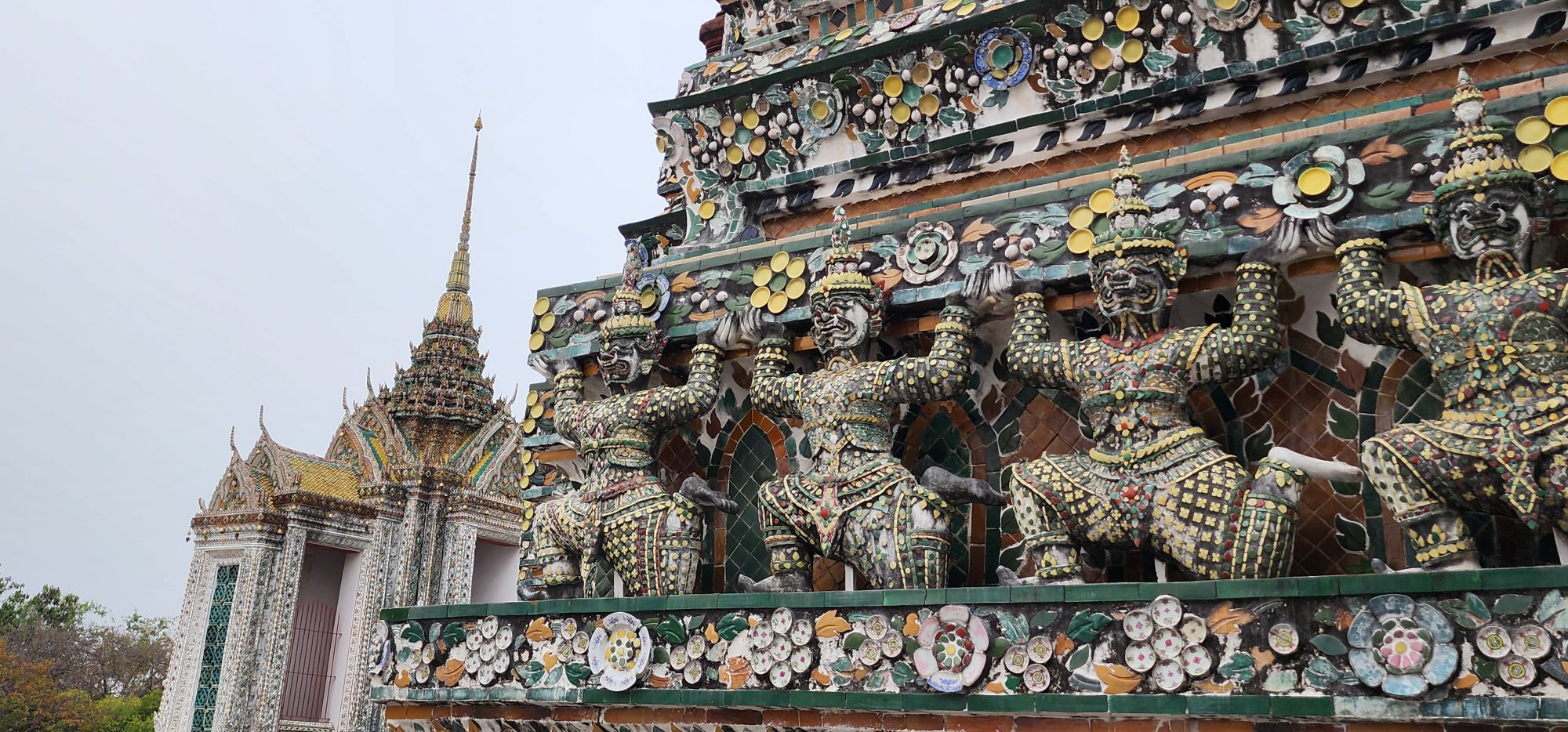
The kids begged us to take a Tuk-Tuk to the dinner spot and we conceded, asking a responsible-looking middle-aged woman who was advertising Tuk-Tuks at the exit. We agreed to a price and she led us to a Tuk-Tuk, giving a nod to a young driver that we are pretty sure was not much older than Alden. He zipped us along, evading traffic as he zigzagged us to our destination: a fabulous Pad Thai stand. Our new friends met us and we hopped around to a few different places to sample food and enjoy some cold drinks. The kids were happy to have some non-parent company and persuaded us all to go on a mission to find water guns for Songkran.
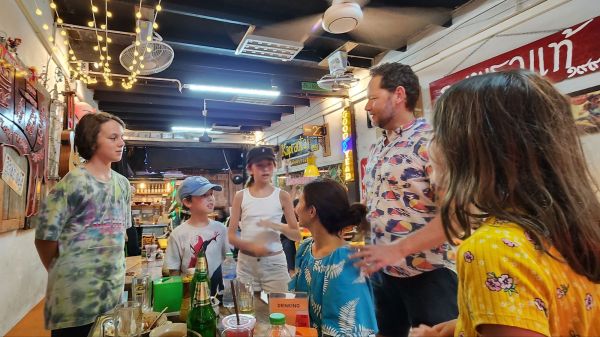
Mila was in the spirit when we woke up on the first day of Songkran! Unfortunately, she hadn’t quite figured out how to effectively operate her weapon.
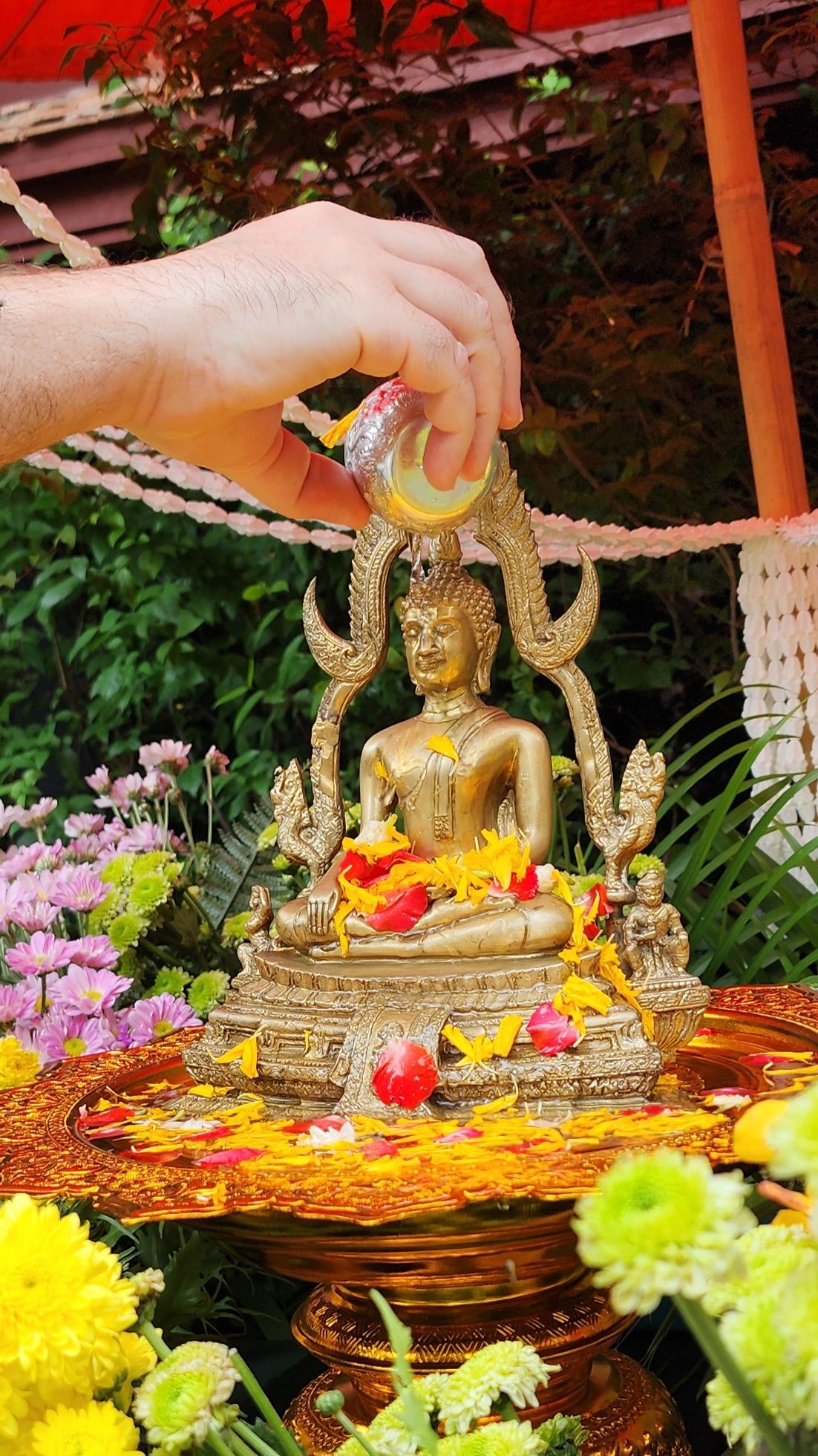
Our final day of this epic adventure was perhaps one of the most memorable. We spent it with our new friends, starting with a tour of the Jim Thompson house. While we awaited our tour, we were invited to partake in the Songkran tradition of making a wish for the new year while pouring water on a Buddha statue. Our guide told us about the late “Thai Silk King” and showed us around his impressive home and art collection. Thompson became interested in Thai textiles during WWII and settled in Bangkok after the war. He started an import business selling his neighbors’ hand-made silks. After introducing the materials to the costume designers of the King and I, his business flourished and he popularized Thai silks, selling them to fashion houses abroad. He mysteriously disappeared in the Cameron Highlands of Malaysia in 1967.
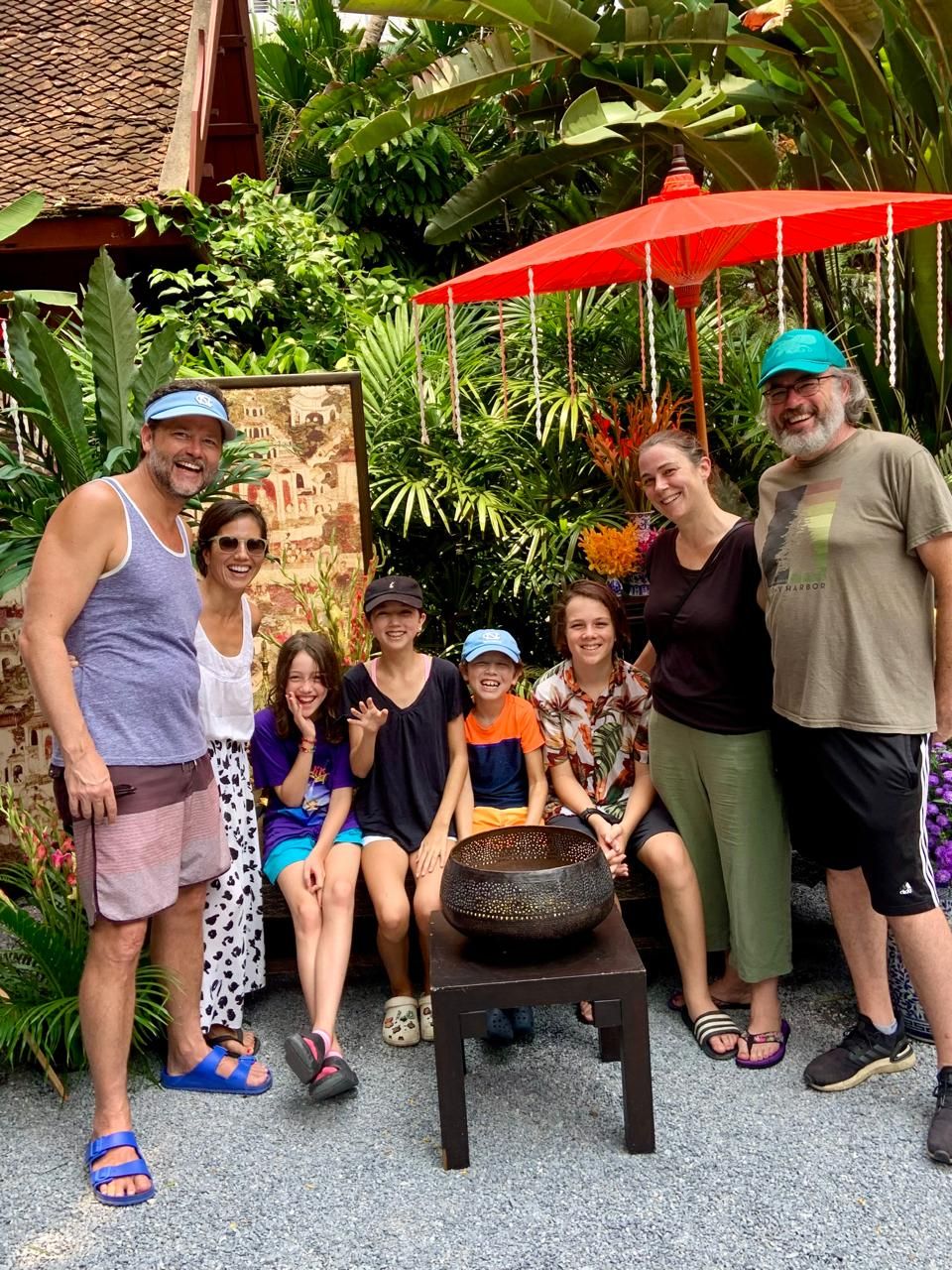
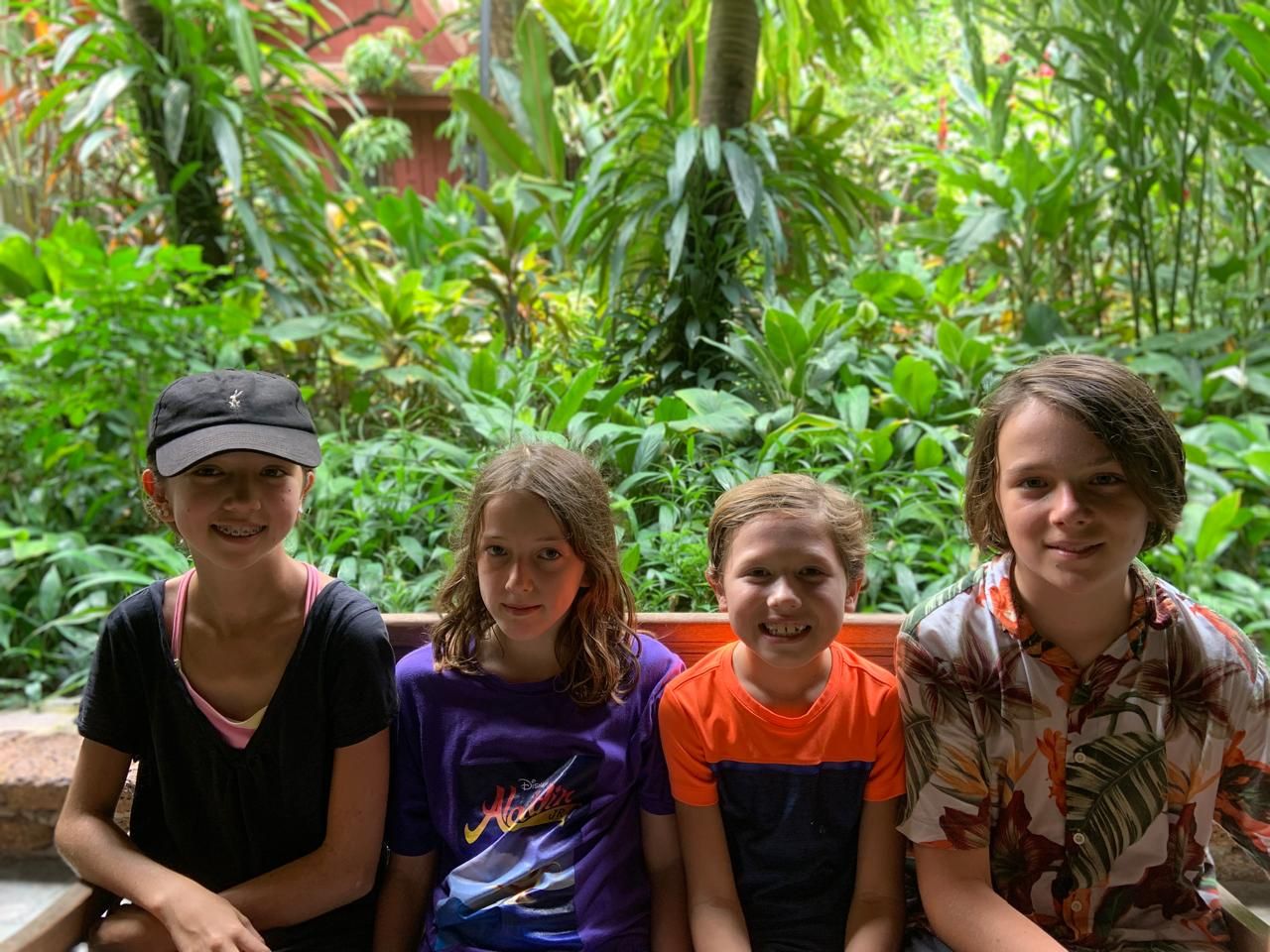
For lunch, we walked to a local spot along the canal where we watched water taxis cruise by leaving huge wakes as we ate our meal. We were wondering when the fabled Songkran water wars would begin and the kids were a bit disappointed that we hadn’t allowed them to bring their guns along. Our kind host at the restaurant offered Alden a water gun. He turned and mischievously approached the other kids, threatening a spray from the small gun. As he did so, the host tiptoed behind him with a large cup full of ice and dumped it down his shirt! I wish I had caught the whole thing on video but you can use your imagination.
That was only the beginning! As we walked around town we encountered countless kids and adults hanging outside their apartments with plastic pools full of water, armed with buckets and guns to drench passersby. Throughout the rest of the day, we enjoyed spraying and being sprayed by strangers in the street.
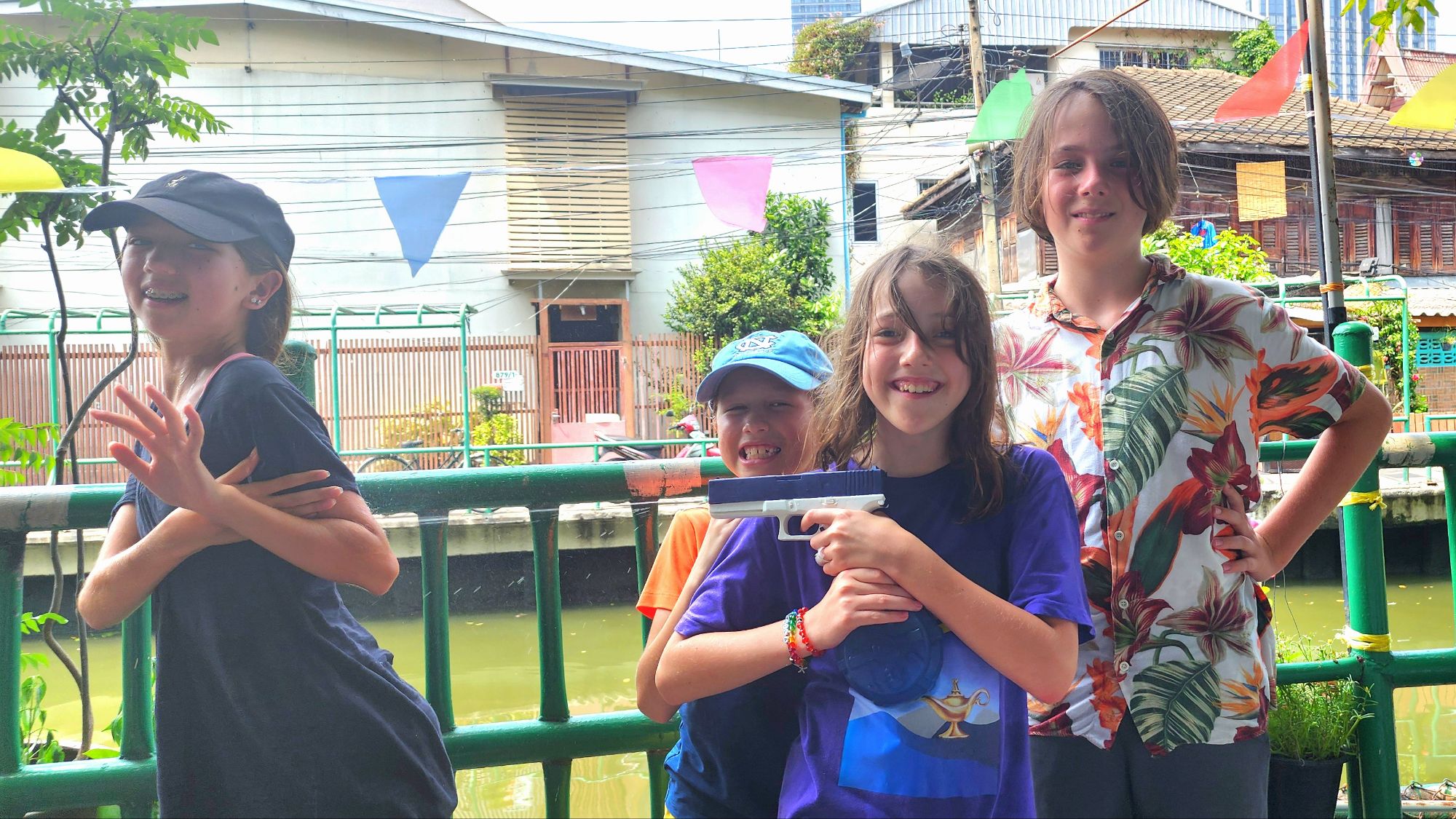
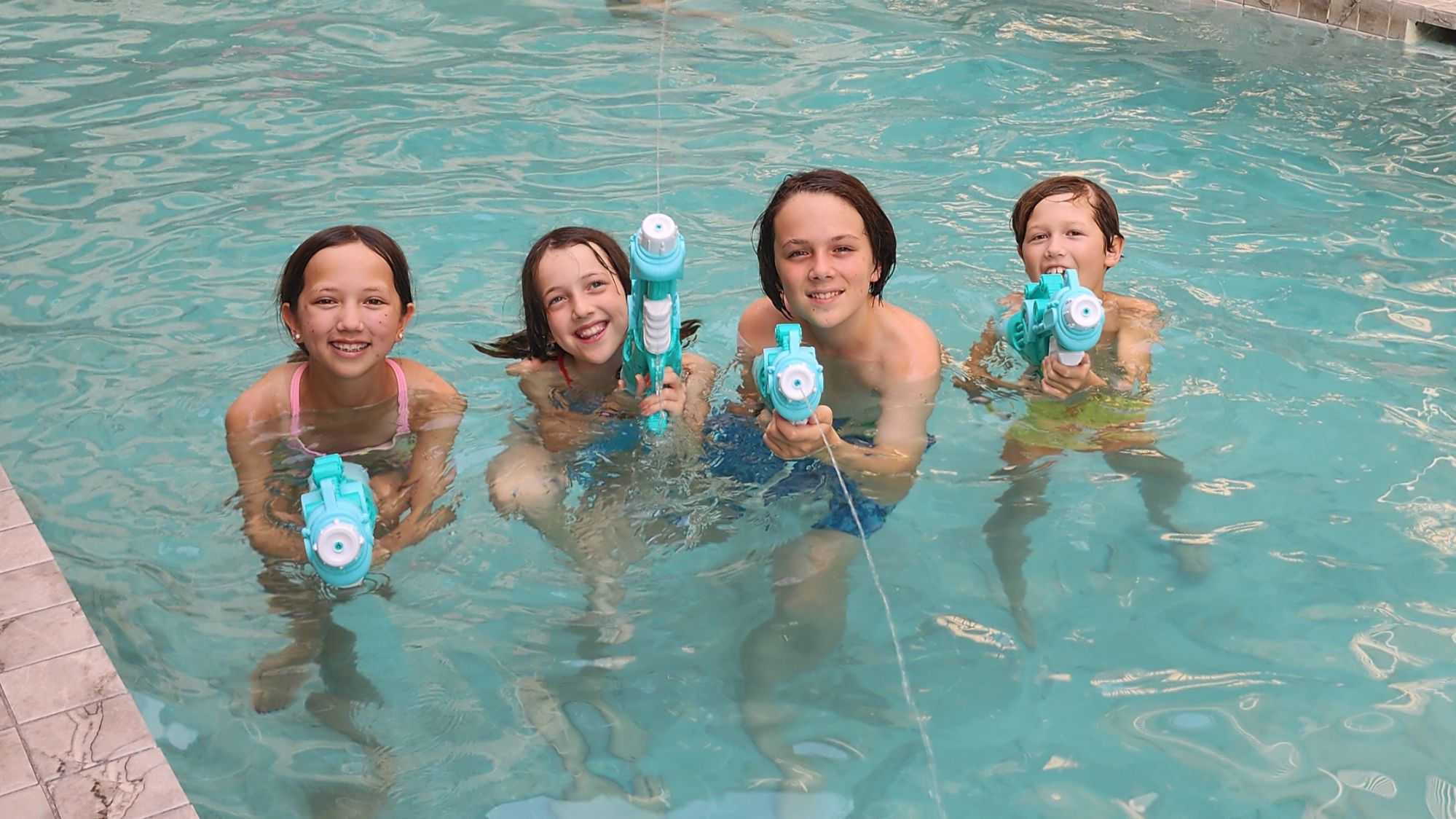
Later, we went to a local festival with food stands, elaborate decorations, live performances, and a Ferris wheel. The kids had fun engaging in water battles with the local kids and at the end of the night brought smiles to the faces of kids as they passed on their water guns to new owners.
It was serendipitous that we happened to be in Bangkok for Songkran and it was the perfect way to end our trip. Our extensive planning led us to amazing stays, delicious bites, and unforgettable experiences. Equally memorable, however, were the unplanned moments: grabbing an impromptu bite from a roadside stand that caught our attention, adventures en route with Uncle Ho, zipping around a park on glowing crazy carts, and fun times with both old friends and new.
 Travels with Mr. Smart